
Bicol Daily News | August 21, 2024
LEGAZPI CITY — When a nine-month-old boy lost his parents in a tragic road accident in
Libmanan town, Camarines Sur, in 2018, his family sought breast milk donations as he refused
to drink formula milk.
Naoki William Pena’s relatives turned to social media to appeal for breast milk donations and
other essentials while he was undergoing surgery for a left leg fracture he sustained after being
thrown from their sports utility vehicle.
Lizlee Pascua and her friend immediately went to the Mother Seton Hospital in Naga City, where
the infant was confined, and offered direct breastfeeding, even for a day.
They continued to support the baby for weeks by providing him with expressed breast milk
preserved in a sterilized container.
The baby survived because of the breast milk donations and was later adopted by his aunt, Aisha
Pena Namoro, who also lactated him.
This tragedy led to the creation of the “Breastfeeding Bicolanas,” a mother-baby support group
based in Camarines Sur in the Bicol region.
The group aims to motivate and empower women and educate people on the importance of
breastfeeding in combating child malnutrition.
“At that time, we struggled to obtain milk donations for the baby at the hospital and even posted
on Facebook. So, we decided to form the group and attended training to become certified
lactation counselors,” Pascua said.
She said that they could not bear the thought of another displaced or premature baby suffering
from hunger due to lack of human milk.
Establishing a group of volunteer breastfeeding mothers could help sustain the supply and
services for those in need.
The organization began with just five core members who attended various training courses to
gain knowledge on lactation and relactation, and now, they have more than hundreds of
volunteers.
Challenges in ‘closing the gap’
Despite a lack of funds for activities such as celebrating Breastfeeding Month every August, the
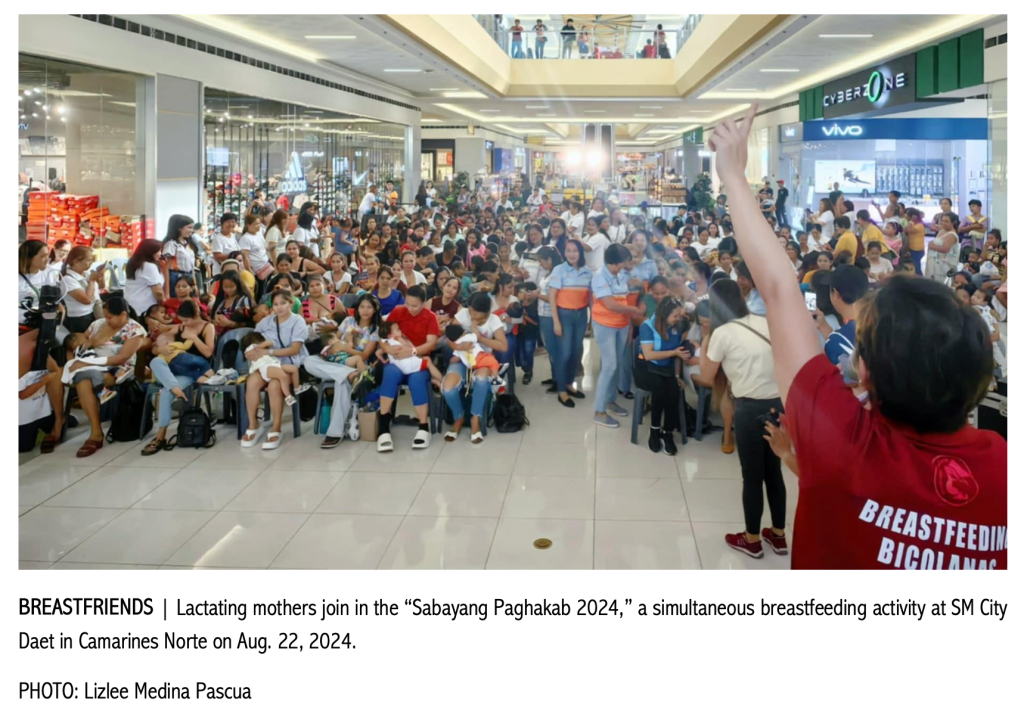
group managed to organize their annual “Sabayang Paghakab,” a simultaneous breastfeeding
event involving lactating mothers and their children.
This year’s event, held at SM City Daet in Camarines Norte on August 22 and attended by more
than 90 lactating mothers, was part of their campaign to garner support from the government and
private institutions.
The aim was to promote maternal health and advocate for maternity privileges, especially for
working mothers.
Pascua said that most of their activities in past years were funded out of their own pockets.
Ines Fernandez, known as “Nanay Ines” and the founder of Arugaan, a breastfeeding support
organization, believed that the government should focus on strengthening health programs and
monitoring the implementation of the Philippine Milk Code.
She also emphasized the need for a stronger campaign to encourage breastfeeding, particularly
among teenagers and working mothers.
Fernandez added that medical practitioners and the market should not promote use of formula
milk for infants without valid medical and legal reasons, as this can lead to numerous health
issues in children.
“The government’s campaign is inadequate, and many mothers are unaware and receive no
support. The 20 mother support groups here in the Philippines have limited reach, so they should
value our work and help us,” Fernandez said.
She said that if parents were trained enough on how to sustain breastfeeding, they could save an
average of P25,000 per month on formula milk.
‘Liquid gold’ donations
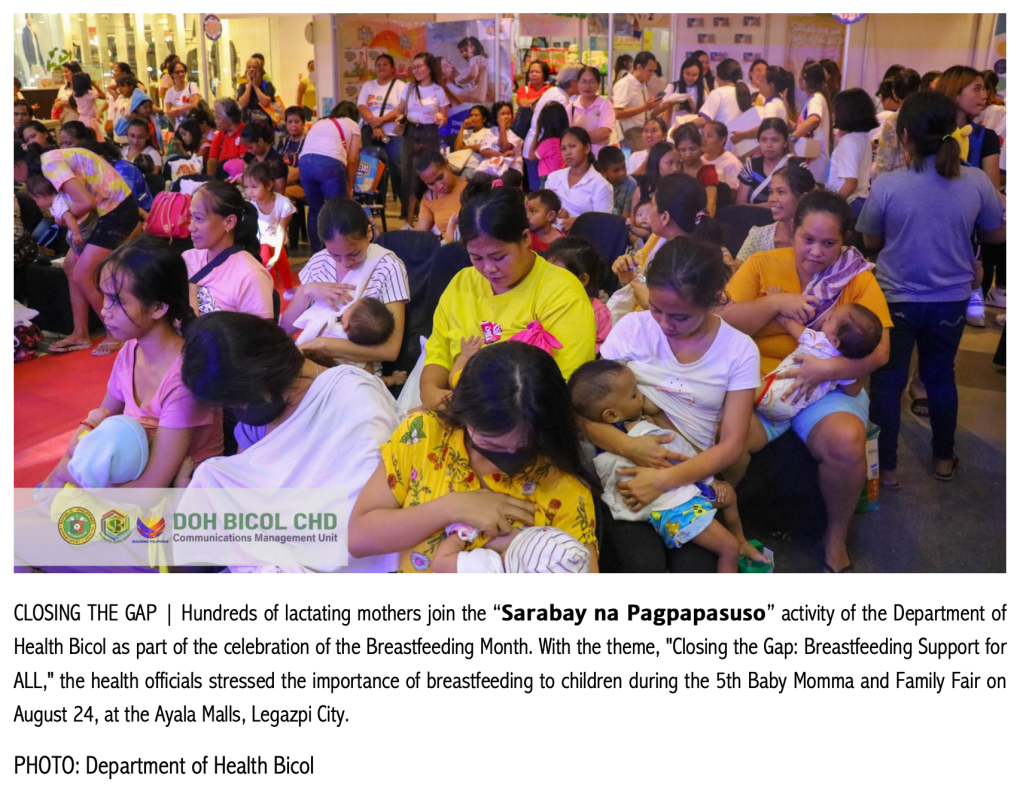
Pascua said that they started with their pilot program, the “Nanay Bayanihan” campaign, to
encourage lactating mothers to assist others who struggle to produce milk for their babies.
Through a Facebook group, they were able to invite more members and collect human milk from
lactating mothers.
This milk was stored in freezers or human milk storage facilities in various public and private
hospitals with premature babies.
“At first, we used to pick up the donated milk from donors’ homes and store it in our personal
freezers. Later, we partnered with the Department of Health to provide designated human milk
storage areas,” Pascua added.
The organization frequently receives requests for human milk from mothers who have just given
birth or from Neonatal Intensive Care Units (NICUs) in hospitals across the region.
Donors are screened by reviewing their laboratory results to ensure they are free from hepatitis,
Human Immunodeficiency Virus, or other diseases.
When Titchie Berin’s sister gave birth via cesarean section in August 2020, their family
struggled to find breast milk for her nephew, who was born prematurely at seven months at
Daraga Doctor’s Hospital in Albay province.
Her sister had not yet produced breast milk, and doctors recommended it for the baby’s complete
nutritional needs and faster recovery, as he was born weighing only 900 grams.
Upon learning about the appeal through a Facebook post, the Breastfeeding Bicolanas quickly
contacted their coordinators, who store donated milk, while other lactating mothers directed their
donations to the hospital.
After five days of receiving breast milk while in the incubator, the premature baby gained 30
grams.
“He is very strong [toddler] now, and I am happy for our baby,” Berin said.
Lactation counseling
Mayrell Paguio, a nurse and breastfeeding coordinator at the Bicol Regional Hospital and
Medical Center (formerly Bicol Regional Training and Teaching Hospital) in Legazpi City, said
that an average of 150 bags of human milk stored in their chest freezers are reserved for babies
confined in the NICU.
She noted that the Breastfeeding Bicolanas have become active partners in their human milk
donation campaign and in helping mothers sustain their milk supply.
Mothers who have just given birth at the hospital are encouraged to pump or express milk for
their own babies as well as for other premature babies, who make up about 70 percent of NICU
patients.
From prenatal care through childbirth, the 15 lactation counselors assist women in preparing for
breastfeeding, as the hospital discourages the use of formula milk in accordance with Executive
Order 51, which implements the National Code of Marketing of Breastmilk Substitutes,
Breastmilk Supplements, and Other Related Products.
“Not all mothers are familiar with the breastfeeding process, especially those influenced by
superstition. We explain the need for stimulation and patience, as it may take some time for
breast milk to come in,” Paguio said.
Dia mentioned that during the pandemic, they utilized social media and other online platforms to
continue their lactation counseling and activities such as simultaneous breastfeeding events.
“It’s very important to protect children who are not yet eligible for vaccines. The antibodies in
breast milk can help,” Dia added.
Mother’s advocacy
During lunchtime, Cathyrine Mae Melitante, 35, used to go home from work to breastfeed her
three-year-old daughter.
Although petite, Melitante believed her breastfed child was less likely to get sick, as antibodies
in breast milk help strengthen the immune system.
She also noted that their skin-to-skin contact became a special bonding experience, making her
child more affectionate and clingier.
“I don’t want to stop her from breastfeeding, even though our setup can be a hassle now. I can’t
let go; I cherish the feeling that she depends on me,” Melitante said.
Melitante, who works in a government office in Legazpi City, has three children.
Sustainability
Marife Joven-Dia, co-founder of the Breastfeeding Bicolanas, said that recipients of the donated
milk undergo counseling to support breastfeeding advocacy.
“We ask the mother if she is willing to work on her breast milk supply so she can also feed her
baby. We hope that through this process, the recipient will eventually breastfeed her baby and
also donate milk to other babies in need,” Dia said.
Although the organization has operated without dedicated funds, they have formed partnerships
with suppliers of breast milk storage bags and breastfeeding supplements.
Some donors received malunggay drink supplements and milk storage bags as tokens of
appreciation.
Monetary donations from non-indigent mothers, intended for counseling and lactation massage
services, have been used to fund other projects such as feeding programs during disasters,
training for pregnant and lactating mothers, and various advocacy efforts.
The organization also collaborated with local government units and other non-governmental
organizations to sustain their advocacy programs, especially during the pandemic.
To date, they have helped 500 parents and babies through milk donations, counseling, and home
visits.
Pascua mentioned plans to establish a breastfeeding center that would offer lactation massage
and counseling for mothers.
“We are also seeking additional partnerships with agencies to fund our programs, such as
capacity training for mothers and the creation of more support groups,” Pascua added.
 Bicol Daily News