by Mark Angelo Mallari, Gianne Paula Cadag, and Athena Grace Cedillo
In the 1990s, Jojo Soria, 50, and many others in his coastal town of Barangay Nursery in Masbate City lived a life deeply connected to the sea. Fishing was not just a livelihood—it was their way of life. The sea was a generous provider, teeming with groupers, parrotfish (mormol), mackerel (buraw), and various pelagic species, their scales shining under the sunlight as they moved through the clear, blue water. It was rich with fish, and no one thought the supply would ever run out.
Back then, sustainability wasn’t something fishermen like Jojo thought about. No one talked about what might happen years down the line. What mattered was getting the job done—and getting it done fast. Jojo had seen others use cyanide and dynamite to catch fish, and before long, he was doing the same. It was the easiest way, and it worked. At the time, it didn’t feel wrong. It was just how things were done. The idea that these methods were slowly damaging the sea never really crossed his mind.
Years passed, and the signs began to show. There weren’t as many fish. The water didn’t seem as alive. Jojo saw the changes himself. The fishing grounds they had relied on for so long were no longer the same. The sea they had depended on for generations was changing, and people were beginning to see the damage that had been done.
“We didn’t know that what we were doing—using dynamite and cyanide—would eventually lead to us slowly destroying the ocean,” Jojo said, reflecting on his days as an illegal fisher with regret.
By the early 2000s, illegal fishing had become widespread in Masbate’s municipal waters. Catches were declining fast, and desperation pushed more fishers toward harmful practices. That’s when the City Government of Masbate stepped in, looking for a solution.
A Safe Haven for Marine Life
On October 24, 2002, the waters off Barangay Nursery and Tugbo—the same areas where Jojo had once fished without limits—were officially declared a marine sanctuary.
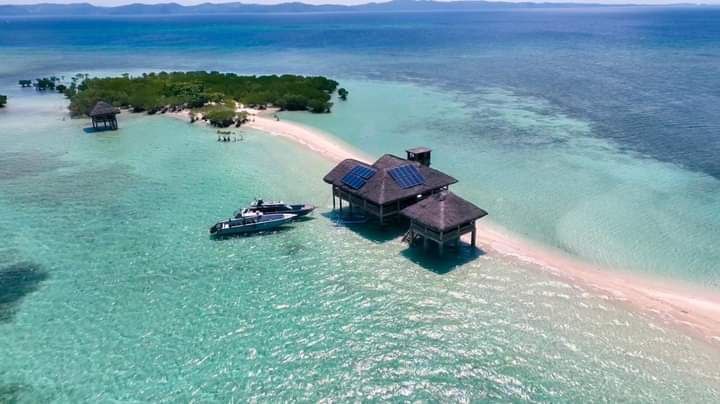
Today, it is known as the Buntod Reef Marine Sanctuary. It covers around 250 hectares of coral reef, along with a 1-hectare sandbar, 2 hectares of mangroves, and a rich foreshore area that is home to a diversity of marine species. It became a haven for fish and other marine life—a place where they could feed, grow, and reproduce without threat.
The sanctuary is protected by national laws like the Fisheries Code (RA 8550 and RA 10654), the Water Code, and local ordinances. These laws prohibit illegal fishing methods and unauthorized entry into marine protected areas. Violators can face steep fines, imprisonment, or the loss of fishing licenses, making it clear that conservation is backed by legal force.
Upon the establishment of the sanctuary, Soria and other former illegal fishers were formed into an association and recruited as protectors of the very waters they had once exploited. This marked a turning point for Soria and his fellow fishermen. The same hands that once cast nets using destructive methods were now entrusted with the responsibility of preserving the marine life they had nearly destroyed.
Soria recognizes that he once contributed to the destruction of the sea and its ecosystems. But today, as the former president and now a board of director of the Samahan ng Mangingisda ng Puro Sinalikway (SAMAPUSI), a people’s organization, he is determined to protect what remains and ensure a better future for both the community and the environment.

Soria releases a sea turtle turned over by a local fisherman near Buntod’s Bantay Dagat Guardhouse. (Courtesy: Jojo Soria)
“We used to go against the government, but we’ve been reformed and turned into an association. We were made aware of the effects of our illegal activities on the ocean, and afterward, we were organized as part of the government’s effort to protect Buntod. This is what it means when we say that those who were once rulebreakers are now the protectors,” he said.
Soria has been a Bantay Dagat—a guardian of the sea—for over 14 years now.
From Poachers to Protectors

Anchored SAMAPUSI boat on standby for area patrol near Buntod reef.
The transformation of Soria and his fellow fishers is a powerful example of change. Today, the members of Samahan ng Mangingisda ng Puro Sinalikway (SAMAPUSI) are passionate advocates for marine conservation. They are the only accredited ecotourism service provider at the Buntod Reef Marine Sanctuary, serving as stakeholders, deputized enforcers, and co-managers of the sanctuary’s protection and development.
This transformation was formalized on August 6, 2015, through a Memorandum of Agreement (MOA) signed by SAMAPUSI, the City Government of Masbate, and the Department of Environment and Natural Resources (DENR) Bicol. The agreement outlined the roles of each party in the co-management of Buntod Reef. For SAMAPUSI, it marked a milestone—formal recognition of their commitment to safeguarding the marine ecosystem they once exploited.
Geralph Andrade, provincial fishery officer, said that before they were recognized as sea wardens, the former illegal fishers surrendered their destructive fishing gear. This was part of the City Government of Masbate’s strategy, supported by the Bureau of Fisheries and Aquatic Resources (BFAR) and DENR, which was anchored on education and livelihood assistance. In exchange for giving up illegal equipment, fishers received sustainable alternatives such as boats and legal nets.
“We gave them livelihood assistance like boats and nets, on condition that when the fishing gear is given to them, they surrender their illegal fishing equipment in return,” Andrade explained.
Further support included training in aquaculture—raising crabs, tilapia, and bangus—using environmentally friendly practices, such as mangrove-compatible crop-planting methods. These efforts not only protected marine life but also provided stable and sustainable sources of income.
Engr. Rodolfo Ajero Jr., city agriculturist, said that the MOA ensures that this co-management arrangement remains in place as long as the agreement is honored.
“As long as they don’t violate anything in the MOA—between the DENR, LGU, and SAMAPUSI—it will not be taken away,” affirmed Ajero.
The change has been profound. Those once seen as threats to the reef are now passionate defenders—patrolling the sanctuary, guiding visitors, and nurturing the ecosystem they once harmed.
Bantay Dagat’s Efforts in Marine Conservation
As Bantay Dagat, they dedicate themselves to protecting the sanctuary day and night, guarding it against illegal activities. In addition to their protective duties, they also help nurture and support the growth of marine life in the area. One of the significant environmental efforts they participated in was a coral transplantation activity conducted under the biodiversity conservation component of the Integrated Coastal Resources Management Project (ICRMP).

Soria, diving alongside the Department of Environment and Natural Resources (DENR), Bureau of Fisheries and Aquatic Resources (BFAR), and other SAMAPUSI members, conducts an underwater cleanup. (Courtesy: Jojo Soria)
During this initiative, they helped transplant coral fragments into designated reef areas within the sanctuary to encourage new coral growth. They regularly manage and monitor the area, checking on the progress of the transplanted corals as they slowly develop into thriving reef structures. These corals have gradually created new shelters for various marine species, contributing to the gradual recovery of the reef.

The coral nursery is under the project of the Department of Environment and Natural Resources (DENR), Bureau of Fisheries and Aquatic Resources (BFAR), and the Integrated Coastal Resources Management Project (ICRMP). (Courtesy: Jojo Soria)
They also take part in regular mangrove planting efforts along the sanctuary’s coastal areas. Often in collaboration with government agencies, these activities aim to reinforce coastal resilience and support marine biodiversity. Each year, thousands of mangrove branches are planted, particularly bakauan-bato, a species common in the area. Though survival rates are low, with only about 20 percent of the estimated 5,000 propagules successfully taking root, the Bantay Dagat continue their efforts with dedication.

Mangrove planting activity and coastal clean-up at Buntod, led by LGU Masbate City, Philippine Coast Guard (PCG), Department of Environment and Natural Resources (DENR), and SAMAPUSI. (Courtesy: Jojo Soria)
Unlike other species, such as bakawan found in muddy environments that grow tall and wide, bakauan-bato tends to spread more through its root system, forming thick, ground-level coverage. These mangroves serve as nursery habitats for marine life and act as natural coastal barriers. Even the fallen leaves from the mangroves play an important role in the ecosystem—they decompose into organic matter that fuels a chain of life, supporting the growth of tiny organisms that young fish depend on to survive and grow.

Small Glassfish (Parangan) thriving around the roots of a bakauan-bato mangrove.
To ensure the comfort of marine species within the sanctuary, the Bantay Dagat also takes responsibility for keeping the area free from garbage. Every afternoon, they bring trash bags to their designated disposal point at the pier, where the waste is collected and then transported by boat to the mainland for proper disposal.
With the persistence and commitment of the Bantay Dagat to their work, and the report of zero illegal activities in the area confirmed by SAMAPUSI, the Bureau of Fisheries and Aquatic Resources (BFAR) of Masbate, and the Agriculture Office of Masbate, the marine ecosystem of the Buntod Reef Marine Sanctuary has significantly improved. The species, coral reefs, and the overall environment of Buntod have all flourished. This progress includes the increased visibility of rare species and coral reefs that can now be found thriving within the sanctuary.

Clownfish nestled in its anemone home, thriving in Buntod Reef. (Courtesy: Jojo Soria)
Geralph Andrade shared that among the thriving species are various types, such as shellfish, sea crabs, grouper, and numerous pelagic species. In terms of corals, both soft corals and hard corals are visible, with the hard corals forming large structures, where parrotfish dwell. Not just that, the presence of sharks, rays, and stingrays in the sanctuary further highlights the health of the ecosystem. According to BFAR, these species play a crucial role in maintaining the balance of the environment.
“Sharks are indicators of a healthy ecosystem because they serve as apex predators, which means they help keep the balance in check. If you see a shark—especially a big one—that’s a good sign because it means the ecosystem is being maintained and there’s still food for them. But if you don’t see any sharks, it means something is wrong. It could mean that some species have disappeared, and the sharks no longer have anything to eat,” Andrade explained.
Buntod’s Ecotourism Growth
When it comes to the environment of Buntod, Engr. Rodolfo Ajero Jr. reiterated how this place changed from an unknown location to becoming a tourist spot. He said, “Milestones have happened here. Not only has it become an icon of the city, but it also participates in various awards—it has become an awardee.” Buntod is now one of the top choices as an ideal destination in Masbate, especially during the summer months. Some people even say that Buntod is similar to the Maldives.
“This is the result of our tourism project. Before, no people were visiting this area, but when we started the project, we became the very first group endorsed by the City of Masbate to receive an eco-tourism project. That’s why you can now see that many people are coming here.” Jojo happily shared.
BFAR agrees that Buntod is beneficial not only for marine diversity but also for tourism in the region. “Aside from it being a sanctuary, the city also benefits from it because of tourism,” BFAR explained.
Buntod has received several awards, including the Outstanding Marine Protected Area in the Philippines, Outstanding Locally Managed Marine Protected Area, Saringaya Award, and the Inang Kalikasan Award. These prestigious accolades have helped boost the popularity of Masbate, as Buntod has become one of the most renowned tourist destinations in the area, gaining recognition not only in Masbate but throughout the Philippines.
This milestone in Buntod’s ecotourism success story would not have been possible without the initiative of the government and the cooperation of the local people.
 Bicol Daily News
Leave a comment