By Amanda Louise B. Gallegos
Co-Editors and Researcher: Rechelle Ann Belinario, Carlo Martin Cruel
In the quiet coastal village of Bariw, Malinao, Albay, the muddy shores have become more than just a sanctuary for trees; they have become a source of life, income, and resilience.
At the heart of this movement is the Bariw Mangrove Rehabilitation Association Inc. (BAMARAI) in Bariw, Malinao, Albay, as a grassroots group that have found a way to protect nature while earning a living; one propagule at a time. At five pesos a piece, a mangrove propagule may not seem like much. But for the members of the BAMARAI, these slender green shoots hold the promise of a better future.
“When someone places an order with us, we sell them. It’s five pesos if it is not potted, and fifteen pesos if it is,” says Haide Casabuena, the association’s secretary. Orders sometimes come from the Department of Environment and Natural Resources (DENR) offices, local government agencies, and private sectors. At peak harvest, they could collect mangrove seeds by the sack.
A Life from the Mud

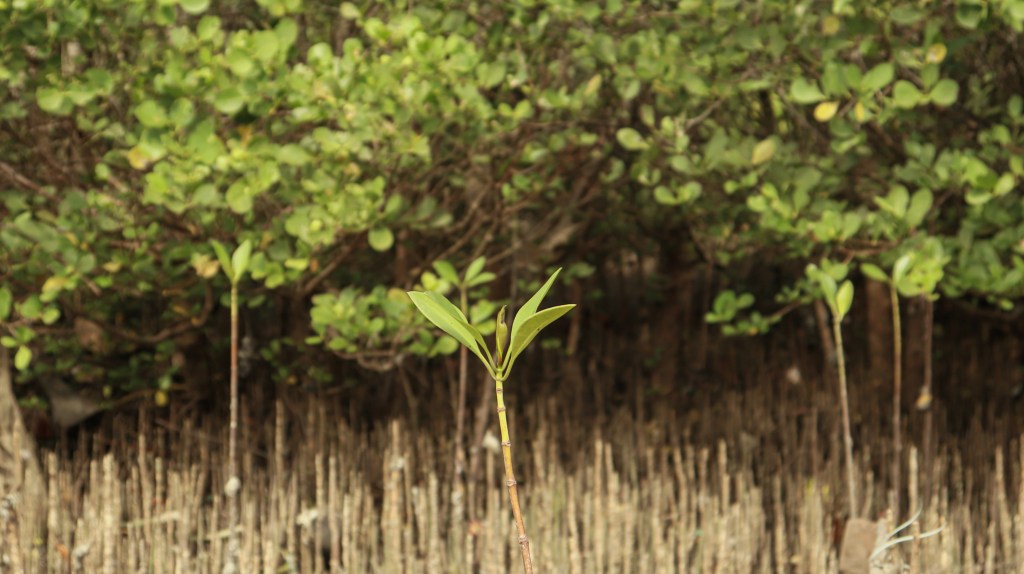
BAMARAI’s operations begin long before the trees reach the shoreline. Members walk through sticky tidal flats, scanning for white-tipped propagules still attached to their parent trees. “When you start to see the white part here, you can already plant it,” Casabuena explains. Sometimes they leave the seeds on the side of the mangrove area for a few weeks, allowing nature to take its course. “Even if you just leave it here, after a few weeks it’s alive again.”
It’s a process passed down through experience and refined by time. Once collected, the propagules are either sold immediately or transferred to pots. The group prefers to pot them first, as that increases their value from five pesos to fifteen. “To make counting easier, we group them by tens. In a sack, there are 100 pieces,” she shares.
The group even tracks different varieties of mangroves they grow; bakawan (the most common), lapis-lapis (sold at three pesos), batag-batag, and the more delicate miyapi, which they now plan less frequently due to the intense heat during potting season. They also started experimenting with talisay trees, though the demands are low.
The Role of Mangroves in Coastal and Climate Protection
Mangroves serve as nature’s defense against coastal erosion and storm surges, shielding vulnerable communities from typhoons and rising sea levels. These trees also provide a safe haven for marine biodiversity, acting as shelters for fish and other aquatic species that sustain local fisheries.
For Francisco Borabo, 48, BAMARAI’s former president and long-time mangrove caretaker, the forests they’ve built aren’t just for show, they’re lifelines. “The mangroves help a lot,” Francisco said. “When there’s a storm they provide protection, The water can’t easily reach the houses,” he added.
The mangroves slow down storm surges, hold the soil together during typhoons, and give crabs, shrimps, and fish a safe place to live. Without them, the village would be frighteningly exposed to the sea. And then there’s the invisible help: mangroves pull carbon dioxide from the air, fighting climate change quietly, day after day. In a warming world, these humble trees are unsung heroes. “It’s not just for us, but also for the children because this will help them a lot in the future,” Borabo added, thinking of the children who will someday inherit Bariw’s shores.
Phil V. Morano, biology professor at Bicol University, emphasizes the critical role of mangroves in coastal ecosystems, both environmentally and economically. He explained that mangrove species such as Rhizopra and Avicennia possess specialized roots, stilt roots and pneumatophores, that not only anchor the soil but also filter pollutants and sediments before they can damage coral reefs or seagrass beds. “They’re not just buffers against storms,’ he said. “They’re living systems that clean water, store carbon, and support fisheries.”
Mangroves also serve as nurseries for marine life, providing breeding ground for fish, crustaceans, and mollusks, many of which are economically important to local communities. Beyond the shore, their presence helps stabilize local fisheries and ensures food security. According to Morano, mangroves are also powerful carbon sinks, absorbing large quantities of atmospheric CO2, and helping mitigate climate change.
Despite these benefits, mangroves are disappearing at an alarming rate due to logging, pollution, and land conversion for development. The loss of these forests not only weakens coastline resilience but also disrupts marine ecosystems and the livelihoods that depend on them. Prof stressed the importance of planting only native species during rehabilitation, warning that non-native varieties can upset the ecological balance.
A Community-Led Conservation Initiative
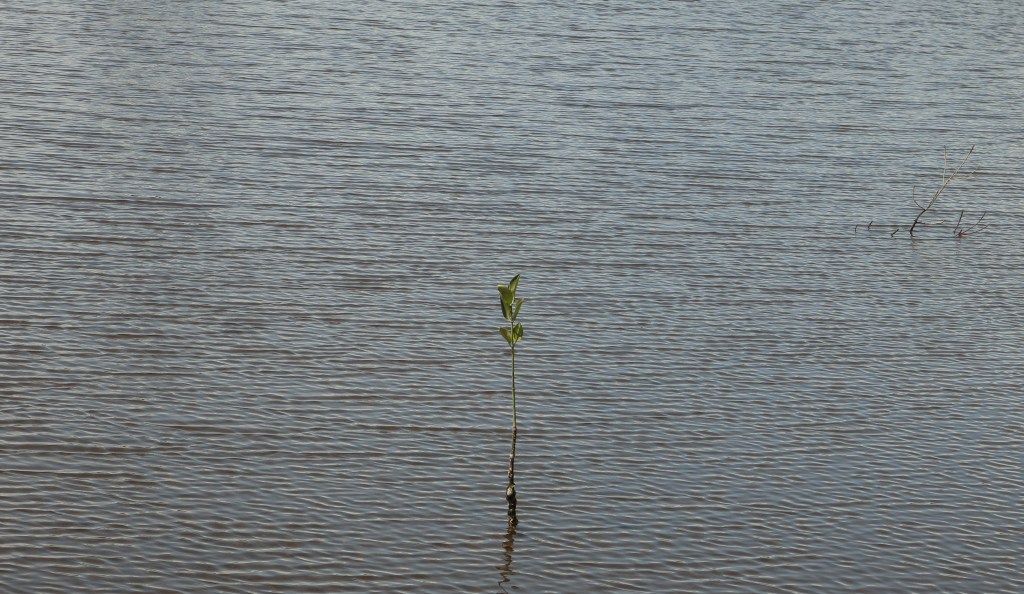
Established under the guidance of the DENR, BAMARAI suns with a simple but sustainable structure. Earnings are shared fairly: ten percent of every sale goes into a bank book for group expenses like transportation, paperwork, emergencies, while the rest is divided among active members.
“They always remind us to set aside 10% for the bankbook,” Casabuena says. “That’s needed for when we go out to handle paperworks or for transportation.” While the DENR does not provide direct funding, it offers technical support and logistical assistance when needed. “When we have problems, they help us. They lend us what we need first, then we just pay later,” she explains.
Still, challenges arise. Some members focus only on planting but skip the potting work, leading to small tensions. There are seasons when buyers are few, and seedlings sit waiting too long. “Right now, there aren’t many buyers,” Casabuena admitted, a flicker of worry passing over her face.
But the group holds together, supporting one another through every setback. Through careful management, the community harvests mangrove wood and other byproducts without compromising the well being of our ecosystem. These efforts not only improve the economic conditions of local families but also encourage long term participation in conservation. By showing them that protecting the environment can be financially beneficial, the initiative ensures that more residents are invested in the continued success of the mangrove rehabilitation program.
A Bold Vision
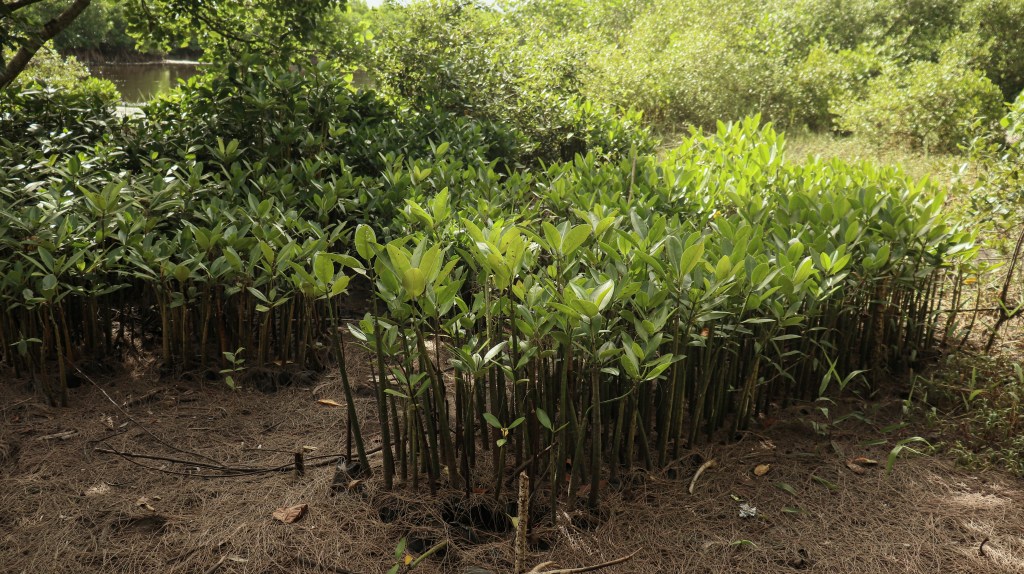
The success of Bariw, Malinao’s mangrove rehabilitation efforts serves as an inspiring model for other coastal communities facing similar environmental challenges. By integrating conservation with sustainable livelihoods, they have shown that economic survival does not have to come at the expense of nature.
With encouragement from the DENR, they have set their sights high: planting 50,000 bakawan mangroves over the next five years. It’s a bold goal and they know it won’t be easy. The work
is tiring, the sun is merciless, and the support from buyers isn’t always guaranteed. They started working on their goal last year and Casabuena admitted that it was not easy at all. Despite the challenges being faced, quitting was never an option. And they are not alone. Whenever they encounter problems, whether it’s a lack of seedlings, pests killing young trees, or trouble moving materials, DENR officers are just a phone call away, ready to lend support or arrange a loan to keep the work going. “They’re really supportive when it comes to our problems. They don’t leave us behind as long as we speak up, they help us solve the problem right away,” Casabuena said.
In an interview, Pearl Kathryn Rasco, Community Development Officer of PENRO Albay, emphasized the importance of this collaboration. “Our efforts, our programs would not be possible without the participation and support of our stakeholders. So as long as they recognize and actively support our endeavors, there will be continuity when it comes to these programs and activities.”
A Legacy that Grows
Their efforts are also protected under Presidential Decree No. 705, or the Revised Forestry Code of the Philippines, which classifies mangroves as forestlands and encourages their protection and rehabilitation. BAMARAI strictly abides by this, together with the DENR. They never cut or sell mature trees, only collect and propagate fallen seeds. For every tree that dies naturally, they plant several more in its place.
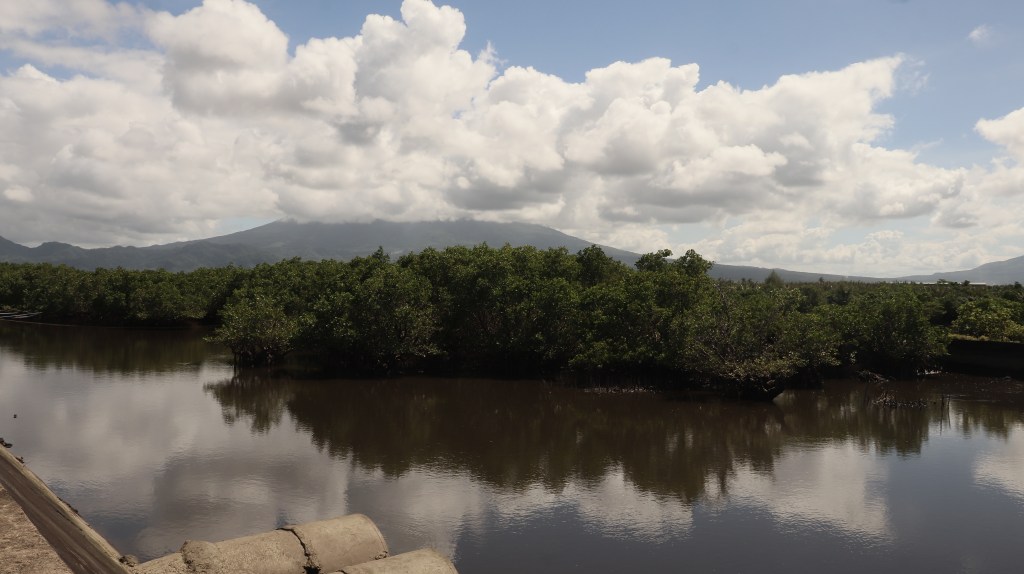
Today the mangrove forest in Bariw stretches farther than it did twenty years ago. “This wasn’t this big before,” Francisco recalls. “It grew because we protected it and stopped cutting down trees.”
As climate change continues to threaten vulnerable coastal areas, initiatives like this prove that local action can make a difference. By restoring their mangrove forest, the people of Bariw are not only protecting their shores, they are also securing a future where both their environment and community can thrive.
 Bicol Daily News
Leave a comment