By: Zamantha O. Bilan, Julievive Bodino, and Hannah Franchezka B. Boragay

In the shadow of the majestic Mayon Volcano, its biodiversity is a ticking time bomb waiting to be ignited that could forever alter the region’s fragile ecological balance.
For Jeffrey Jaymes Mesias, a passionate bird watcher and biologist based in Albay, the issue of lighting the Mayon Volcano was crystal clear, it was a moment that would set off a chain reaction of alarm and outrage.
“It’s a domino effect,” he warned, his voice laced with concern.
On March 21, a bold new plan was suggested for the transformation of Mayon Volcano’s nighttime landscape through artificial illumination.
The estimated P1.3 billion plan sought to bathe the iconic volcano in spotlights, enhancing its nocturnal visibility and luring more tourists to the region.
Mayon is a vital ecological habitat, home to a diverse array of flora and fauna, and any disruption could have severe consequences on all its dependent species.
He highlighted that if this project pushes through, migratory species like the barn swallow (Hirundo tahitica), the Giant Golden-Crowned Flying Fox (Acerodon jubatus), and the Large Flying Fox (Pteropus vampyrus), a bat species considered vulnerable due to habitat loss and other threats, will face forever extinction, resulting in a significant loss to the Bicol Region’s biodiversity.
According to Mesias, the proposed artificial lighting on Mayon, although it may have a minimal impact on humans, will significantly affect species, especially nocturnal ones.
This will disrupt their patterns, as they rely on nighttime to forage for food, such as insectivores and carnivores like owls and eagles.
Their eating habits and ecological functions will be affected, especially for insectivores, including bats, “kalamidong” in Bicol.
“Their diet consists mainly of insects, so when lighting is installed, insects are attracted to the lights, such as post lights.” Mesias said.
He also stated that this would impact nocturnal species, leading to food scarcity, and that since insects are scattered and attracted to light sources, nocturnal species would struggle to find food.
According to Mesias, the proposed artificial lighting on Mayon, although it may have a minimal impact on humans, will significantly affect species, especially nocturnal ones.
This will disrupt their patterns, as they rely on nighttime to forage for food, such as insectivores and carnivores like owls and eagles.
Their eating habits and ecological functions will be affected, especially for insectivores, including bats, “kalamidong” in Bicol.
“Their diet consists mainly of insects, so when lighting is installed, insects are attracted to the lights, such as post lights.” Mesias said.
He also stated that this would impact nocturnal species, leading to food scarcity, and that since insects are scattered and attracted to light sources, nocturnal species would struggle to find food.
“In the long run, installing lighting, even for just 10-15 minutes, will significantly impact local wildlife, especially nocturnal species. This scarcity will affect their health, and continuous exposure to this factor will lead to population decline.” – Mesias warned, his voice laced with concern.
Another significant impact of artificial lighting is the disruption of forging and daytime/nighttime mechanisms in species for this will also affect breeding behavior, especially for nocturnal species that are active at night for this will disrupt their body clocks, affecting breeding rituals and mechanisms.
For instance, bats in areas with existing artificial lighting have disrupted daytime and nighttime mechanisms, making it difficult for them to find a mate to breed.
“Like bats, they’re (the Golden Fox species) also nocturnal foragers, so they’ll be affected too. The impact is almost the same, whether it’s bats or birds – their foraging and breeding behavior will be disrupted. Additionally, if there’s a scarcity of food due to lighting, their population will decline.” Mesias said.

Similarly, artificial lighting can affect birds, mammals, and mice, disrupting their ecological behavior.
“Even migratory birds, like the barn swallow, are affected. These birds migrate from the northern hemisphere to warmer regions due to food scarcity. However, when they encounter artificial lighting in cities, their behavior is disrupted, as they are accustomed to dark areas.” Mesias said.
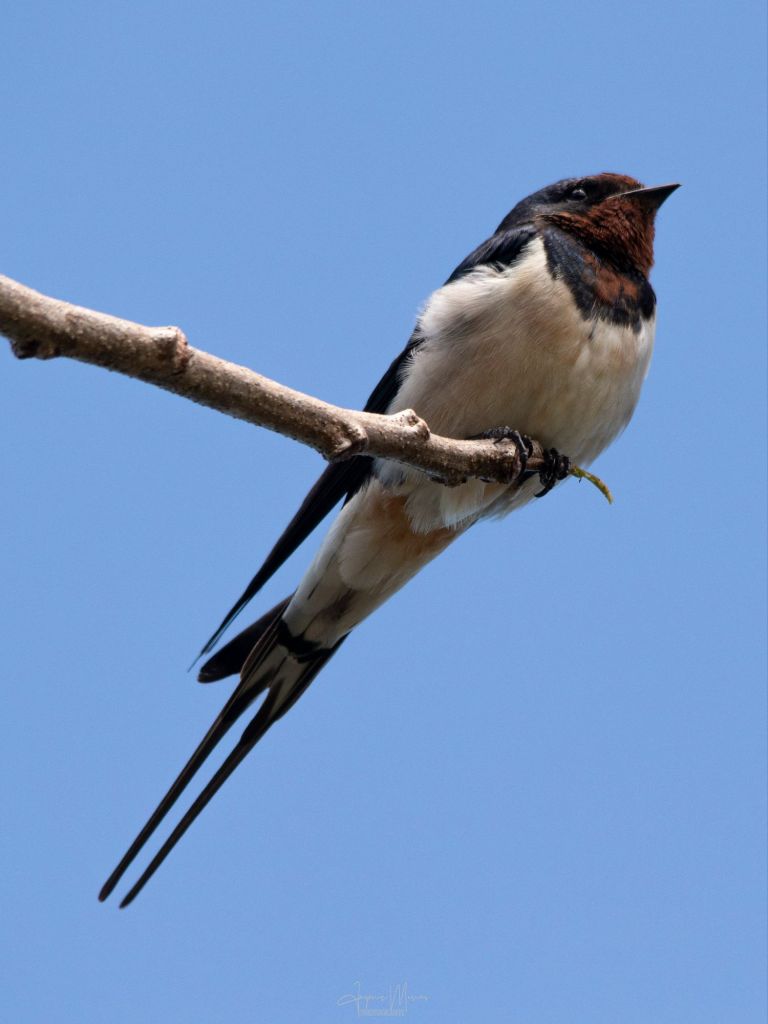
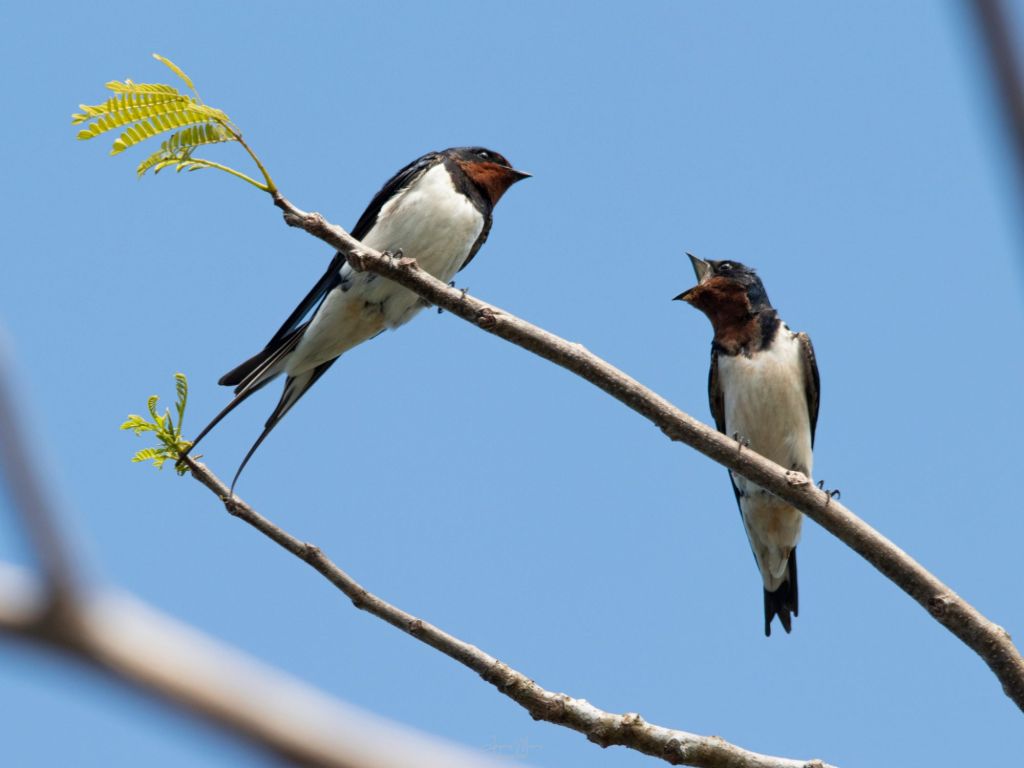
Birds and bats play a major role in pest control, regulating insect populations to prevent them from reaching levels considered pests.
When the population of predators that consume insects declines, the insect population may boost, potentially becoming a pest.
This can impact agricultural sectors because if the insect population increases in agricultural lands, it will lead to food scarcity for humans, causing a decline in agricultural supply and increased prices, plunging the Bicol Region into economic turmoil.
Project Lights Out
The ambitious proposed P1.3 billion project to illuminate Mayon Volcano at night with spotlights met with swift backlash from environmentalists, local government officials, and the public.
Amid public backlash and concern, the Tourism Infrastructure and Enterprise Zone Authority (TIEZA) has officially scrapped the procurement process of the 500 million peso-worth Mayon Volcano Heritage Aesthetic Lighting at Albay Under Design and Build Scheme on March 25.
In the statement released by TIEZA, signed by Atty. Niño Ruperto Aquino, chairperson of the Bids and Awards Committee, called off the project due to ‘some issues from concerned stakeholders and government agencies and the need to obtain full stakeholder acceptability.’
Based on the statement, the termination of the proposed project was in accordance with Section 41c. i. of the Revised Implementing Rules and Regulations (IRR) of Republic Act (RA) No. 9184, otherwise known as the Government Procurement Reform Act, where the Head of the Procuring Entity (HOPE) may decide to reject bids if ‘significant changes’ occurred during the project development that would make it infeasible to push through.
The cancellation also renders the bid evaluation of the sole bidder, a joint venture between Amigo Entertainment Technologies, Inc. and BF Corporation, null and void.
The agency stressed the need to secure public backing and comply with regulatory requirements before embarking on large-scale infrastructure projects.
Similar to the opposition faced in 2019, this contentious issue sparked widespread fierce resistance on March 23 when there was an unannounced public hearing about the lighting of Mayon Volcano in the covered court of Santo Domingo, Albay.
It was only discovered that there would be a public hearing about the lighting of Mayon Volcano when Jessica Noelle Wong, president of the Association of Accredited Travel Agencies in Bicol, posted about it on Facebook.
In her post, Wong expressed her vehement disposition on this pressing issue, stating that ‘tourism stakeholders are kept in the dark’ because her organization was not formally informed about the meeting and only learned about it through a group chat.
Meanwhile, Dorothy Colle, head of the Provincial Tourism, Culture, and Arts Office, expressed opposition to the Mayon Volcano Heritage Aesthetic Lighting project, stating that it was not part of their management plan for the volcano.
She warned that proceeding with the project could lead to Albay’s removal from the UNESCO Man and Biosphere (MAB) program, which would be a significant loss for both the province and the Philippines, given the resources already invested.
According to Colle, there are only four (4) LGUs in the Philippines included in the UNESCO Man and the Biosphere Reserve (MAB) program, and Albay is proud to be the third LGU inscribed in March 2016, so being delisted is really a great loss in Albay.
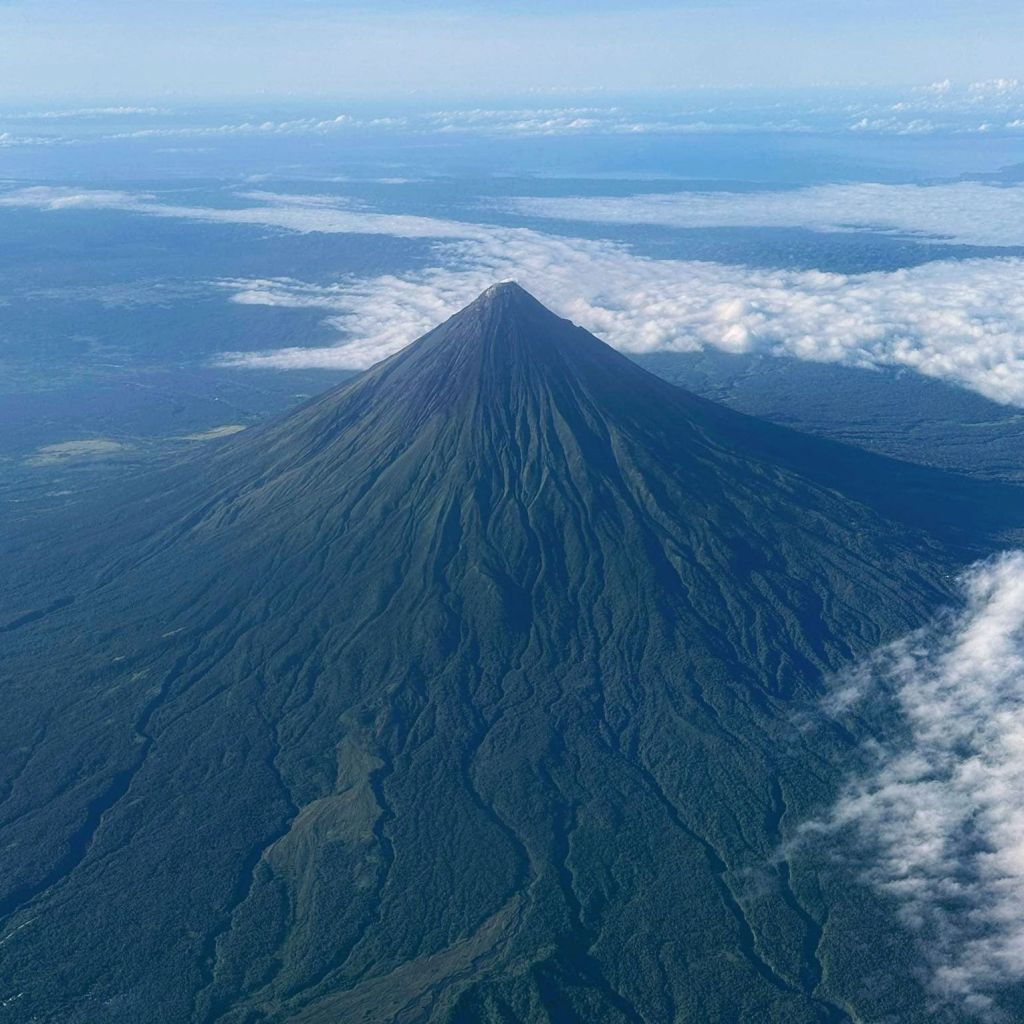
The Provincial Government of Albay has also criticized the TIEZA for the Mayon Volcano Heritage Aesthetic Lighting project because this feasibility study has not considered the declaration of Albay as a UNESCO Biosphere Reserve and its ongoing nomination to the UNESCO World Heritage List as Mayon Volcano Cultural Landscape.
Albay Province’s Governor Glenda Ong Bongao issued a statement urging TIEZA to stop the Mayon lighting project, citing that it would harm the conservation efforts of the Albay Biosphere Reserve and was not included in the management plans submitted to UNESCO and the DENR.
The project also threatens to marred the natural beauty of Mayon Volcano, which is a significant part of Filipino national heritage and spirituality.


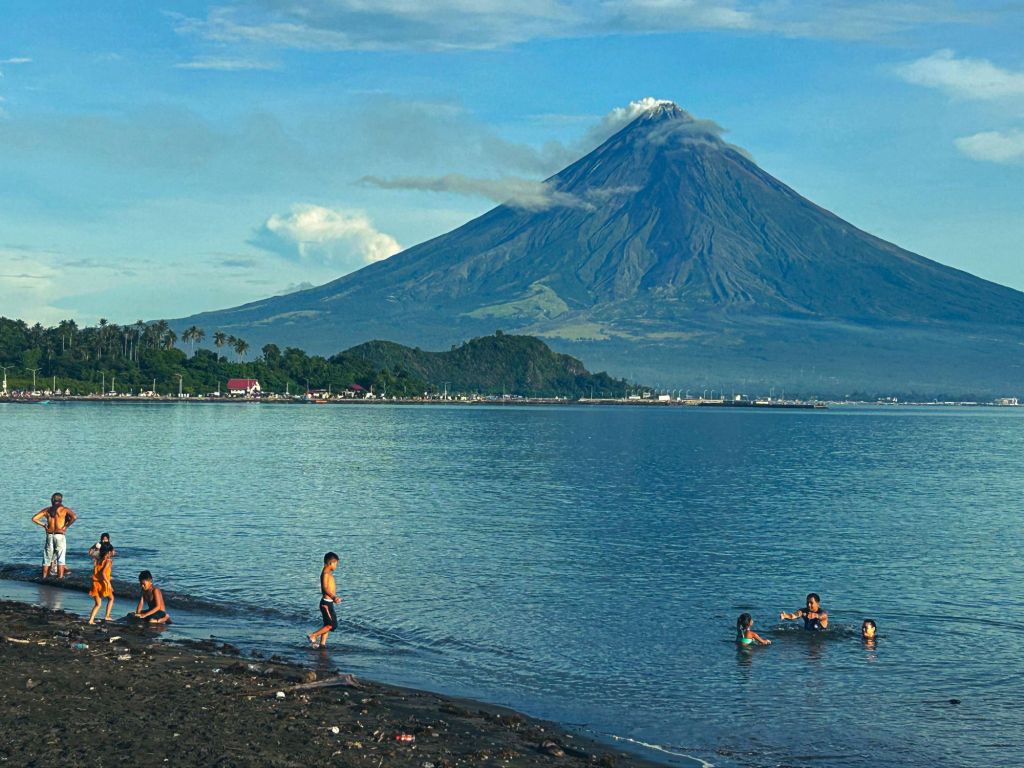
The Provincial Government of Albay believes that the same objective can be achieved with the successful designation of Mayon Volcano as a UNESCO World Heritage Site.
Ecological Risk
Local officials also stressed their opinion that the planned project will drastically wreak havoc on the biodiversity landscape.
Colle emphasized that the Mayon Volcano lighting project could impact biodiversity—particularly nocturnal wildlife—causing stress and even death to animals under the care of the Albay Biosphere Reserve Program.
Voice clouded with dismay, Fernando Fajardo III, a Special Science Teacher 1 in Senior High School at Tabaco National High School, and a licensed Agricultural and Biosystems Engineer, also argue on this disturbing issue.
According to Fajardo, all nocturnal animals follow a natural migration, feeding, and reproduction patterns based on lighting conditions and adding artificial lighting will disturb these natural behaviors and significantly confuse and disorient these animals leading to lower reproduction rate. This can cause a decrease in population or even extinction.
“All nocturnal animals will be disturbed, confused and disoriented by artificial lighting, leading to lower reproduction rates, decreased population, or even extinction.” Fajardo said in distress.
He said that animals have already adapted to their environment so any abrupt changes will most definitely have an impact on their behavior.
Light Pollution Alert
Apart from fauna, Fajardo also emphasizes that the artificial lighting of Mayon Volcano could greatly affect the growth and development of plant species in the Mayon Volcano area, particularly those that are endemic or endangered.
He highlighted that while artificial lighting can supplement light sources for plants necessary for photosynthesis, it can cause disruptions to the plants natural growth patterns.
“These have impacts over the plant’s stem length, leaf color, and leaf size as plants have the natural tendency to react to light sources, wavelengths and intensity. These impacts may even have a greater effect on endemic species of plants as these plants have already adapted to the local conditions and drastic changes can put stress on them.” Fajardo said.
He also said that the light pollution could disrupt the natural pollination process of plants in the area, potentially affecting plant reproduction.
“Like plants, pollinators also react with light sources. Nocturnal pollinators such as moths and bats may be disoriented by artificial lighting (since natural lighting has been disturbed) leading to decreased efficiency and poor reproduction of plants.” he added.
Biodiversity Profile
According to the United Nations Educational, Scientific and Cultural Organization (UNESCO), Mayon Volcano is home to 156 floral species belonging to 36 families and 83 species of trees, including the single dipterocarp found in the area, locally known as baguatsa or gisok-gisok (Hopea philippinensis); and one near-threatened species from the rare family Nepentheceae, the pitcher plant.
The park is a canvas of a stunning and vibrant botanical garden of 71 woody species belonging to 49 genera and 33 families— about 32 percent of these species are endemic, while others are indigenous.
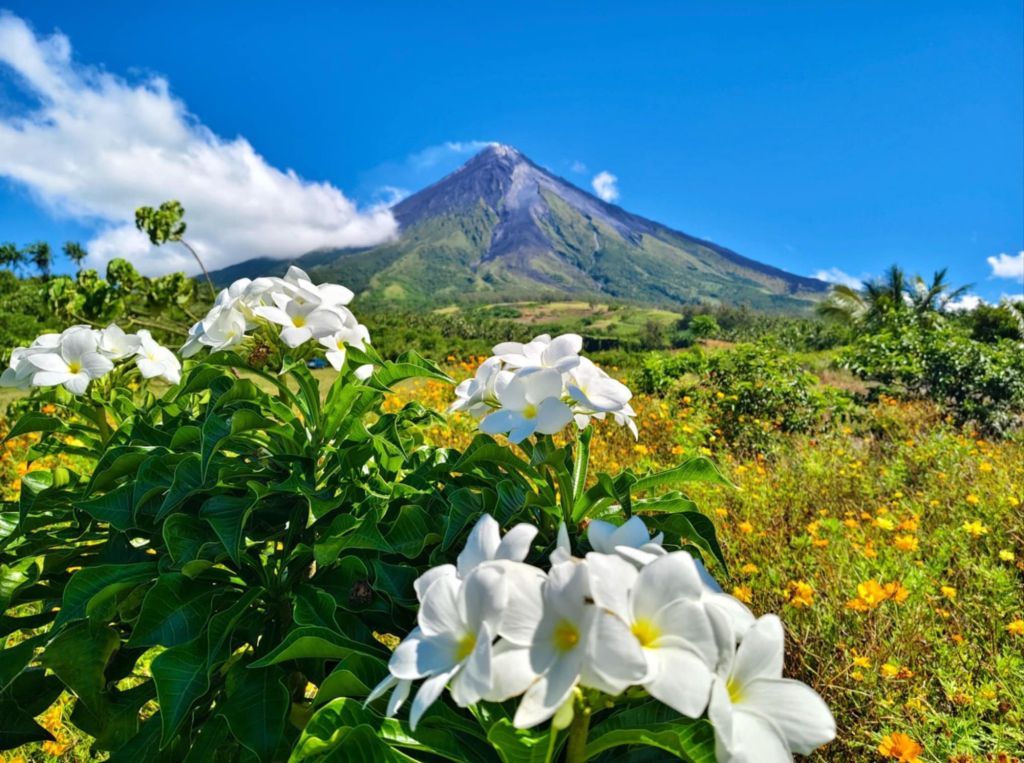
It is also a habitat for 104 species of land vertebrates, including 57 species of birds, 10 species of amphibians, 24 species of reptiles and 13 species of mammals.
Seven of the thirteen mammal species are endemic, and three of them—the giant golden-crowned flying fox, Philippine brown deer, and Philippine warty pig—are classified as vulnerable.
Furthermore, the bird fauna found in the Mayon Volcano includes 37 endemic species with three species listed on the International Union for Conservation of Nature (IUCN) red list: the nearly threatened Luzon bleeding heart, vulnerable Philippine eagle-owl and the critically endangered Philippine cockatoo.
The 10 amphibian fauna are all endemic frog species with four listed in the IUCN red list: the nearly threatened Luzon fanged frog, Luzon forest ground frog and Guenther’s forest frog, and the vulnerable banded pygmy tree frog.
The volcano also houses endemic butterflies, stick insects, and spiders in the registered insect and arachnid fauna and these endemic species were found nowhere else in the world.
No doubt that the artificial illumination of Mayon Volcano could have serious ecological repercussions for these delicate species, especially due to behavioral disruption, habitat avoidance, prey base alteration, breeding interference, and light-induced habitat fragmentation.
“These impacts are particularly dangerous because such species often have limited ranges, low population sizes, and high sensitivity to environmental disturbances—including artificial light.” Fajardo stated.
Lightings’ Environmental Toll
Going back to Mesias’ point, the repercussions of artificial lighting on Mayon Volcano’s bird species can have far-reaching effects.
As mentioned earlier, some bird species serve as pollinators, contributing to seed dispersal and the global carbon cycle.
Some bird species, like garden sunbirds and sunbirds, serve as pollinators, transferring pollen between flowers as they feed on nectar, which facilitates pollination and enables plants to produce fruit, especially fruit-bearing trees.
Moreover, birds also contribute to seed dispersal, particularly fruit-eating birds, such as common urban birds like yellow-vented bulbuls, red-keeled flowerpecker, and Asian glossy starlings, which are abundant in Albay and function as seed dispersers for fruit-bearing plants and trees.
Hence, if these birds migrate from other places, the ecosystem in which they live will be imbalanced, leading to the decreased growth of fruit-bearing trees, plants and shrubs that helps in maintaining healthy biodiversity.
Note that trees and plants produce oxygen through photosynthesis, which is necessary in all living things, it also absorbs carbon dioxide, a greenhouse gas, from the atmosphere, helping to mitigate climate change.
Additionally, trees and plants play a crucial role in regulating the water cycle, with their roots absorbing water and releasing it back into the atmosphere through transpiration.
Furthermore, it regulates local climates by providing shade, reducing noise pollution, helps to purify air and lastly, conserves biodiversity.
The far-reaching consequences of this disturbing issue will have a devastating impact on ecosystems, leading to irreparable harm to flora and fauna and substantially contributing to disruptions in the global carbon cycle, exacerbating climate change.
These are the ripple effects of the proposed project. In the eagerness to boost tourism, with the intention of promoting betterment, little did we know that this would lead to a colossal predicament.
“Some people think the impact of artificial lighting is minimal, but in the long run, we’ll see the effects. It’s not just about the initial impact, but the long-term consequences.”
Jeffrey Jaymes Mesias
The Call for sustainable tourism
Although the lighting project has been officially terminated, the battle for Mayon’s preservation is far from over, sparking a renewed call from local communities, environmentalists, and advocates for a shift toward sustainable tourism practices that protect rather than exploit natural heritage.
For many, the controversy served as a wake-up call: the need to reimagine tourism not as an industry driven by spectacle, but as a movement rooted in respect, education, and ecological stewardship.
“The very reason why tourists flock to Mayon Volcano is because of its natural beauty. We don’t need any lighting to accentuate its curves.” Joey Brecia, a 19-year-old resident of Buang, Tabaco City, voiced his concerns over the proposed plan.
He also expressed skepticism about the effectiveness of lighting in attracting tourists, citing Dolomite Beach as an example where initial curiosity eventually led to desertion, outweighing any potential benefits to tourism.
Moreover, he believes that, aside from flora and fauna, this flawed strategy will have a colossal impact on the livelihoods of farmers who plant at the foothills of Mayon Volcano.
“They can be affected because the sites where the planned lighting project will be installed could be sources of livelihood for them, such as plants, animal habitats, etc. It’s also possible that even their homes will be affected.” Brecia added.
This was seconded by Arianne Joy Bornasal, 21, a resident of Oson, Tabaco City, as she expressed her sentiments about this pressing issue, emphasizing that the allure of Mayon Volcano lies not in artificial lights but in its raw, natural beauty.
Furthermore, she encourages the government to just focus on sustainable tourism practices that prioritize environmental conservation and community engagement, ensuring that Mayon’s splendor endures for generations to come.
She believed that Mayon’s natural beauty was enough to attract tourists, making the lighting unnecessary. Instead, she suggested focusing on reforestation, maintaining cleanliness, and improving roads to enhance the area’s beauty.
“If they want to enhance its beauty, they should focus on reforestation, especially in barren areas; maintaining cleanliness; and improving roads leading to the skyline or other spots,” Bornasal stated.
With a tinge of frustration, she also voiced her stance, lamenting that local projects were notoriously plagued by inconsistency, lack of sustainability, and reckless wasting of funds that could be better allocated elsewhere.
“As someone who came from a family of farmers, I don’t see the point. Artificial lights will disrupt the natural ecosystem, which is our source of livelihood,” she added.
There’s a developing assumption that tourism does not have to be at nature’s expense, and instead, a different approach can be taken, one that is based on slow travel, subdued appreciation, and authentic relationships with local people, incorporating methods such as eco-tourism, community-based initiatives, led treks, and storytelling to promote Mayon without harming it.
At its heart, this movement is not about plans or policies, but rather about love—for place, for heritage, for the earth—and serves as a reminder that sometimes, the best way to honor something truly beautiful is to leave it just as it is.
 Bicol Daily News
Leave a comment