By: Jerna Marie Alzaga, Daisy Azores, and Christine Mae Daseco
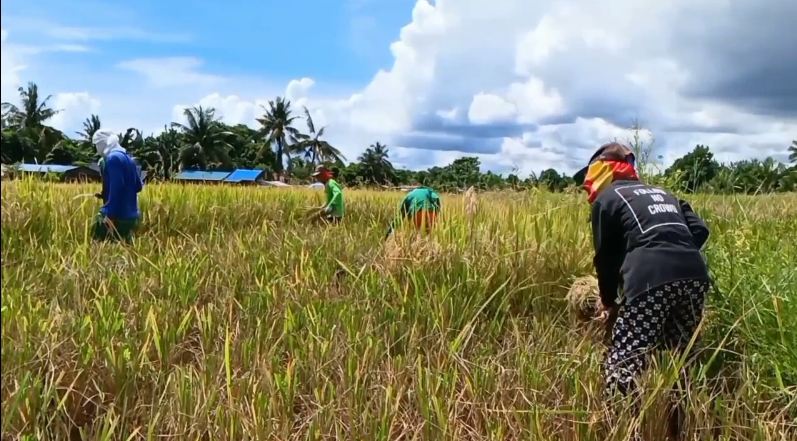
Farmers working together to bring us this essential staple. | via Jerna Marie Alzaga
In the fertile agricultural fields of Legazpi City, Albay, rice cultivation previously thrived with quantity and quality. But the worsening climate crisis has upended this, retelling the narrative from abundance to survival.
In the Legazpi, irregular rainfall, prolonged droughts, and increasingly frequent typhoons have created erratic growing conditions, leaving even historically robust rice varieties vulnerable to pests, diseases, and poor grain formation.
Diego Bañega, a 60-year-old farmer with 40 years of experience in rice farming, is one of those affected. “You have to cut your irrigation so that your rice doesn’t get soggy. You have to fix the irrigation system, reduce the irrigation input,” he said. “There’s nothing you can do, you can’t control the rainy season,” he added.
As a result, his rice harvest has been almost halved compared to previous years. Not only is the quantity of the harvest affected, but also the quality. Due to irregular rainfall, rice does not grow well, resulting in a weaker product that is not very desirable.
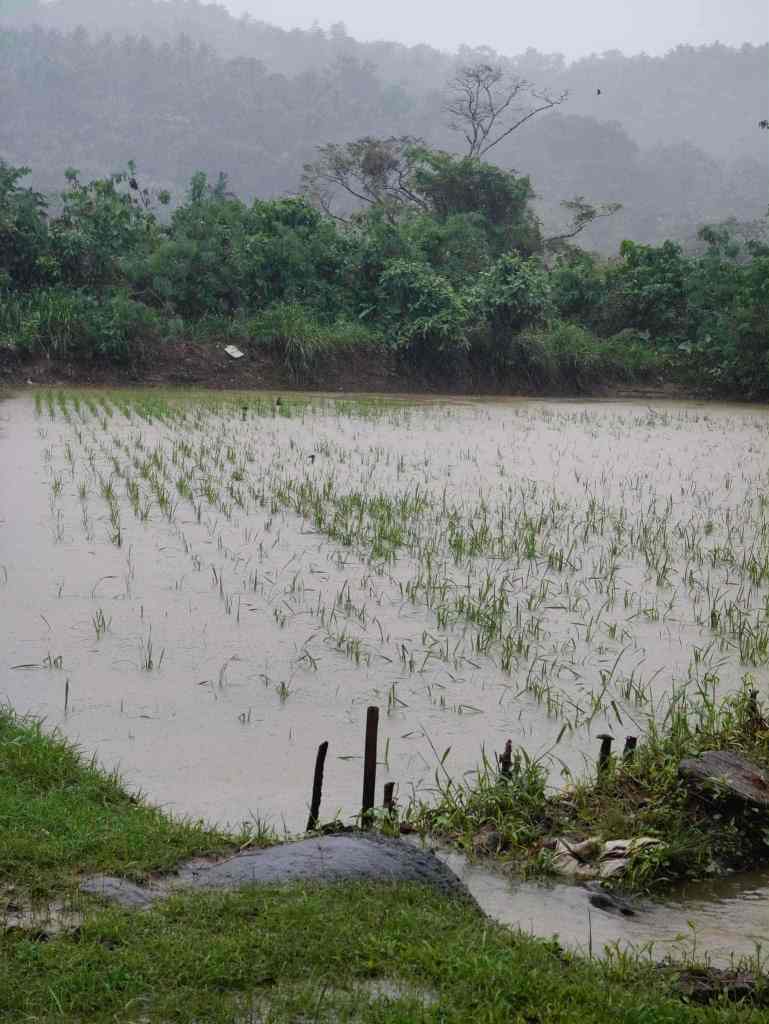
Local rice farmers in Legazpi are facing an uncertain harvest season due to unpredictable weather patterns. Recent rains have threatened their crops, affecting the vulnerability of this vital industry. | via Daisy Azores
Farmers are really grappling with the impact of erratic weather patterns, escalating costs, and concerns about rice quality, significantly affecting their harvests.
Rice is a staple food for millions of people, it’s more than just a food–it’s a lifeline. Rice has become a tool for the livelihood of many families that support their everyday lives as time passes by. Standing and planting palay under the heat of the sun, and sometimes challenges the farmers by the unpredictable weather, the production of rice changes over time. While this phenomenon has happened, climate change has evidently arisen especially in the past years.
Climate change is intensifying the already difficult task of palay cultivation, forcing farmers to contend with increasingly unpredictable and devastating weather.
At the age of 69, Alfredo Esplana is no stranger to rice farming— but climate change has forced him into unfamiliar territory,”Overwatering can lead to rotting, while insufficient watering during dry spells reduces yield,” he explained.
He also noted a decline in the quality of his rice due to the inconsistent weather. “The grains aren’t as full as they used to be and the overall quality is lower,” he said.
The intense heat of the dry season makes water management more complex. On top of that, the quality of his rice has noticeably declined. “The grains aren’t as full as they used to be,” Esplana said, noting the market value has dropped accordingly.
The National Food Authority headed by Julie Llenaresas, an Acting Regional Manager in Bicol, acknowledges the challenges faced by farmers, particularly the El Niño and La Niña events. According to Shiela Nas, Head of the City Agriculture in Legazpi, “El Niño brings drought, while La Niña brings flooding.” With this, not just the planting process threatened the livelihood of the farmers but their whole life also.
According to Llenaresas, they need to increase their buying price of the palay so that the farmers will be encouraged to deliver their produce to the NFA. But as to high production, if the farmers are enjoying better return of their investments they will also be encouraged to produce so for this, they will have a high production. For her, it’s a cycle both the farmers and NFA enjoy a better income in rice production.
National Food Authority headed by Julie Llenaresas, an Acting Regional Manager in Bicol, acknowledges the challenges faced by farmers.
On the other hand, according to Nas, the buying price of palay indeed depends on various costs including labor, seeds, fertilizer, pesticides, and water. If these inputs are high, the buying price must also be high to ensure farmers don’t incur losses. The buying price is computed based on these inputs, and its impact is significant. High inputs result in higher buying prices to prevent losses, which would discourage farmers from planting palay.
The selling price of rice is also influenced by the buying price of palay. A higher buying price for palay results in a higher selling price for rice. Interestingly, the selling price of rice needs to be at least double the buying price of palay. For instance, if palay is bought for P20, it should be sold for at least P40 after milling, considering that only 60-65% of palay becomes rice, while the rest is referred to as “ata-ata” or rice bran. This means that from two kilograms of palay, only one kilogram of rice is produced.

The constant battle of local farmers in rice farming is the unpredictable weather. | via Daisy Azores
A Farmer’s reality
Beyond all the challenges being faced by the farmers due to climate change, there are still some instances where they almost lost hope to experience a successful life, from planting palay to waiting for almost four months to harvest and sell it at a very low price is something that needs to be addressed. It took them more than a week to plant and more or less four months to wait to harvest the palay yet they received less opportunity and help from the government.
Diego Bañega, a farmer, shared that they sometimes receive help from the government such as seeds and fertilizers but as of now, they still haven’t received any of this help that was expected to arrive this month.
“There were times when they would give us seeds and fertilizers. But they said that next month, they will give some to the farmers, but until now, nothing has been given yet.” he said.
Behind every sack of palay lies a farmers’ story– battling from unpredictable weather conditions and family depending on a stable harvest. Climate change is indeed one of the major factors that continue challenging every farmer. They almost lost the planted palay, especially in times of severe drought and rain, but the most heartbreaking is that they also lost the money they invested in planting and it is very evident this year.
“Almost half of my rice harvest is lost. Of course, when it’s excessive and lacking in some months, like now, my harvest used to be 36, but now it’s down to 20 because of too much rainwater causing tungro disease,” Bañega said.
Farmers like Bañega hopes for a better harvest in the next planting season, but he was also hopeful to receive the help they always needed from the government.
“They need to properly implement the programs they’ve come up with, that’s all”
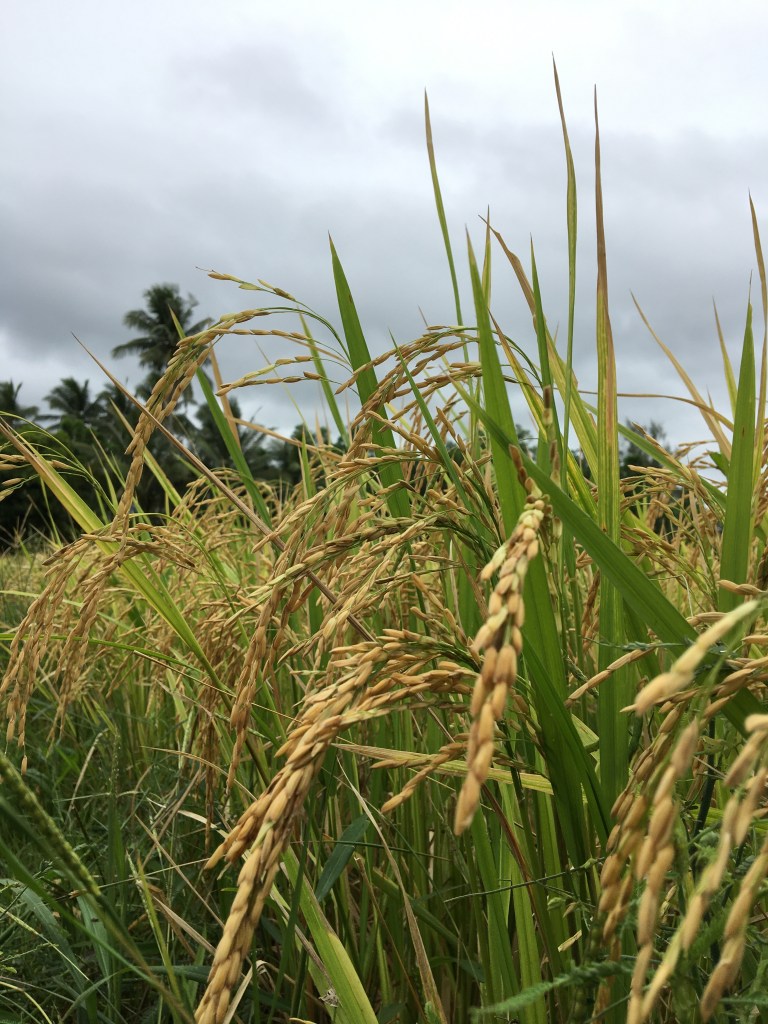
Abundant rice grains in Legazpi, Albay ready for harvest. | Daisy Azores
Consumers Called to Action as Climate Change Hits Food Security
The escalating prices of goods especially on rice are a stark reminder of the far-reaching effects of climate change. Nicanor Arienda, a resident of Bigaa, Legazpi City, clearly shows this reality: “So even if prices are so high, let us seriously take into consideration the various factors why there is a price increase, whether in the local market or directly to farmers.” His view of climate change was a reminder of the very personal impacts that climate change has on the daily existence of all of us.
Sometimes there are consumers who think that “sabala” is an alternative way for them to buy rice cheaply, but unfortunately this system sadly harms farmers, and it’s heartbreaking to see farmers losing more money because instead of buying their rice from ₱2,200-₱2,500 per sack it has dropped to ₱1,200-₱1,500, which is a huge loss for them. Consumers might think they’re saving money, but in the end, it’s the farmers who ultimately bear the cost. This unfair system needs to be discussed and addressed. We need to find a solution.
Bañega said, “What they call “sabala” is when you borrow money using your harvest as collateral. For example, if you need to buy a sack of rice, you’ll only get around ₱1,200 to ₱1,500, depending on who you borrow from, and you’ll pay them back with a sack of rice.”
It’s a losing situation for the farmers. Instead of having money to buy more rice for planting during the amihan season, they will use their harvest to pay for the money they borrowed from the lender as collateral which is the original price of sack of rice ranging from ₱2,200 to ₱2,500 and has dropped to ₱1,200 to ₱1,500 per sack.
“It’s really difficult to rely on “sabala,” so if you can avoid it, don’t borrow money this way,” he added.
Bañega further explained, “The sabala is just an informal agreement among us about who we can approach when we need money. It’s not really a legal contract.” In this system, sabala is not a formal agreement but rather a traditional arrangement between farmers and a trusted individual or institution that can lend them money. They rely solely on trust and long-standing relationships between the parties.
Consumers like Nicanor are calling on others to limit haggling with farmers. He emphasizes the hard work and processes involved in producing rice, urging consumers to consider the difficulties farmers face.
“I believe we should not always haggle with our farmers over the prices of their produce. They rely on this for their livelihood just like we do. We should limit haggling in local markets, especially if the prices are excessively high and don’t align with government agency guidelines. We need to consider the processes involved in farming, understanding the factors that influence the price of goods, particularly rice. This will help us appreciate why prices might be high or low.” he said.
Consumers can play a vital role in mitigating these challenges in terms of supporting local farmers by purchasing their produce directly, fosters sustainable food systems and strengthens local economies. Furthermore, engaging with local officials to advocate for programs supporting farmers and promoting sustainable agricultural practices is crucial. By understanding the interconnectedness of consumer choices and the plight of farmers facing climate change, we can collectively work towards building a more resilient and sustainable future.
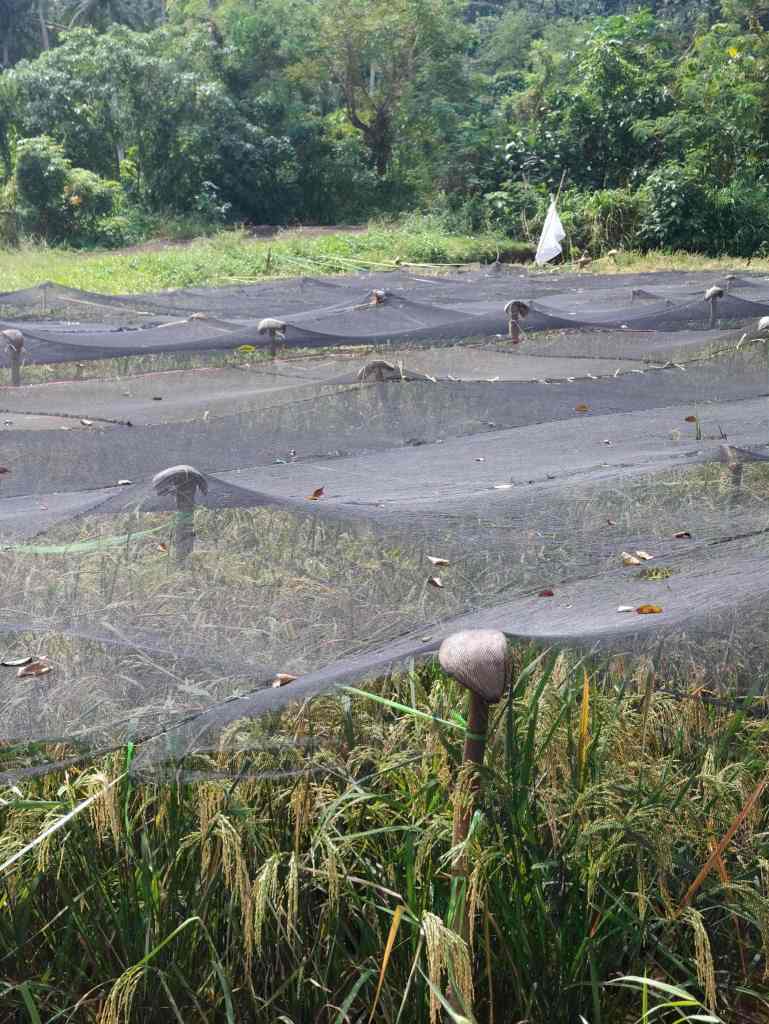
A protective net shields ripening rice from birds and pests. | via Jerna Marie Alzaga
Solutions and Moving Forward
Addressing the climate crisis and its impact on Bicol’s rice farmers requires a multifaceted approach. The Department of Agriculture is implementing programs such as training farmers in climate-resilient techniques, providing irrigation support, and enrolling farmers in Philippine Crop Insurance Program. However, these efforts need to be strengthened and expanded to reach a wider range of farmers. Investing in climate-resilient infrastructure, improving access to credit and insurance, and promoting sustainable farming practices are all essential elements of a comprehensive strategy. Furthermore, raising consumer awareness about the impact of their choices and encouraging responsible consumption patterns are crucial for building a more resilient and sustainable food system.
Government agencies in the Philippines, such as the Department of Agriculture (DA), Philippine Rice Research Institute (PhilRice), and National Food Authority (NFA), are implementing various programs to address climate change impacts on rice farming and production and several initiatives indirectly address the issue by boosting resilience and productivity.
In 2023, the DA’s National Rice Program (NRP) continues to provide to the farmers in focusing on increasing farm productivity and income by distributing high-quality seeds (both inbred and hybrid) across 1.8 million hectares of farmland in the Philippines. This includes providing P6.4M worth of seeds and offers fertilizer discounts through vouchers, aiming to ease the burden of high input costs. Additionally, the DA promotes the use of nitrogen-fixing biofertilizers to reduce fertilizer use and maintain yields.
The DA also aims for higher rice production under the MaSaGaNa Rice Industry Development Program, focusing on improved seeds, better fertilizer use, and efficient logistics. This program aims to increase productivity and farmer income, ultimately lowering consumer prices.
According to Sheila Nas, they are addressing climate change’s impact on farmers, mainly focusing on El Niño (drought) and La Niña (flooding). Their mitigation strategies include information dissemination. They conduct risk analyses, focus group discussions, and meetings to raise awareness about climate change and weather patterns. They provide training using technologies to help farmers cope with El Niño, such as planting drought-resistant varieties and root crops.
They advise using appropriate technologies and techniques. Irrigation Support by the LGU provides irrigation pumps where water sources are available, recognizing water’s crucial role in agriculture. They enroll farmers in the Philippine Crop Insurance program to provide financial assistance in case of disasters or infestations, helping to cover production costs.
They emphasize the importance of resilience through orientation and training, encouraging farmers to adapt to changing weather patterns. Promotes diversified farming (polyculture) instead of monoculture, encouraging the planting of various crops like rice and vegetables to reduce risks associated with drought or flooding.
“We advise planting drought-resistant crops during El Niño and lastly technical support, their technicians conduct regular training and provide on-the-ground support in different barangays. We utilize weather forecasting to help farmers prepare. They hold regular farmers’ classes and monthly meetings to reinforce these messages.” Nas explained.
With the collaborative efforts of PhilRice with the DA on rice mechanization, they provide farmers with tools like rice transplanters and combine harvesters to improve productivity and reduce labor costs. This indirectly helps farmers adapt to climate change by increasing efficiency.
The Rice Competitiveness Enhancement Fund (RCEF) established under the Rice Tariffication Law, allocates ₱10 billion to four programs, including seed development and distribution. This program aims to improve the quality and availability of inbred rice seeds, increasing the adoption of certified seeds. The RCEF also supports farmer organizations involved in seed production and trade.
The NFA Bicol provides support to rice farmers in several ways: They offer free drying services using solar dryers at their warehouses, providing space for farmers to dry their harvest during sunny periods. Additionally, when the buying price is low, they provide incentives, particularly to cooperatives.
While Bicol’s rice production has shown some growth in the past, recent climate events have significantly impacted the sector. The government is implementing programs to address these challenges, but the long-term effects of climate change remain a concern for rice farmers in the region.
The climate crisis poses an existential threat to Bicol’s rice farmers and the food security of the region. Addressing this challenge requires a collaborative effort involving farmers, the government, and consumers. By implementing climate-resilient strategies, providing adequate support to farmers, and fostering responsible consumption, we can work towards a more sustainable and equitable future for all.
 Bicol Daily News
Leave a comment