by: Alexa Julian Chan, Jenilyn Nagar, and Maria Ana Abegail Nocomora
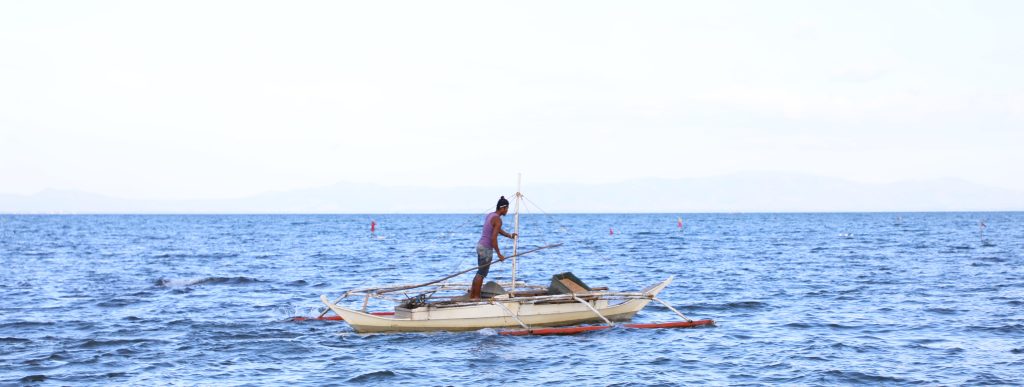
A lone fisherman in the middle of the sea | via Bureau of Fisheries and Aquatic Resources Region V
LEGAZPI CITY— The days of joyous fishing filled with plentiful harvest are long gone— at least to 48-year-old fish seller Romeo Balderama.
He tried his hand as a fisherman for two years before actually becoming a fish vendor at 28 years old, witnessing two decades of harvest in the vast waters of Legazpi.
He was the fourth in eight siblings to parents who were both fish vendors. As a teenager, he would prepare his jacket and pack his lunch to set sail with his friends– at this point the need far surpasses his wants, and because of him, his older brothers then took initiative to also help, through fishing.
“If I can do it, they can too, ” Balderama said.
It was all so easy back in 2005. In his experience, harvest back then was so much more.
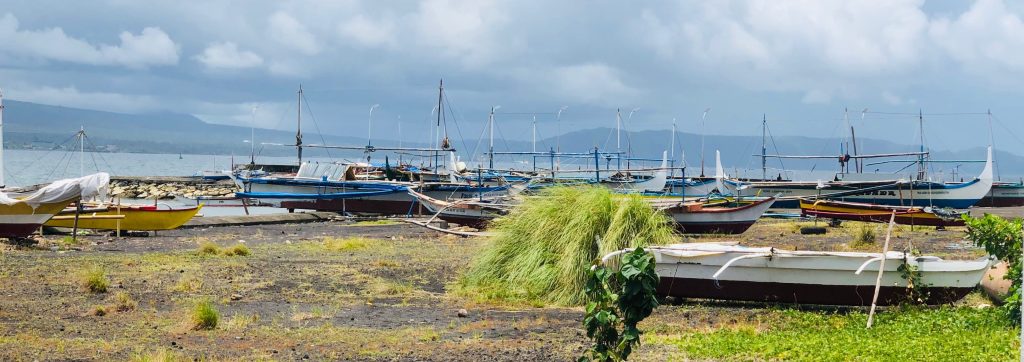
Boats situated in Puro, Legazpi in the morning | via Alexa Julian Chan
Now, competition is ruthless for fishermen and fish sellers alike. The pressure upon his shoulders to provide for his family is heavy. Not to mention trash is all over the once clean waters. The amount of fishermen and vendors he now has to compete with is doubled, which means the amount of harvest and income decreases.

Trash mounted by the shore of Puro, Legazpi | via Maria Ana Abegail Nocomora
This makes the risk of the fishes going bad higher. When this happens, Balderama makes sure to dry the fishes under the sun, selling it as sun-dried fishes or daing. Balderama can only hope it is enough.
Celestial Guardian
Under the cold blanket of the sky, it’s only them and the fishes. They would come back to the shore only until the silvery peals of moonlight started to show high in the sky. On nights when the moon is hidden beneath clouds, they take every extra minute they get; even refusing to go home until it’s early in the morning.
“It’s much better to catch fishes when there’s no moon, the fishes will follow the light in our boat because the fishes will swim around in the direction of the light,” Balderama said.
The full moon is a constant obstacle, forcing them to come back to the shore as early as ten in the evening. It emits a light so bright that leaves them no choice but to let the fishes swim normally in groups and not disrupt them; like a constant guardian overhead.
For fishers, especially pelagic fishers, the moon serves as their constant nemesis. Balderama said that the fishes are scattered during a full moon; making it harder for them to lure the fishes to their boats.
Noel Umbao, Chief of Fisheries Management and Resources in the Bureau of Fisheries and Aquatic Resources (BFAR), vouch for this in addition that he is also a fisherman himself. He explained that this phenomenon happens because pelagic fishes— fishes that are swimming at the surface of the ocean—depend on the moon’s light for the purpose of either hunting for food or shelter for protection against privations.
The light attracts the planktons and other microorganisms such as balaw (krill) that the fishes eat. The fishes instinctively follow the light because of the prospect of food.
That’s why during the dark moon or new moon, the fishers —with their gear accessories on— will now lure the fishes to their boats in hopes for a bountiful catch.
This process creates a trophic level kind of food chain: there is food (micro organisms), first order consumers (the fishes), and the second order consumers (the fisherfolks or humans).
Fish in Flux
Climate change, an inevitable change in our world, has its effects on coral reefs disruption. It affects the habitats to a diverse marine life, and by extension, the quantity and quality of the fish are then affecting livelihoods. It impacts fish reproduction, leaving fish quantity at risk, abundance not enough to supply marine life needs, and sex reproduction that requires optimal temperature range for them to spawn. In a city that is located along the eastern seaboard, Legazpi is considered a typhoon belt. This is now another obstacle that the fishermen are anticipating.
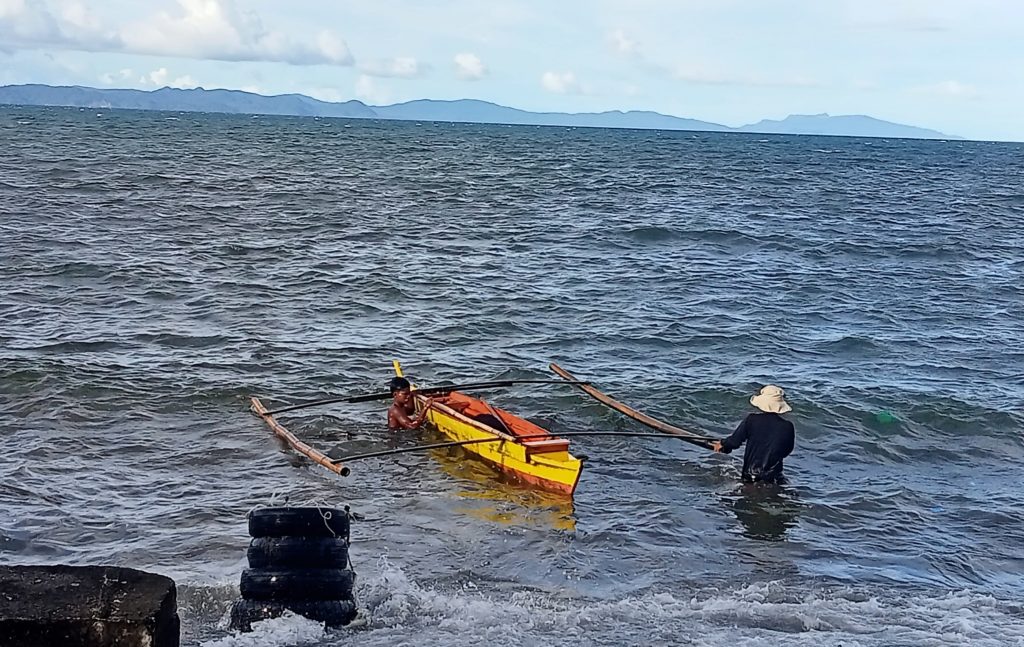
Two fishermen in wading through the waters of Puro, Legazpi | via Jenilyn Nagar
Marine life can thrive if necessary needs to live and reproduce are met, and this not only affects them but the rest of the lives that surround it. If the fishes’ natural habitat is constantly being threatened, fishes will have a harder time surviving.
“If the corals are gone, so are the fishes because their source of refuge will be gone, or either they will die because there will be nothing for them to replenish,” Umbao said. “2-3 degrees increase in sea surface temperature will dissipate 90% of the corals in the world,” he added.
Besides the coral reefs, climate change impacts fish reproduction as well, leaving fish quantity at risk with an amount barely enough to supply marine life needs, and sex reproduction that requires optimal temperature range for them to spawn.
Guarding the Rainforest of the Sea
Corals, despite their bearing, are sensitive animals that are susceptible to the slightest disturbances. Even a slight disruption in their environment that will lead to eventual deaths. These are fragile creatures that require intensive research, studies, and experiments before they can ensure that they thrive when performing a facilitated restoration.
This is why there are yet to have coral restoration projects in the Legazpi Port: they simply don’t have enough data to conduct this activity. Proceeding to coral planting with no legible experience and knowledge will lead to more harm than good. For the meantime, they facilitated protection and management programs to further examine the corals in Legazpi.
“There’s a science principle that needs to be implemented. From the very start; from the isolation up to the species to plant. It needs to be studied thoroughly first,” Umbao said.
Leslie Biago, an agriculturist from the Office of the City Agriculture (OCA), also expressed the need to acquire permits, legal documents, and the legibility to perform coral restoration activities to ensure the safety and to preserve the natural habitat of the fishes.
“Anything that you put or do in the ocean will always make an impact,” Biago said.
One of the OCA’s contributions for the preservation of the fishes’ habitat is coastal cleanup known in Legazpi as ‘scubasurero.’ With scuba diving gears on, the goal is to gather plastics or nets that usually got lost or washed up during typhoons. Apart from this, she also mentioned their monthly mangrove planting program with the help of several schools, private organizations, even the coastguards, airforce, and navy.
“The purpose of mangrove planting is to stabilize the water. It also acts as a filter of waste materials before it even reaches the corals,” Biago added.

A mangrove site | via Department of Environment and Natural Resources
Biago also explained that the mangrove is the first line of defense for marine habitats. Waste materials will be filtered by the mangroves, then, the remaining waste materials that did not get filtered will go through the seagrasses before finally hitting the corals.
The Catch
The story of Balderama encompasses the pressing challenges faced by the fishing industry amidst climate change. As fish distribution shifts and ecosystems are disrupted, fishermen must learn to help conserve and find ways to sustain their livelihoods.
As the impacts of climate change are faced often, it is essential that a movement to protect the marine ecosystems that support the livelihoods of the increasing number of fishermen in Legazpi is made. This includes supporting conservation efforts, promoting sustainable fishing practices, and addressing the root causes of climate change.
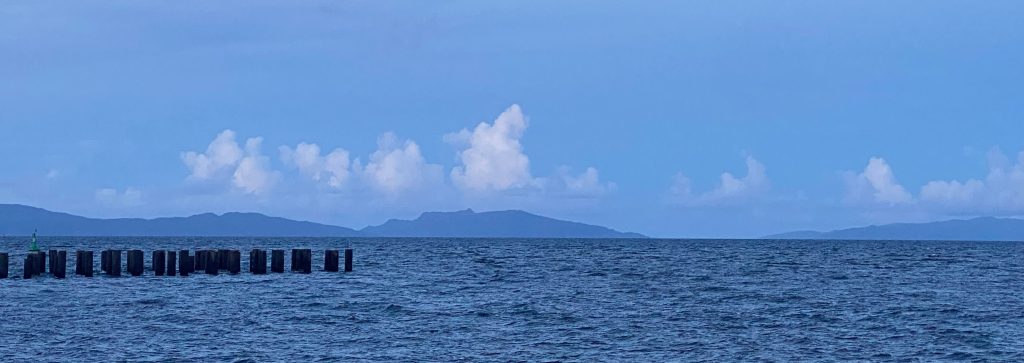
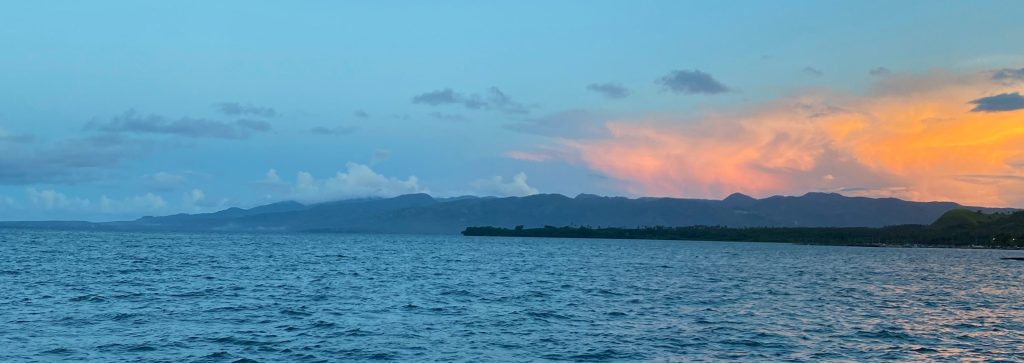
Puro Legazpi at Sunset | via Maria Ana Abegail Nocomora
With the help of government agencies like BFAR, DENR, and OCA together with the experts in the field, we can pledge to ensure that the ocean remains vibrant, full of life, and a productive source of food and livelihoods for years to come.
As Romeo Balderama and his fellow fishermen continue to face the uncertainties of the sea, their resilience and determination serve as a testament to the enduring spirit of the fishing community.
 Bicol Daily News
Leave a comment