by Xyrrah Eamma Czaryna Jimenez, Princes Teresa Roda, and Nika Anne Cabanela
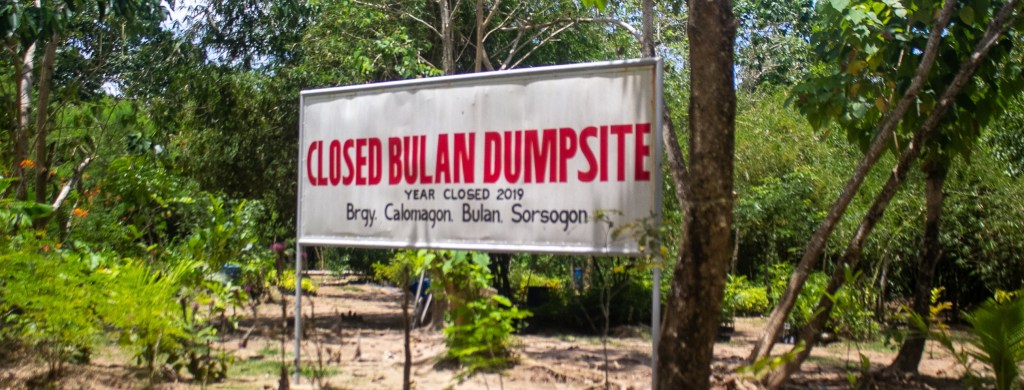
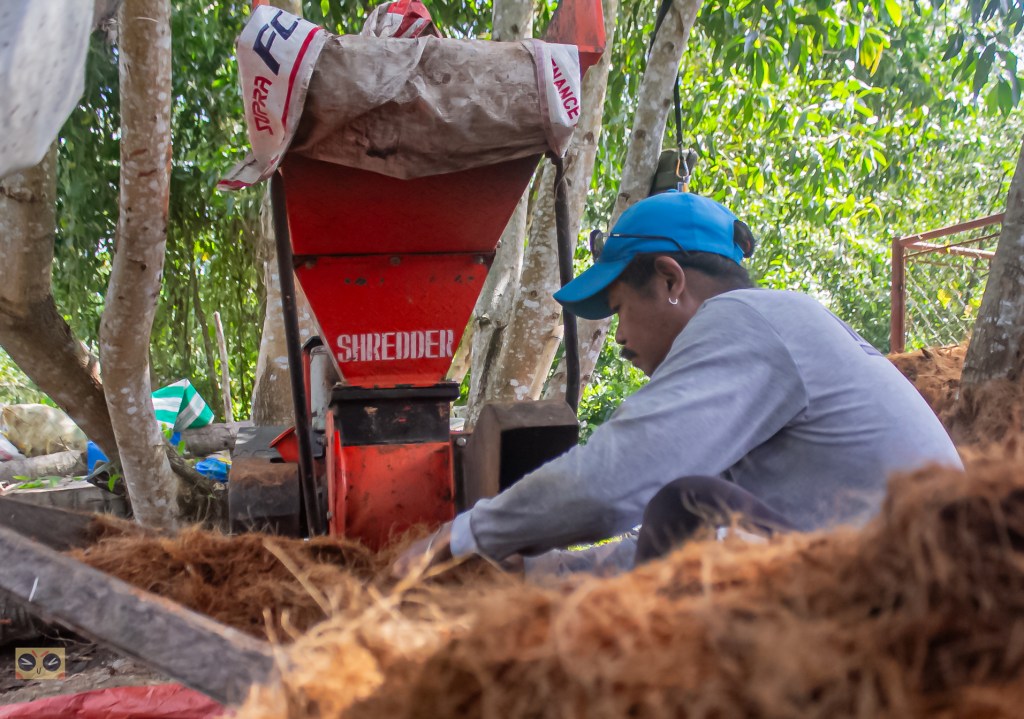
BULAN, Sorsogon — The scent of wet earth greets the nostrils before any municipal signage does. One might expect a whiff of decay from what was once a dumping ground; instead, there is the shredder—the tale-old shredder in the flesh, albeit rusty, that championed environmental degradation back in 2009.
The place served more as an amuse-bouche—a preview conditioning one for the feast of sights that lay ahead.
On a Friday morning in April 2025, the Head of the Municipal Environment Natural Resources Office (MENRO), Kelly Tan, sat upon what seemed to be a humble chair—whom one did not yet know to regard with reverence.
The Bulan “EcoPark” comprises various facilities, primarily focused on solid waste management–Biodegradable [Then, shredder; now, rotary drum composter and Non-Biodegradable [Sorting-Pressing-Washing-Shredding-Drying-Melting facility]
“This is our very first shredder, the first one we used in 2008 for vermi,” said Tan.
Beneath the soil, a quiet industry hums—not of men, but of worms.
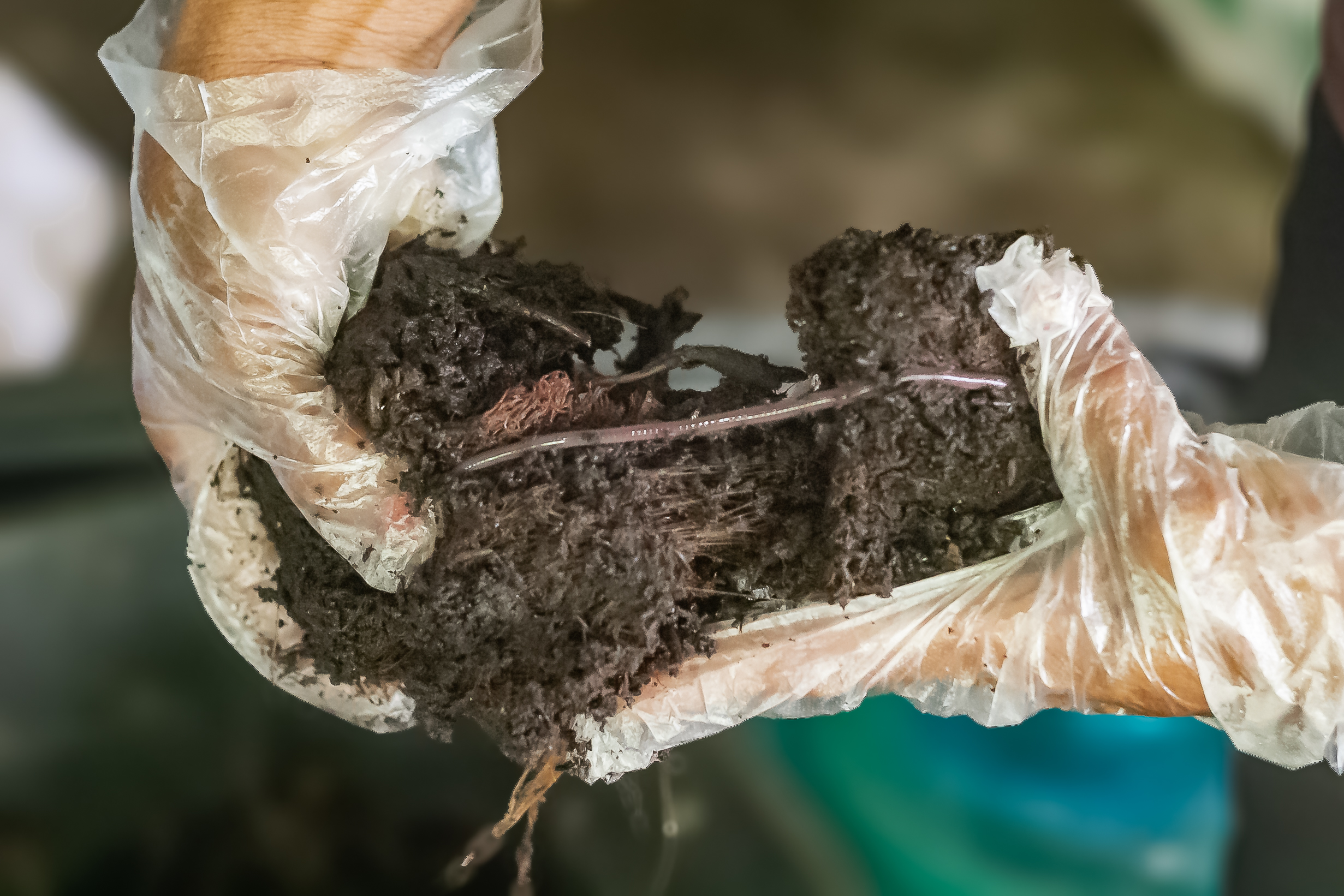
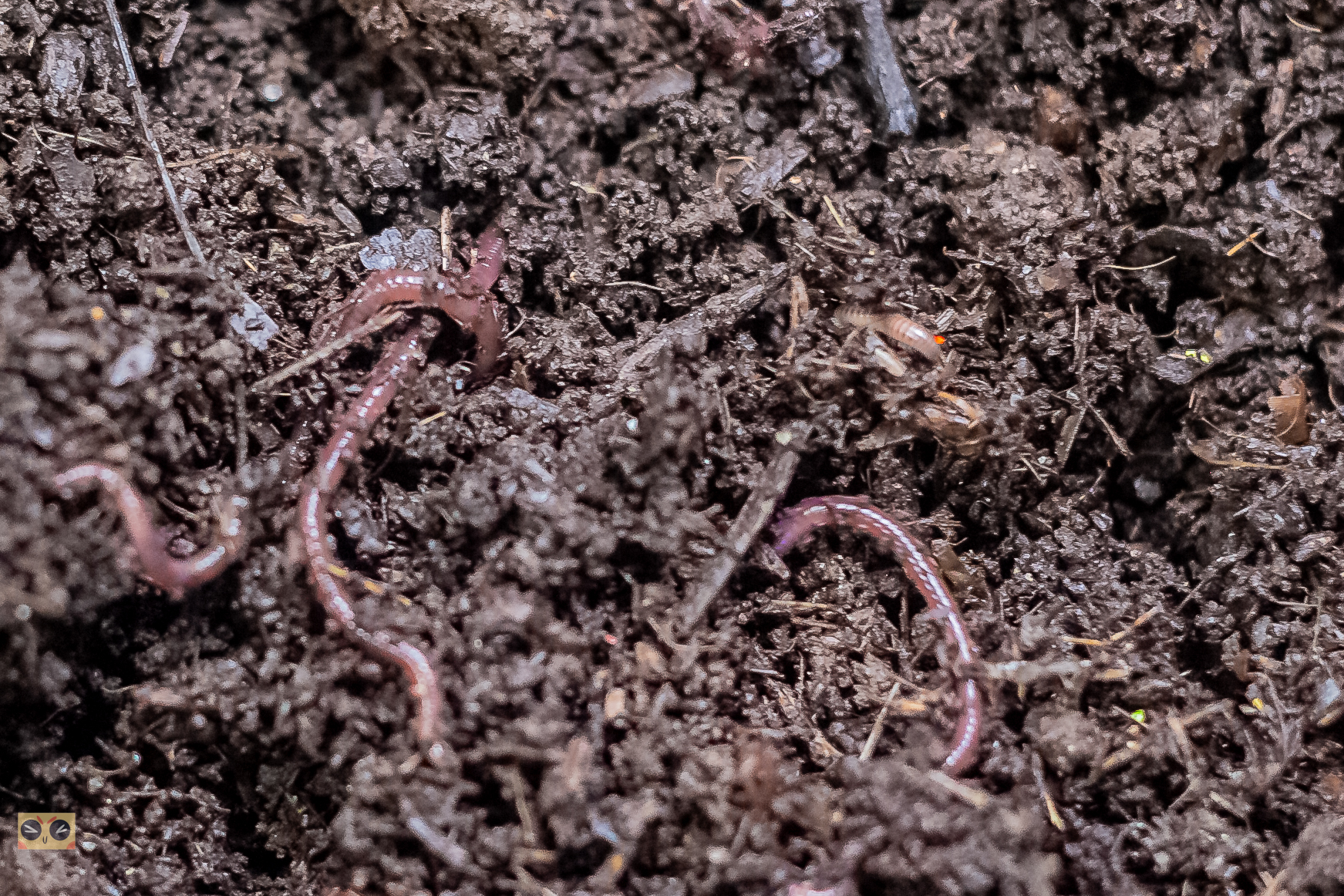
They were the heart of the process—the African nightcrawlers—a slim, soil-loving marvel with no fixed gender but an unshakable appetite for refuse.
“We use African nightcrawlers worms, and if it consumes the waste-the natural substance we have prepared, it will come out through its waste, and that waste is called vermicast. Pure… Completely…Pure waste,” she added.
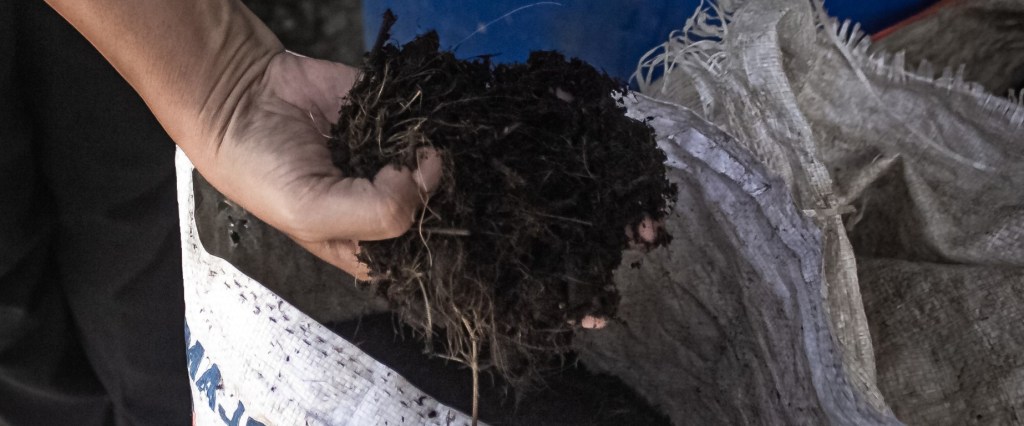
In the process of vermiculture, equipment plays an important role for faster production. There are two key products: vermicast, which is the pure excrement of the worms, and vermicompost, a mixture of worm excrement and still-partially decomposed matter.
A third product exists too—the so-called “vermi tea”—produced by soaking vermicast in water much like steeping a rustic brew, this yields a potent liquid fertilizer.
Before the worms could eat, however, the waste must first undergo pre-digestion through a machine as large as its impact—[before they used a Shredder, now rotary drum composter.]
“First and foremost, when you grind biodegradable waste, it’s hot. Second, it is new. The vermi primarily consumes partially composted biodegradable waste, so you need to let it decompose first.,” Tan said.
The original shredder ceased operations in 2021 after the facility it once occupied was repurposed by the town’s battalion forces.
October 2024 marked a mechanical renaissance: the arrival of the rotary drum composter, ushering in what might be termed “Vermiculture 2.0.”, if you think about it.
Tan explained the key difference between the old shredder system and the new rotary composter:
Under the old method, shredded waste required an activator—Indigenous Microorganism [IMO]— and a full 10 days to become even partially ready for worm consumption, often requiring up to a month for full readiness.
“Two spoons, one liter of water, as for ten days, it starts to decompose, our substrate. But it’s no longer allowed to feed it to worms because it is no longer as… as processed…it’s still quite wet and mixed. But this means that IMO is effective. In ten days, it will be partially decomposed,” Tan explained.
With the rotary drum, waste is processed far faster—shredded, composted, and worm-ready in mere hours.
Specifically, the smaller drum operates with a cycle time of approximately 50–56 hours, while the larger unit achieves full composting within just 24 hours, owing to a much faster internal rotation of roughly 14 seconds per turn.
[Though operationally, due to work shifts, the drums typically run 7 hours in the day and 4 hours at night, which achieves full processing within two operational days.]
Biodegradable Waste Management
On April 14, 2025, just a day before this interview, they had collected 870 kilograms of biodegradable waste and yielded 570.75 kilograms of processed compost after a single 24-hour cycle.
While the compost produced by the rotary could be used directly, Tan insisted that further feeding it to the worms elevated its quality significantly.
“Vermicast is the second-best soil enhancer,” she asserted. This logic becomes evident: compost may feed, but worm manure nourishes.
A single worm consumes its body weight in decomposed matter each day, and according to Tan’s observation, “As it eats, it also excretes waste,” —a fact delivered with more fascination than revulsion.
The worms thrive underground, protected from sunlight and predators such as birds and centipedes.
“Worms burrow underground because they dislike light; they are nocturnal. So, whether it’s nighttime or simply dark, that’s when they are active. But when it’s bright, they will definitely dig deeper,” said Tan.
By 2019, despite an interruption due to the military occupation, the program had expanded impressively—from an initial 30 worms to an abundant source of fertilizer for local growers.
“We initially started raising only 30 worms. We wished to get 30 worms,but after two years, they multiplied, and we were able to distribute them to our fellow community members.” said Tan.
The vermicast was not for sale—it was given for free upon backyard growers, farmers, and green-thumbed dreamers who understood the sacred art of coaxing food from rot.
“It’s not just for anyone who wants it. If it were given to just anyone, it would go to waste if they don’t have any plants, right? So even if you’re just a backyard vegetable grower, it’s fine as long as you use it properly and make sure it doesn’t go to waste,” she clarified.
With every sack given, the town buried a little less—and planted a little more.
Thus, the earth, long burdened by the weight of plastic and peel, began—ever so slowly—to forgive us, one worm at a time.
Non-Biodegradable Waste Management
If the biodegradable refuse lent the EcoPark its pulse, then it was the plastics—gathered from 49 barangays beyond the poblacion—that bestowed upon its very bones.
Where the humble worms supped discreetly beneath the soil, the non-biodegradable wastes underwent a transformation no less miraculous—only noisier.
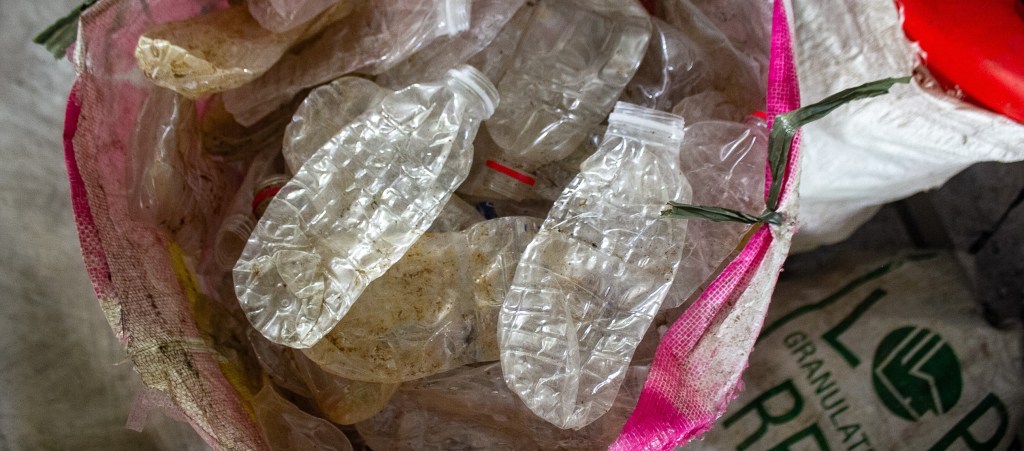
These plastic wastes—both soft (sachets, snack wrappers, and the like) and hard (bottle caps, broken dippers, fractured pitchers, et cetera)—are subjected to a process: manual sorting, pressing, shredding, manual hand-washing, sun drying, and, at last, the melting process.
Once forsaken, these plastics are now salvaged by what one might call “environmental warriors”.
Joel Austria, mid-shift, demonstrated the mechanical ballet that transmutes plastic waste into artificial wood.
How does it operate? Is it still plastic-looking? We shall see. Make your own judgment.
Manual Sorting
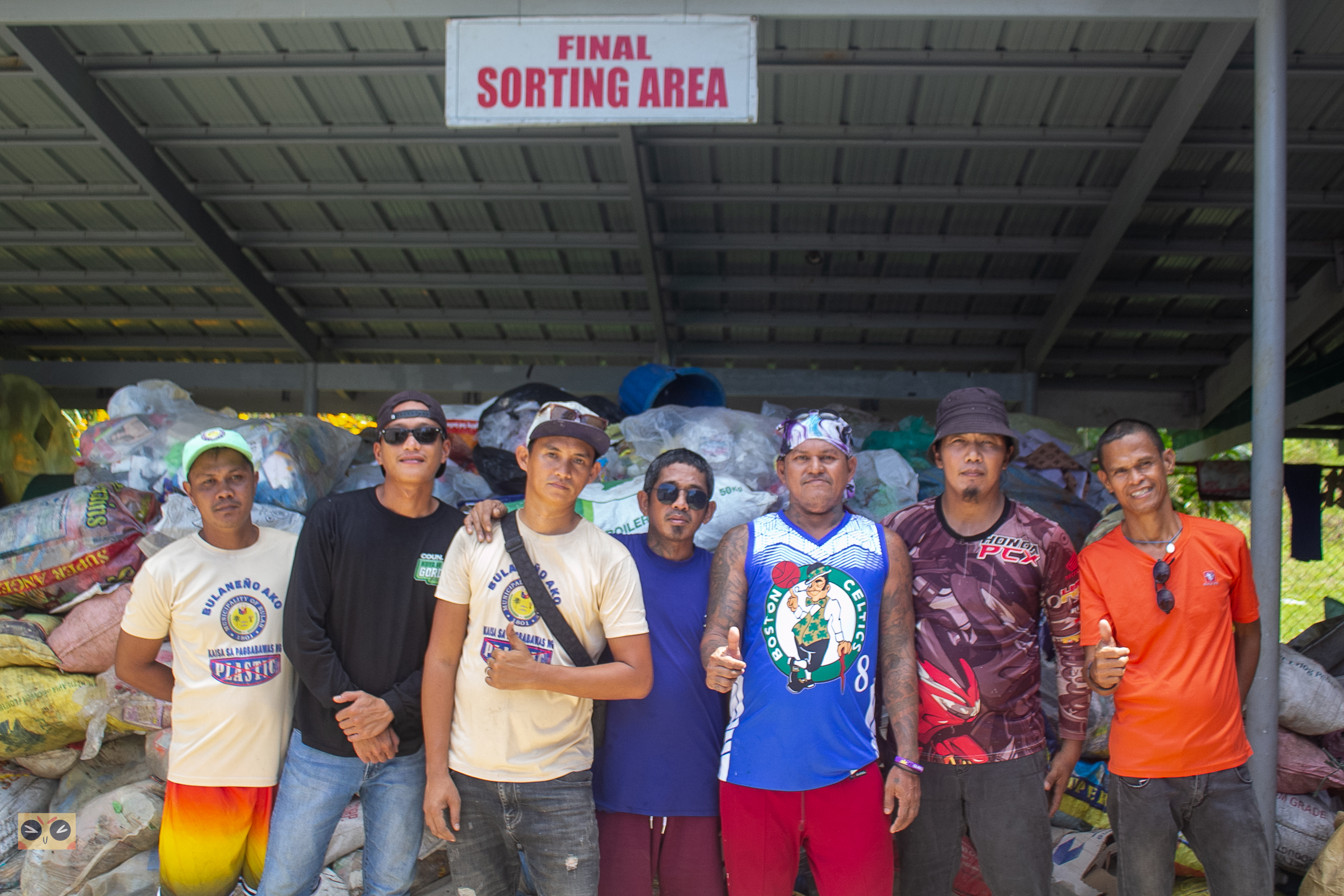
MENRO Bulan staff (from left): Joemar Gracilla, Roel Nicolas, Joel Gerona, Joel Austria, Juan Jevasco Jr., Jeffrey Razon, and Rene Balbalosa. | Sydney Gabelo 
Joel Austria compressing sorted plastic waste, predominantly PET bottles. | Sydney Gabelo 
Joel Gerona engaged in preliminary waste sorting. | Sydney Gabelo
Austria, with a sweep of his hand, introduced us to his co-workers—Joel Gerona, Jeffrey Razon, and Edie Gido—whom he affectionately dubbed as “The Sorting Boys.”
They sift through the plastic harvest, sort what is fit for shredding and what ought to be pressed and dispatched to the town’s junk shop.
Among the materials they routinely relinquish are water bottles, soda cans, and condiment containers, for the hard plastics.
Pressing | Shredding
“Even just an hour of pressing the pedal would already hurt your foot. But now, with the presser, it only takes a few seconds and it’s already okay,” said Austria.
“Why do we press it? So that when we sell it, especially since the junk shop is far from here, we can make the most of the space in the vehicle,” added Tan.
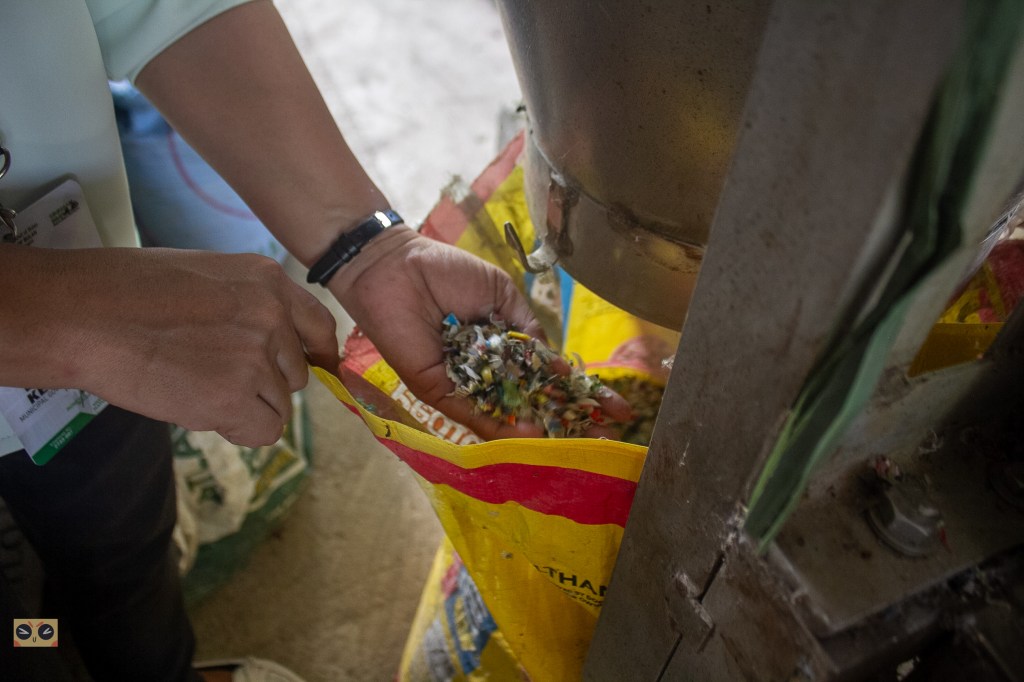
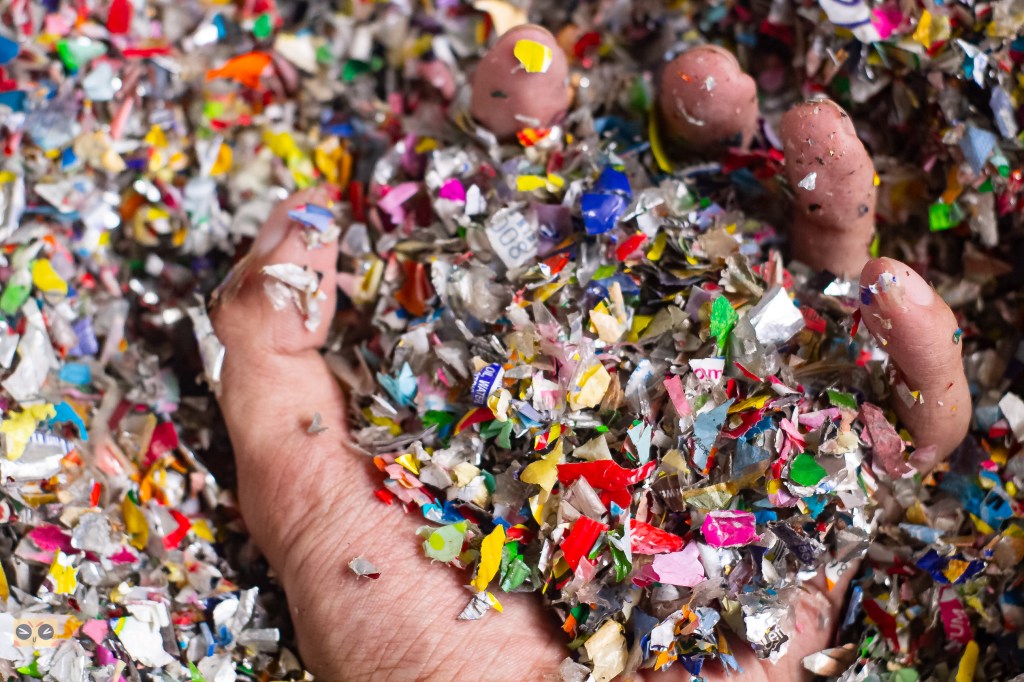
Dolores Chiga, who, having dedicated seven years under Tan’s stewardship, sat diligently sorting bottle caps, aided by Juan Evasco Jr.
The bottle caps, as well as other soft and hard plastics, goes to the shredding facility,” Austria said, gesturing toward said facility.
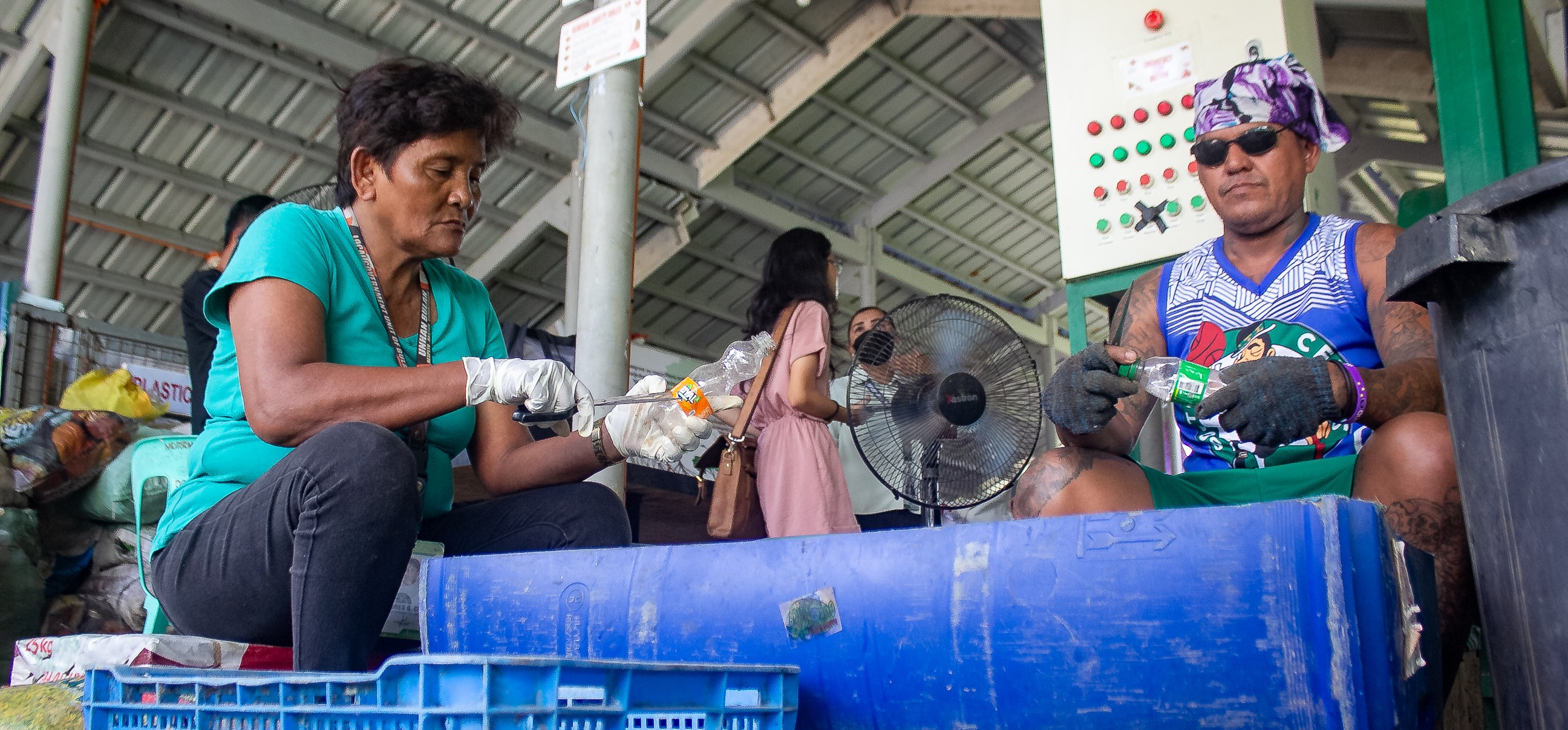
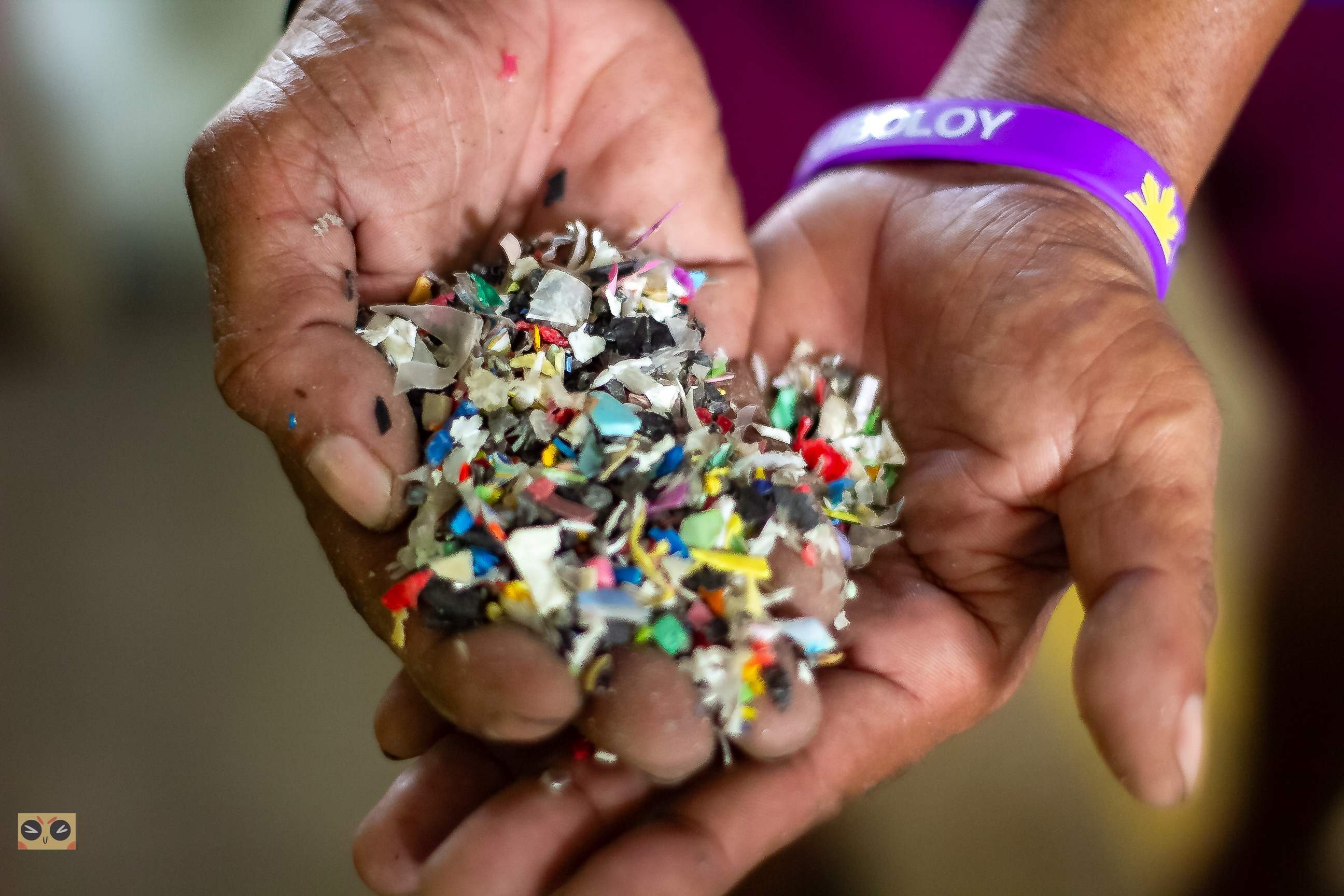
“So here, we first shred plastic—this is what it looks like,” he continued, proudly displaying a handful of shredded fragments.
Manual Washing
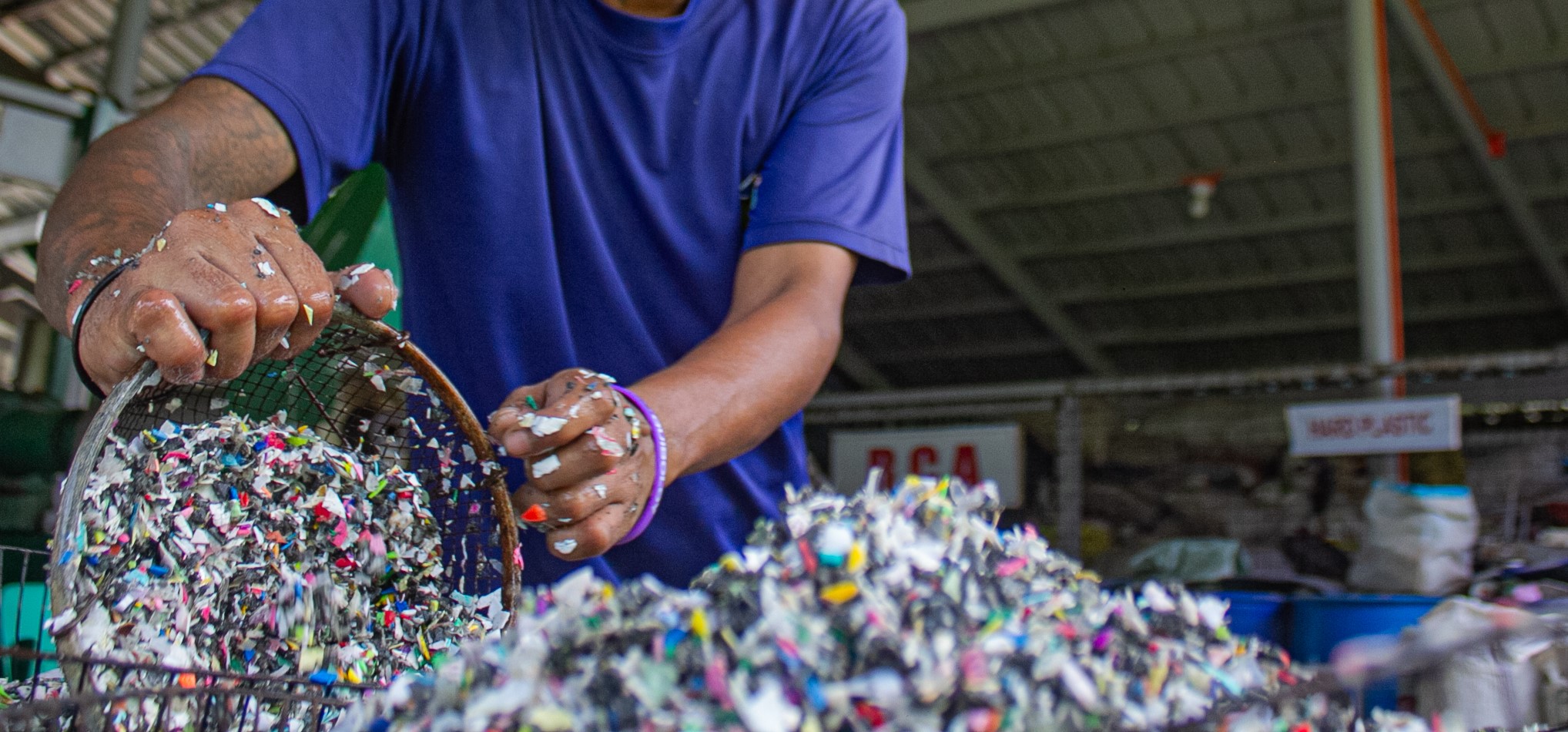
In a bid to conserve energy—a virtue both environmental and economic—Austria demonstrated the washing process, filling a basin with water and the multicolored plastic fragments.
“These are hard and soft plastics mixed with plastics from junk food, shampoos, and soap packaging. This one here is hard plastic—like broken dippers or pitchers. We grind those using the shredder, then wash them and place them in the mold,” explained Austria.
Post-washing, the shredded waste is strained through an improvised one, ready for its next trial.
Manual Sun-Drying
Laid upon nets and surrendered to the mercy of the sun, the plastic fragments dry in the open air—an honest process, dictated by time and weather.
The Melting
At temperatures soaring between 250 to 300 degrees Celsius, the shredded plastic is melted within four chambers.
“Here, the plastic is melted, then it comes out through the hole in the machine—that’s already melted plastic. It depends on the mold you are using,” said Tan.
Among the products of their labour are faux lumber and coal moulds—artificial wood borne not from trees nor quarries but from the very waste of civilization itself.
“Everyone was given one, but in the entire Bicol Region, we’re the only LGU with this kind of operation. The rest, in other provinces, haven’t started yet—their machines are still idle. We’re the very first to operate this kind of machine. In a way, that’s good feedback for us,” said Tan.
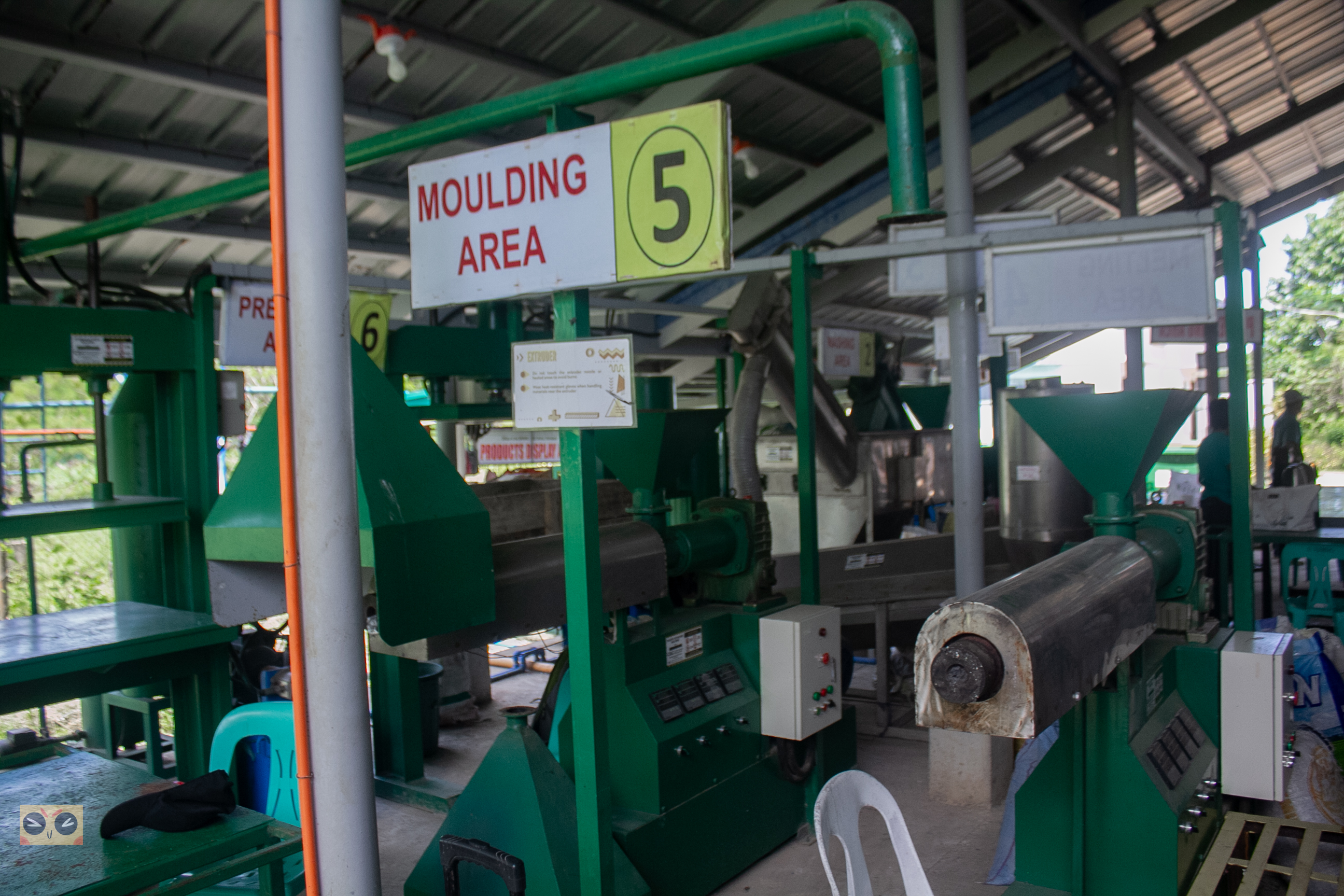
The moulding area inside the non-biodegradable waste facility. | Sydney Gabelo 
Post-operation view of the melting machine used for plastic recycling. | Sydney Gabelo 
Kelly Tan, Head of MENRO Bulan, displays the end product: plastic lumber derived from processed waste. | Sydney Gabelo 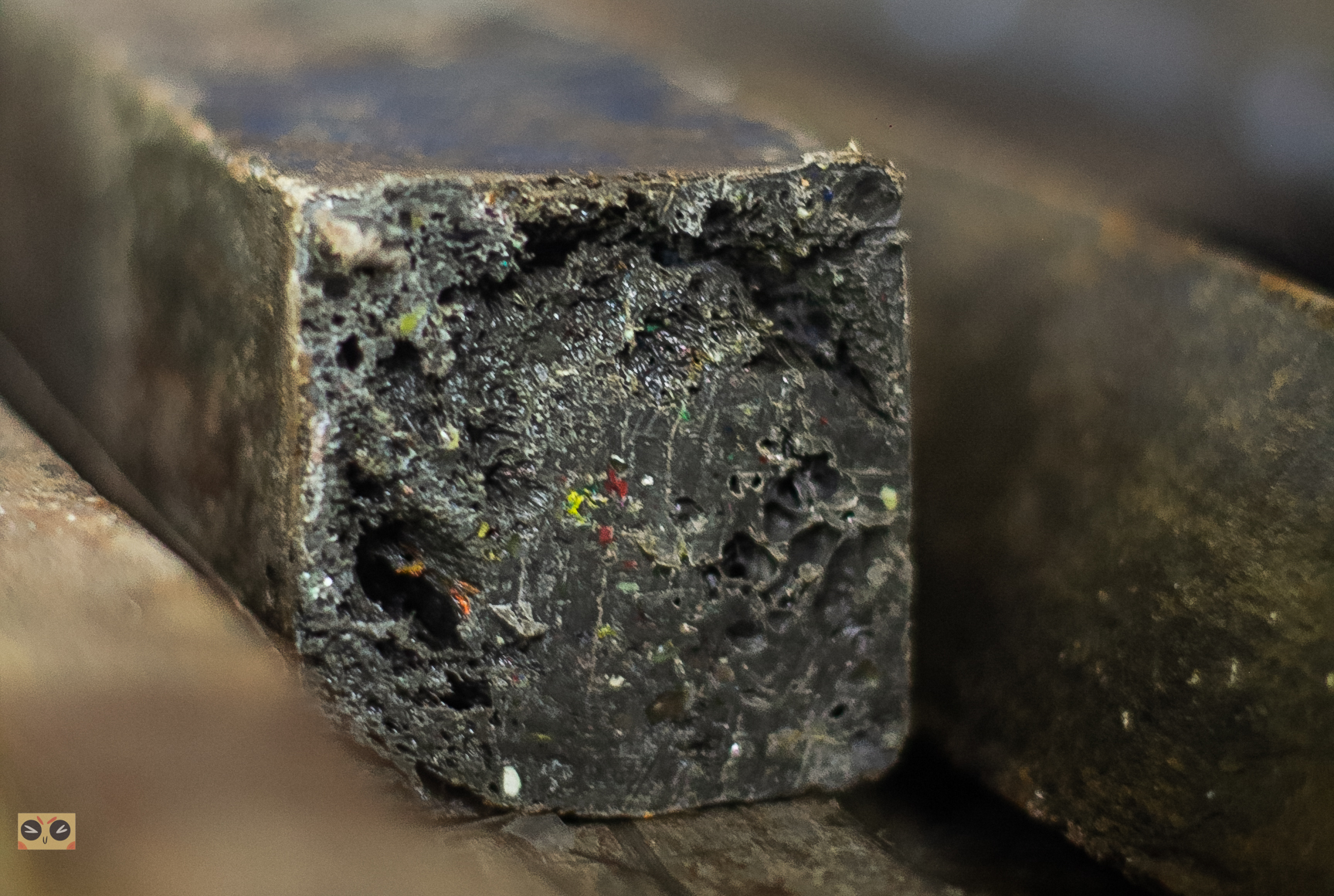
A close-up of the plastic lumber fabricated from non-biodegradable waste. | Sydney Gabelo
Moreover, should any product falter or fracture, it is not discarded but rather recycled—melted anew.
Upon inquiry regarding the duration of each process, Tan responded with commendable forethought.
“There’s no exact time in minutes—it’s just one of the things we have to monitor, because there should always be a standard. Just the right timing, when it’s properly melted,” said Tan.
A Return to the Chair
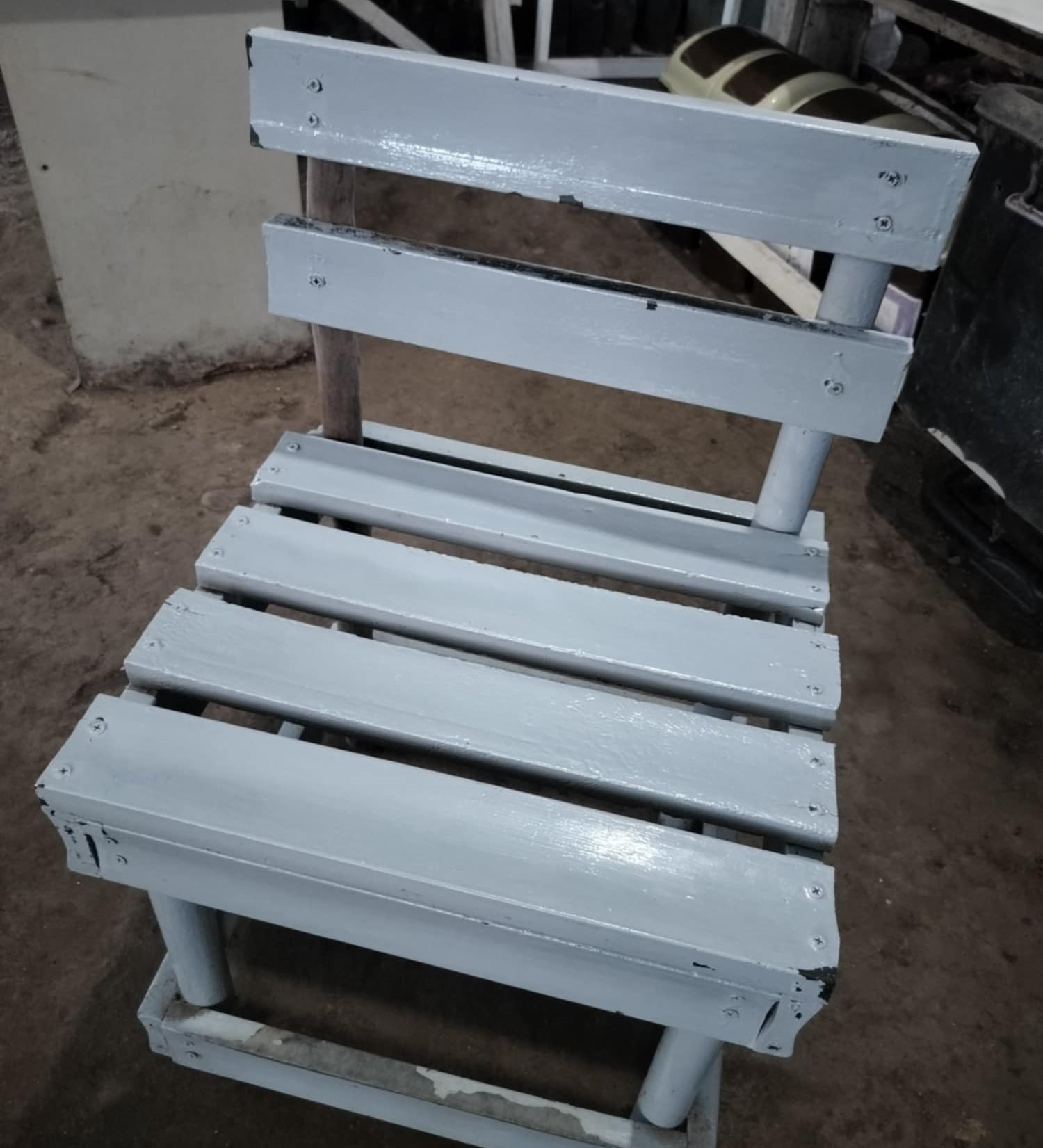
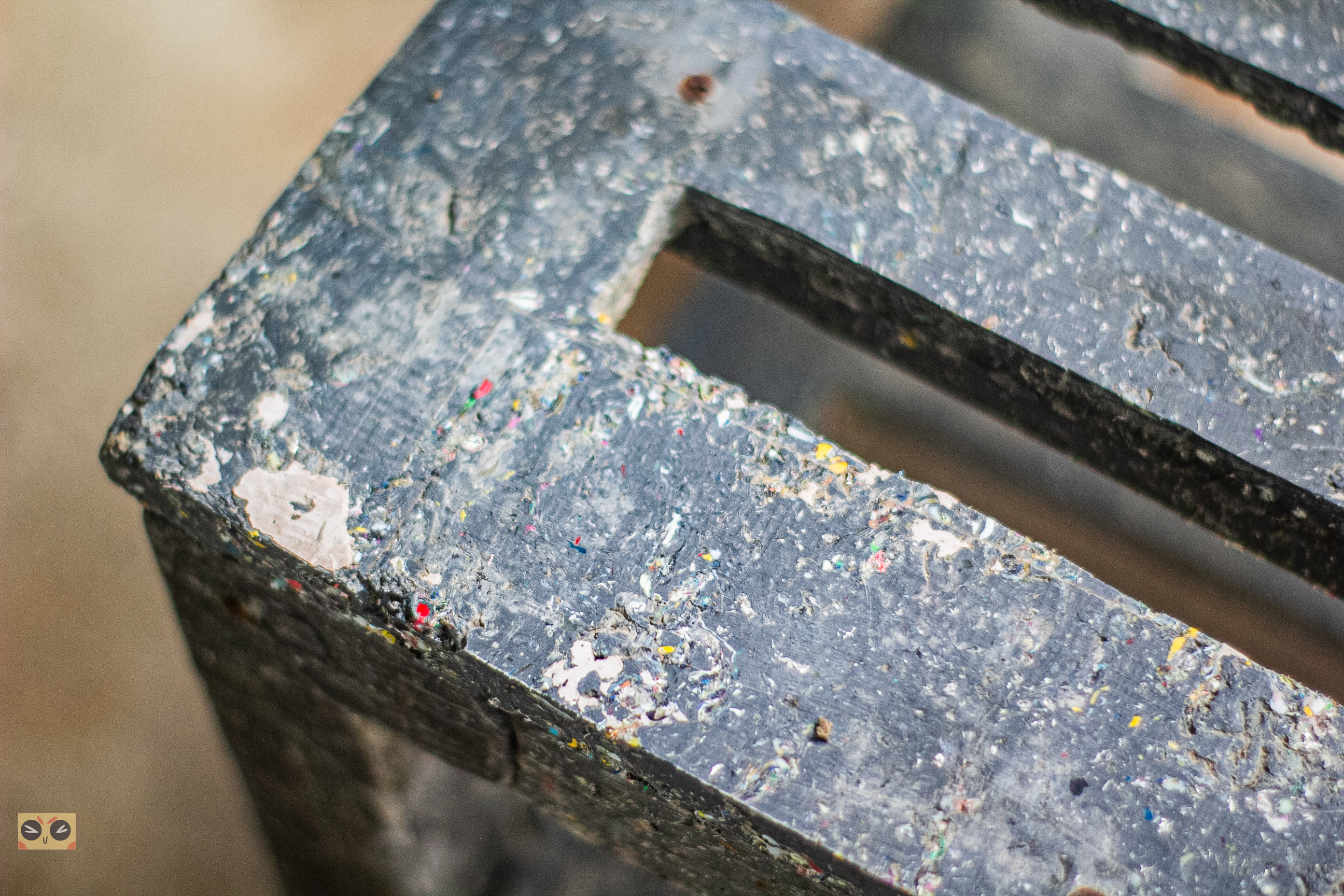
The unassuming chair upon which Tan so gracefully seated, isn’t hewn from narra nor wrought of iron, but pressed from the fragments of plastic bottles.
“We haven’t started other production yet because we’re still in the early stages, but we do have a sample—my gray chair in the garden, that one—we just painted it,” Tan recounted.
“This is our very first product—you can see it, it’s really quality—but as a whole, it’s still not quite there yet,” she admitted with candid humility.
Whilst the worms toiled quietly beneath one’s feet, reshaping the very earth, the plastics—under the vigilant guardianship of Tan’s cadre—became something on which to sit, to speak, and, indeed, to champion the environment.
“Because imagine, we can use this as a fence, but—let’s just say that facility over there costs 200,000 pesos for 24 meters. Why would we spend 200,000 pesos of government funds on that, when we can just use this? You’re making use of waste, and you save 200,000 pesos. So if it’s even more expensive, like 1.5 million, why not just go with this?” said Tan.
“It can be used as an emergency shelter during disasters because it’s sturdy, it’s solid,” she added.
Ecoparks Present State
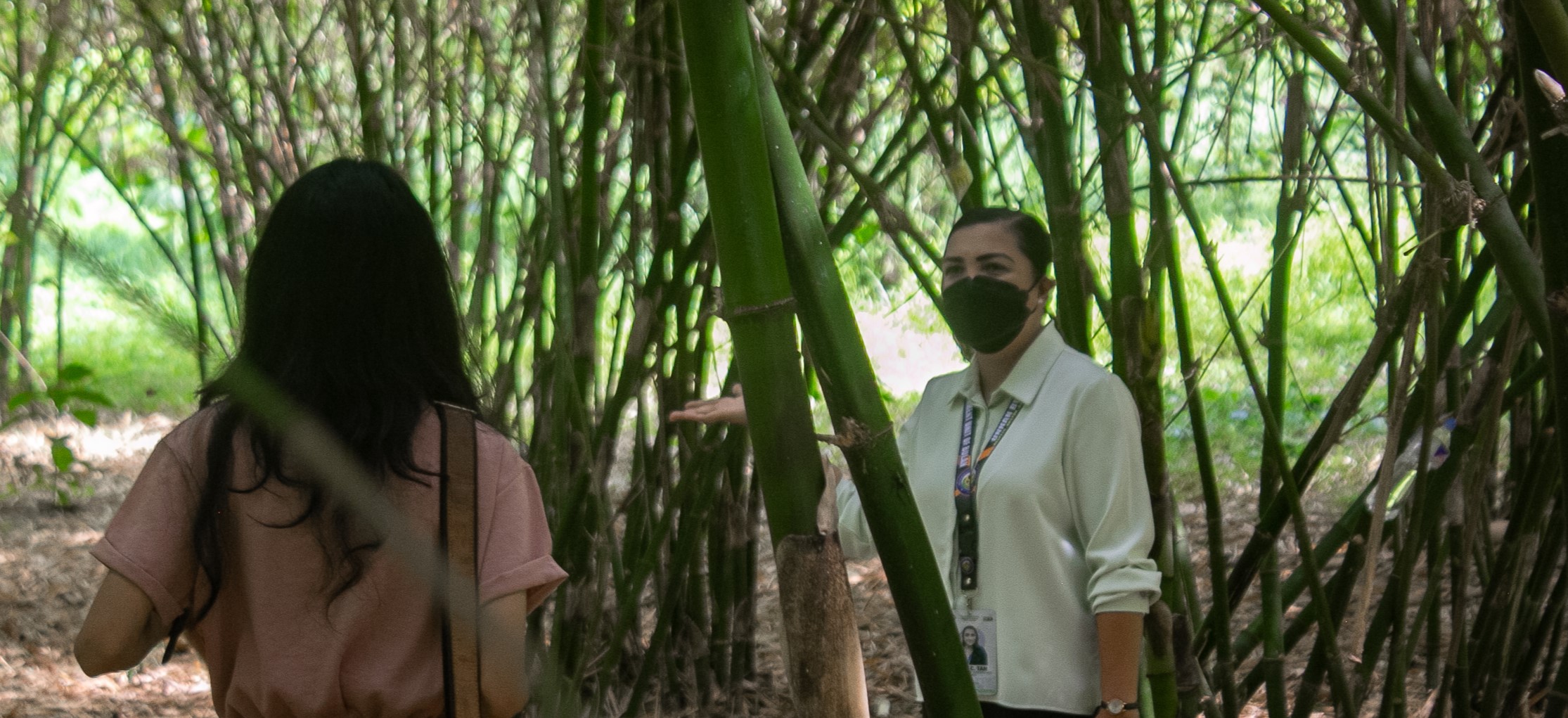
14 years have passed. Where once stood but three trees, now over 50 native species dance in the breeze—some bold and brash, others shy and retiring, yet none ordinary.
“Our native species, when I listed them, I think there were already around 50. Yes, I’ve listed them,” said Tan.
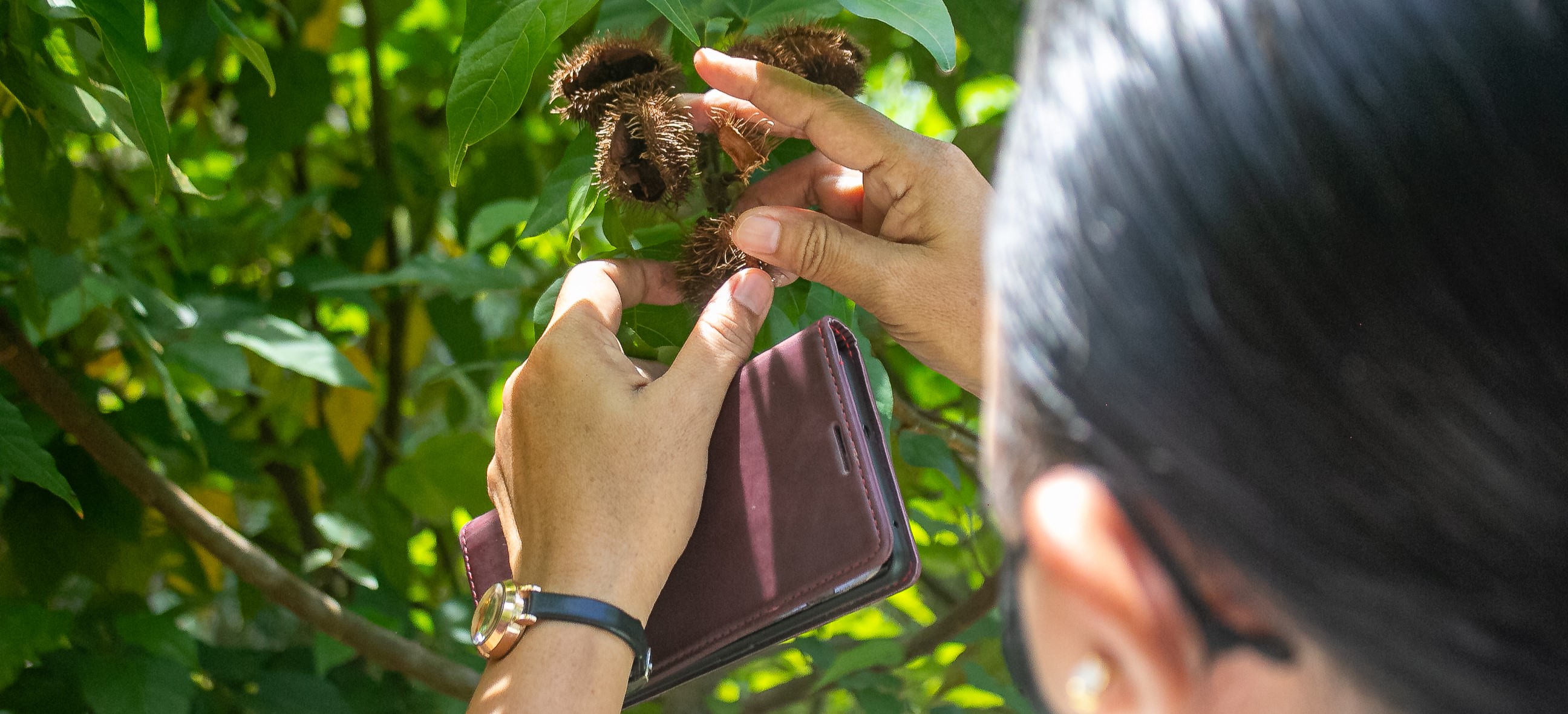
Among these are the fiery Achuete (Bixa orellana), known as the “lipstick tree” for its vivid dye used in cosmetics and cooking; coffee plants growing in neat rows; the ornamental Palawan Cherry Blossoms; Kahoy Dalaga; Kasoy (cashew); and the fragrant Ilang-Ilang (Cananga odorata), essential to perfume-making. Hardy species such as Lauaan Reed, Bungliw, and Rambutan also flourish.
There was also this 1000 millionth tree planted during their 100 million tree sapling challenge from the 7th Day Kalikasan program.
“This is the one-millionth tree in the Sorsogon 7th Day Kalikasan program in the whole of Sorsogon. On May 23, 2023, our governor planted it, and we were the ones who planted it—the one millionth tree planted in the Sorsogon 7th Day Kalikasan’s 1 Million Tree Challenge,” shared Tan.
Their selection owed much to the lore of Vicente Payra, once a man of the mountains, now a guardian of forests, and by strange turns of fate, of peace itself.

“Tatay Vicente, he used to be an NPA surrenderee,” Madam Tan shared.
“But now, he is one of the most knowledgeable about our forests,” she added.
His eye, trained in the lost language of the land, guided the rewilding. If you’d ask a town-dweller these were but nameless greens, to “Tatay Vicente” these were his kins: Molave (Vitex parviflora) called by the tender native name “Amor Awon,” Narra (Pterocarpus indicus), Atis (Sugar-apple), Guyabano (Soursop), and the humble yet mighty Tuyukay, a cousin of the Balete.
Vegetables like corn, okra, sweet potatoes, and kalabasa (squash) sprawled across the hillsides, nodding to the sun in grateful approval.
Birds and butterflies, those whimsical arbiters of ecosystem health, returned in secret multitudes.
Even the elusive Philippine Eagle—albeit in transitory visits—graced the sanctuary, leaving behind no certificate, but the surest endorsement of nature: its presence.
No decree has yet officially christened EcoPark a wildlife reserve, none of the birds, bees, nor occasional wild eagles seem to have received such a memo. But they have already declared it as their sovereign ground.
Some young saplings, to maximize its disaster risk resilience, grafting is being practiced in their “tree growing”.
“Simply three branches, but one tree trunk,” explained Tan.
“This tri-stem method ensures that if one branch fails due to disease or storm, others survive. But not all trees will be treated like that. Of course, for Narra, we won’t do that anymore because it’s already strong. We’ll only do it for the weaker ones, like cacao, or jackfruit. But for our native trees, we won’t,” said Tan.
Back Story
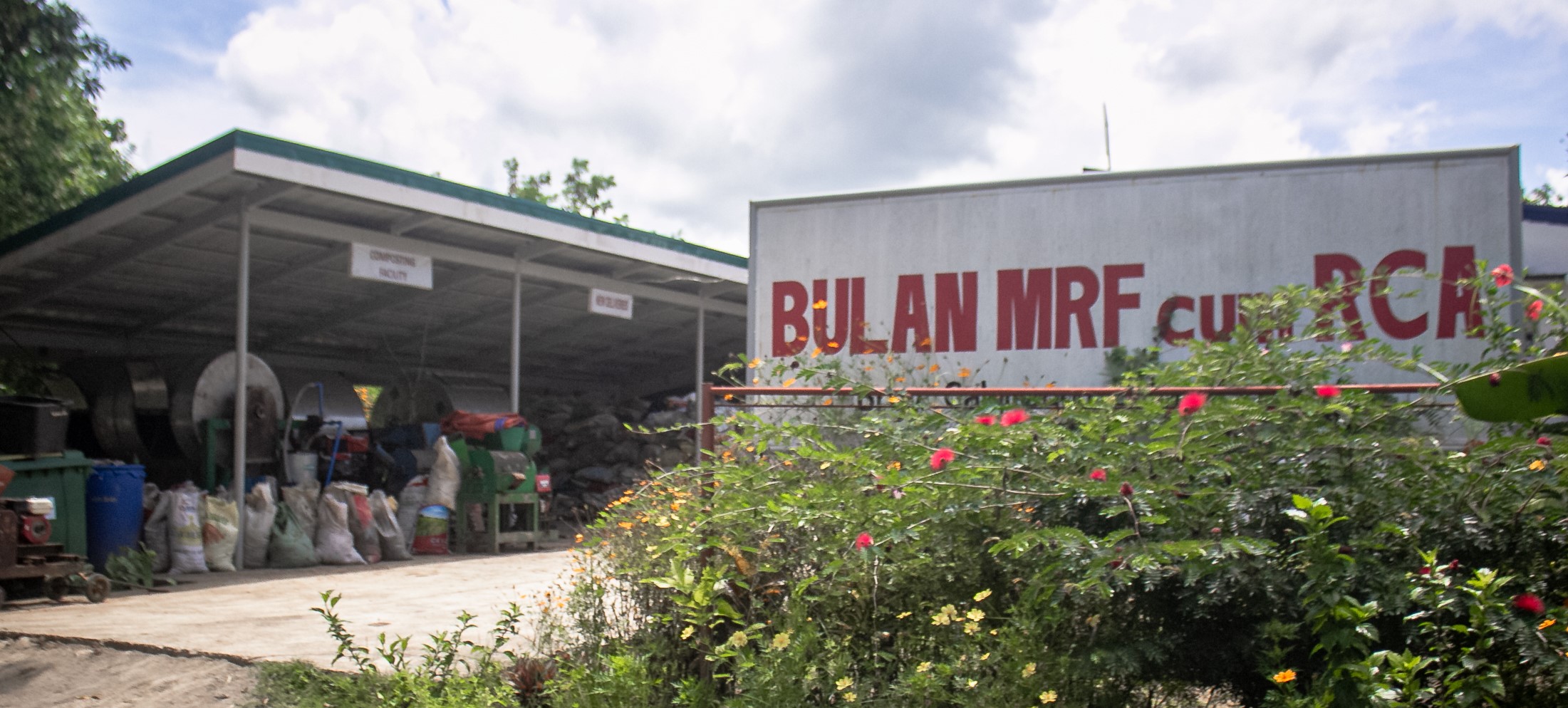
Some 14.19 hectares was donated by the late Ambassador Tomas De Castro, uncle-in-law to then-Mayor Helen De Castro.
This lot, nestled in Barangay Calomagon, had for 24 years borne the role of a dumpsite.
Yet in 2004, the first germ of redemption was sown, though the official unveiling of the dream would not bloom until five years later.
While the Department of Environment and Natural Resources (DENR) might quibble over technicalities—arguing that a dumpsite, by law, cannot bear the sanctified title of “EcoPark”—the people of Bulan had long since made their own peace with the matter.
“Locally, to us, it is Ecopark. We are getting used to calling it an Ecopark. However, when it comes to legal matters, such as our laws and the DENR regulations, you can not simply classify a solid waste management facility as an Ecopark. Even if we say that the former dump site has been rehabilitated,” said Tan.
By 2008, the first hum of machinery echoed through the once-silent fields, heralding awards soon to follow: National Finalist for the Gawad Pangulo sa Kapaligiran, recipient of the Saringgaya Awards, and recognition as a GO-FAR Model LGU—just to name a few.
The inaugural Fiesta sa Kabubudlan in 2009 was not just a festival—it marked the ceremonial burial of a filthy past and the birth of something altogether nobler.
For in Bulan, they did not merely crawl or build furniture—they cultivated, created, and cradled a vision that waste could nourish, plastic could support— and well, a chair that could tell stories.
 Bicol Daily News
Leave a comment