By Christine Quite, Ailene Andes, Ludwig Gaytos
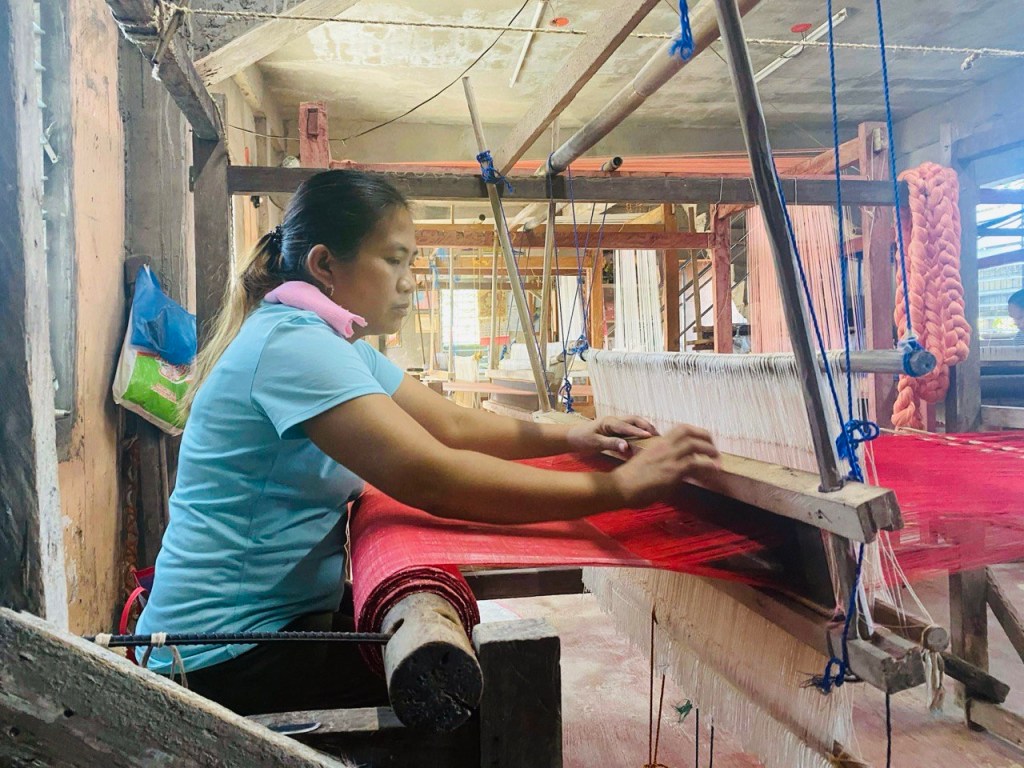
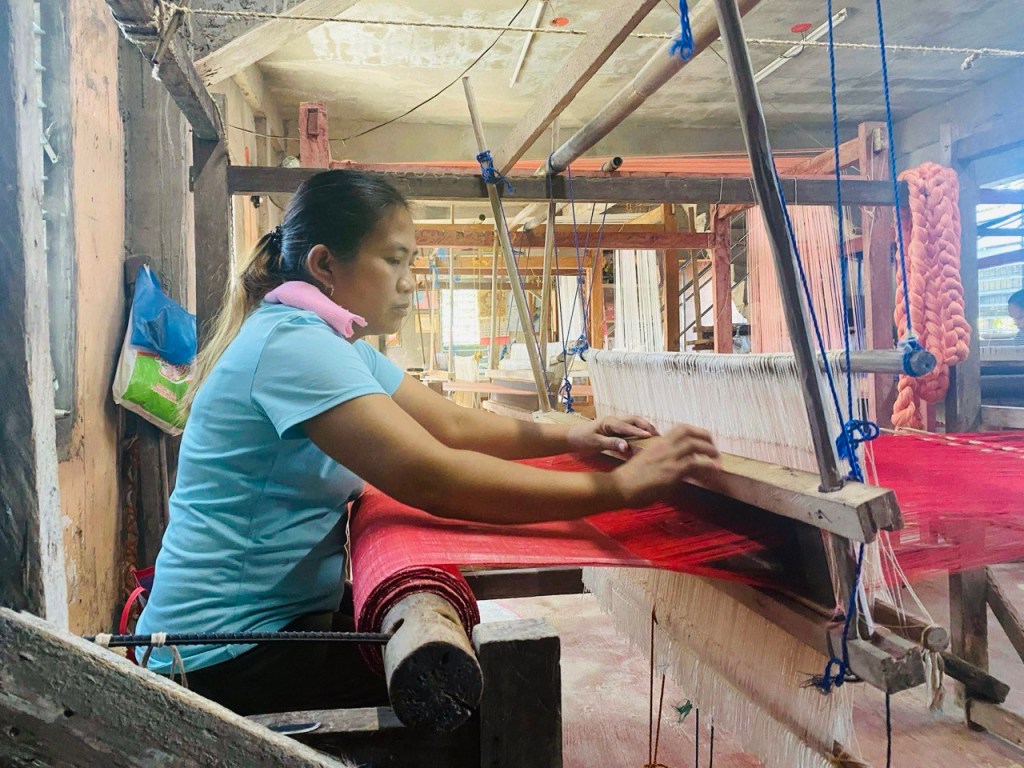
LEGAZPI CITY, Philippines — For the women of Legazpi, the abaca is an integral part of their passion and survival, turning fibers into sellable products that make waves in the global fashion industry.
In Banquerohan, Legazpi City, women weave abaca fiber into pinukpok cloth to provide for their daily needs.
Elizabeth Mirafuentes, owner of the local weaving center, employed nine women to weave as their form of livelihood and alternative source of income.
Once under the ownership of Bicol Small Business Institute Foundation Inc. (BSBI), the Banquerohan weaving center used to be a bigger association for women weavers back in 2010, chosen to help those in the barangay’s resettlement area have a stable source of income after the 1992 Mayon volcano eruption.
“Now, the association is dead. I’m the one operating the weaving center these days, like it is mine,” she added.
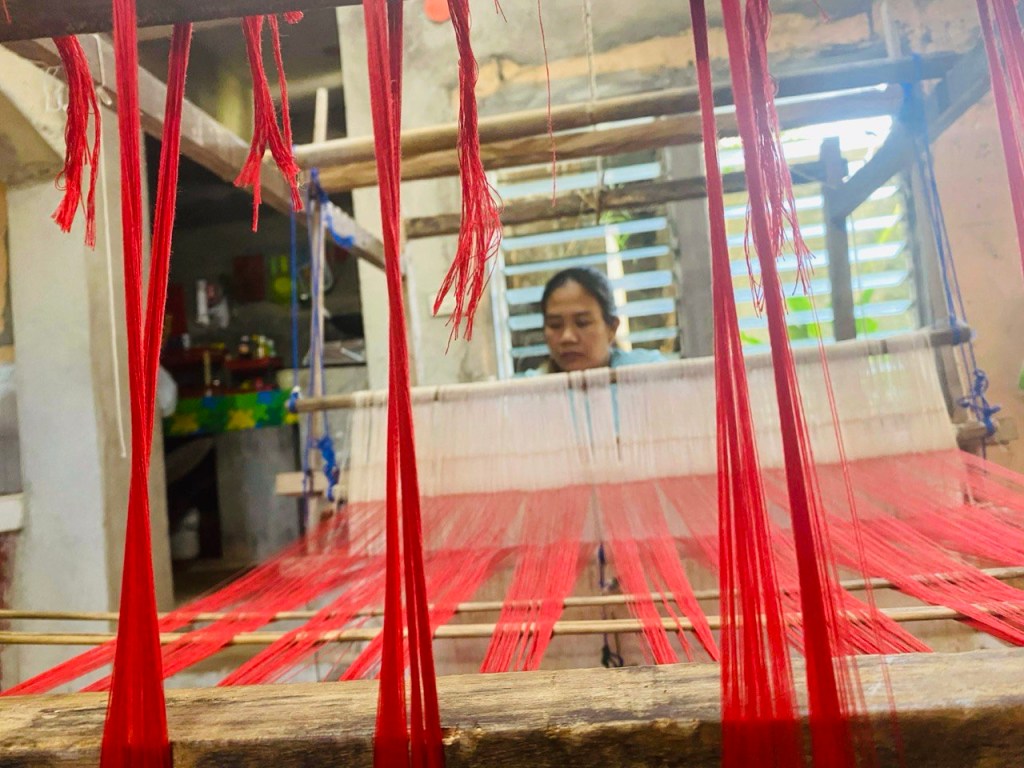
Despite the limited number of weavers currently working in the center, Mirafuentes reported that they are able to keep up with the demands for pinukpok cloth, often having orders even abroad.
“We started reviving and developing our ways to weave pinukpok back in 2019. Now, I am currently the supplier for various shops in Legazpi. Sometimes, when there are orders, our pinukpok reaches other countries. Others in Manila have also directly ordered from me,” she said.
Though the weaving center is able to keep up with demands for pinukpok cloth, the supply shortage of abaca sometimes poses challenges for them in terms of securing enough fiber to turn into cloth, alongside increase in prices for the raw materials.
“We mostly get our raw materials from Daraga and Tabaco. Sometimes, when supplies are low in both, we get abaca fiber from Bonga. But there have also been times when we are unable to get any material, although this is very rare,” Mirafuentes stated.
Currently, the Banquerohan weaving center focuses solely on the creation of pinukpok cloth from abaca fiber. They have also formed partnerships with Bicolano fashion designers as a way of promoting the use of local materials produced in the region.
Etching the name in couture
The use of abaca has been further redefined, making waves in the high fashion industry, especially when Bicolana fashion designer and couturier Jean Alta established this to be the main cloth of her brand, Kutur ni Jean.
Alta said that among the reasons why she loves using pinukpok in her pieces was because it allows her to partake in a cycle that promotes, supports, and empowers the livelihood of women in Banquerohan, where she gets her supply of abaca, along with preserving the culture of the Bicol region.
“In the past, my reason for why I wanted to use it was very shallow. It was because it’s very elegant, and the texture is remarkable. Until such time that I saw the bigger picture—that purchasing pinukpok directly helps a lot of women,” Alta said.
“This is why I love pinukpok. I want to help the women in Banquerohan, the weavers. And now, I am glad that the weaving industry is expanding in their community,” she added.
Kutur ni Jean is a rising fashion brand in Bicol, most known for their wide use of abaca in their unique creations, ranging from Filipinianas, barongs, wedding gowns, and other clothes.
The brand celebrated its 10th anniversary last November 8, 2025 with a fundraising fashion show, where the proceeds would go to providing sewing machines to fashion scholars chosen by Alta. In the long run, she hopes to establish her very own fashion school in Albay to mold future couturiers in Bicol.
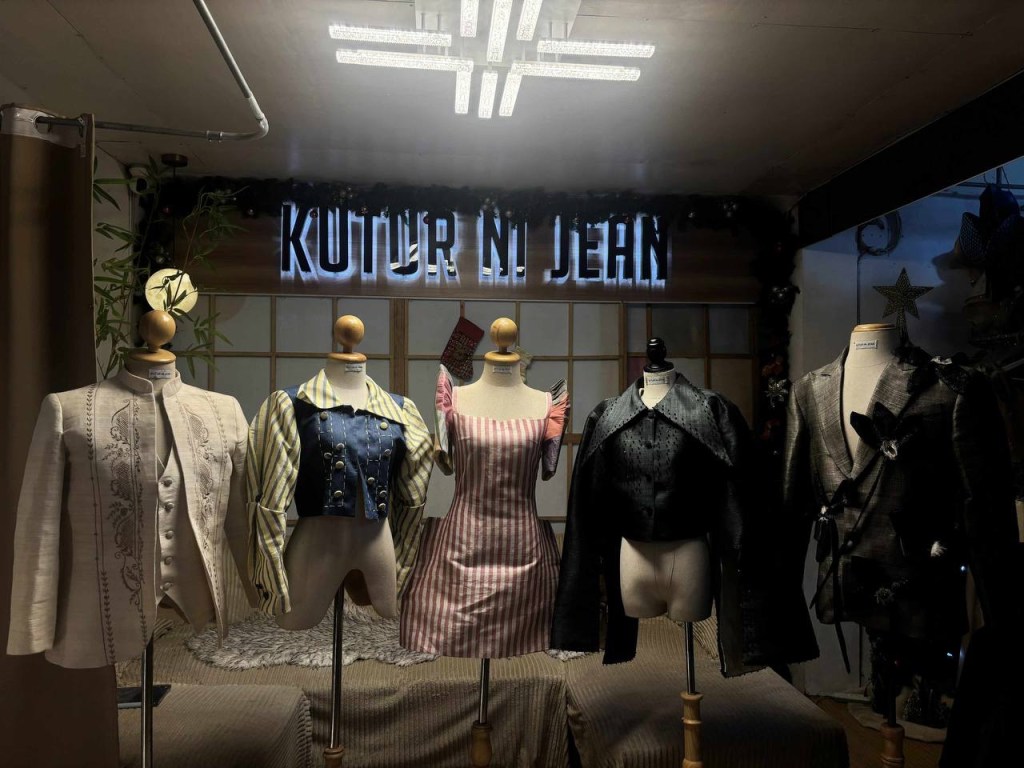
Borne out of Alta’s desire to be like her mother, who used to be a seamstress, one simple sewing machine provided by her supportive partner, and a dream that took her from being an IT to attending the Fashion Institute of the Philippines to become a couturier, her brand has dressed both high-end personalities like Heart Evangelista and Catriona Gray, and Bicolanos of all types, staying true to her mission of promoting inclusivity in the fashion industry.
However, her advocacy of promoting Bicolano culture by integrating pinukpok in her designs also has challenges of its own, particularly in terms of the material’s financial sustainability when it comes to securing the supply.
“It’s very natural that when the supply of materials falls short, the cost of purchasing increases. In the past, pinukpok was already expensive. Now, it’s even more expensive because of higher demand,” she said.
Alta recalled that there had been a time when it was hard to secure bulk supplies of pinukpok from Banquerohan because of high demand from other designers.
“There was a time that we experienced a huge shortage of supply of the cloth, especially when the use of pinukpok created a boom in the fashion industry. And on their [Banquerohan weavers] part, they had very few weavers left. But when the use of the cloth became a trend, a lot of the women became more engaged with weaving, so it became a mass production. Now, anytime people want to avail from them, they are able to answer the demand because there is a greater support system for the weavers now,” she said.
Although Alta did not recall experiencing shortage of abaca supply due to environmental factors, her struggles still pose questions on the sustainable reproduction of the material for widespread trading and use in the Bicol region.
Abaca production
The Bicol region is the country’s leading supplier of abaca, contributing one-third to the Philippines’ production, with Catanduanes being the top producer after having a total of 82 percent share to the national supply.
However, as of 2025, the Philippine Fiber Industry Development Authority (PhilFIDA) reported that a 14.75 percent decline in abaca fiber production was observed in the first semester.
According to the agency’s industry performance report, Bicol produced 918.89 metric tons of abaca fiber less this year compared to the same period in 2024.
Though Catanduanes remains to be the top producer, PhilFIDA recorded a 15.81 percent decrease in their production. On the other hand, Albay showed a 23.56 percent increase in its production, with Camarines Norte and Sorsogon contributing 2.93 and 22.31 metric tons, respectively.
While Bicol’s supplication of abaca fiber is considerably less this 2025, PhilFIDA also recorded an increase in the export of this raw material, rising by 64.26 percent than last year.
Challenges in abaca reproduction
Recent calamities have affected the continued supply of abaca fiber, impacting both the plantations and the consumers dependent on the material for their living, particularly the women weavers in Bicol.
PhilFIDA Planning Unit officer Leo Andrew Bordeos reported that as of 2025, abaca production in Catanduanes has failed to recover due to the consecutive typhoons in the Bicol region.
“Back in November 2024, we had typhoons Kristine and Pepito. Those two storms greatly affected Catanduanes, which is the Abaca Capital of the Philippines. By that time, around 80 to 90 percent of abaca farms were totally damaged,” he said.
“Now, after a year, we had another typhoon-Uwan. The abaca farms still recuperating from last year were unable to fully recover their reproduction. Basically, we’re back to zero in terms of their recovery,” Bordeos added.
When abaca plantations get damaged by calamities, the standard process of recovery takes up to 18 to 24 months.
However, with the current case of Bicol being hit by natural disasters every year, particularly tropical storms, the full recovery of abaca production in Catanduanes keeps getting pushed back.
“For example, when an abaca plant is damaged it’s also like a banana plant. But after it grows or you can harvest it after 18 to 24 months. However with the recent natural disasters, the recovery process does not even reach 12 months before another typhoon hits Bicol and damages the new plantations,” Bordeos said.
PhilFIDA reported that the consecutive typhoons last 2020 [Rolly, Quinta, Ulysses] were among the most hard-hitting calamities that destroyed abaca crops, creating a shortage in the supply of the fiber despite numerous farms in the region.
To mitigate the effects of disasters on abaca production, rehabilitation areas all over Bicol were identified to help with the regeneration and continued supply of fibers to consumers and those using the raw materials for their livelihood.
Of the 11 geotagged locations for abaca rehabilitation, three are in Albay, and two each are in Camarines Norte, Camarines Sur, Sorsogon, and Catanduanes.
Other measures PhilFIDA adopted to further contribute to the continued regeneration of abaca include the provision of technical assistance to farmers, establishment of provincial abaca nurseries in Catanduanes, and collaborative livelihood trainings and projects with local government agencies and international partners.
These rehabilitation areas and additional measures act as ways to produce alternative sources of abaca fiber, especially for weavers in Albay, to ensure the continued supply amidst rising demand.
 Bicol Daily News
Leave a comment