By: Lorence P. Divinagracia and Cherrylin Mabelin
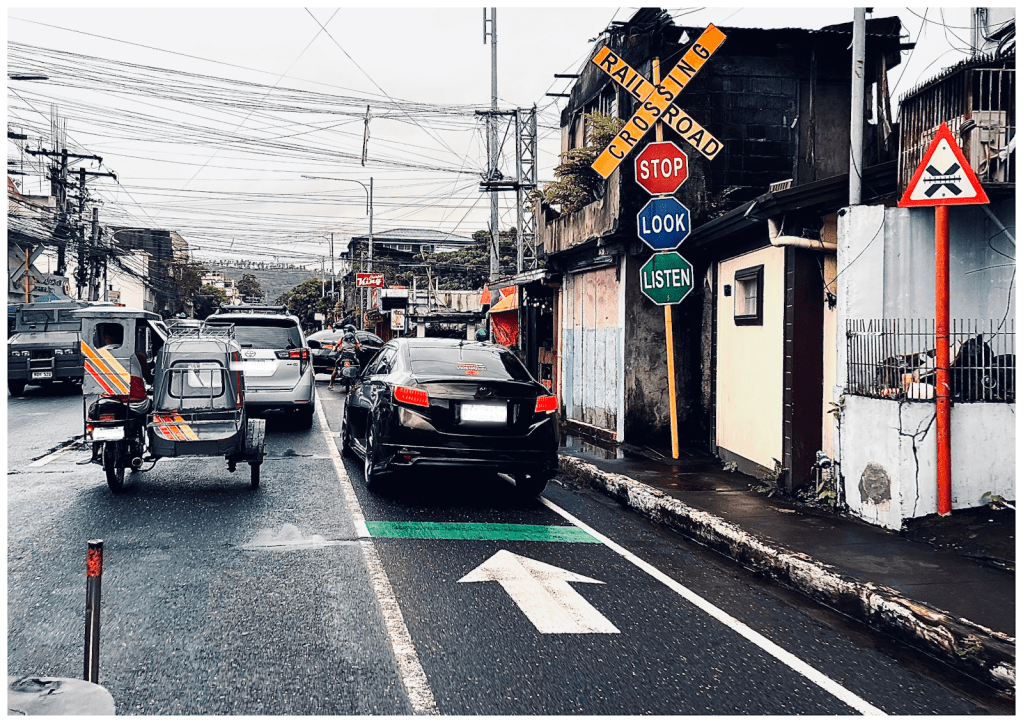
LEGAZPI CITY— Cycling on the streets of Legazpi City has become a daily challenge as parked cars often block sidewalks and lanes meant for bikers.
Calypsto Custodio, a resident from Puro, Legazpi City who regularly uses bike lanes, especially during training, recalled several tense moments on the road, saying that sudden actions from the motorists have put her safety at risk despite being within the bike lane.
“There are a lot of close calls because of suddenly opened car doors or sudden cutting off. Sometimes a driver even honks aggressively as if they are angry, even when I am in the bike lane.”
Meanwhile, Jobert Hernandez, a member of Team Kapulikat Multisports Inc., relies on bike lanes for his daily commute to Bicol University. While he finds the lane size adequate, he notes they are often obstructed by motorists and parked vehicles. These obstructions force him into the center of the road, a situation he warns could easily lead to accidents.
“Yeah, because of this, I’m forced to pass through the middle of the road, which could lead to an accident if I’m not careful,” Hernandez said.
Custodio also shared the inconsistency of the bike lanes. She said there are parts that are safe, but there are also routes where motor vehicles are blocking and parking, such as tricycles, jeeps and private cars, particularly in market or commercial areas. As a result, cyclists are forced to divert to the main road, exposing themselves to greater risks.
“There are parts that are fine and safe, but there are also roads where other motorists don’t seem to follow the rules; often there is something blocking the bike lane or there are parked vehicles,” said Custodio.
These day-to-day struggles of cyclists didn’t escape the sight of Legazpi City Public Safety Officers (PSO). Moving beyond routine patrols, the agency is now strictly clamping illegally parked vehicles that obstruct the mobility of local cyclists.
PSO’s enforcement efforts and challenges
The PSO Officers are focusing on clamping illegally parked vehicles as drivers continue to obstruct lanes across Legazpi City.
PSO Chief Octavio Rivero said they conduct patrols almost every day, and whenever they see four-wheeled vehicles or motorcycles parked in bike lanes, they immediately clamp them.
“Almost every day we conduct rounds there. Whenever we see four-wheeled vehicles or motorcycles parked in the bike lanes, we clamp them.”
According to PSO records on their wheel-clamping operations, a total of 154 vehicles were clamped for obstructing bike lanes between September and November 2025.
| STREET | NO. OF WHEEL-CLAMPED |
| Rizal Street | 57 |
| Peñaranda Street | 39 |
| Quezon Avenue | 30 |
| Lapu-Lapu Street | 24 |
| Lakandula Drive | 4 |
| Total | 154 |
This table illustrates the number of vehicles clamped in Legazpi City for obstructing designated bike lanes between September 2025 and November 2025. According to the PSO data, a total of 154 vehicles were impounded during this three-month period.
Although bike-lane violations are monitored and penalized, enforcement in Legazpi City remains inconsistent due to manpower shortages, hostile encounters with motorists and the inability to maintain continuous road coverage.
With only 36 active personnel out of 50 authorized positions, Rivero said the PSO struggles to deploy enforcers across all major roads, especially during peak periods and city events. As a result, some areas are left without regular monitoring, allowing violations to recur.
“Out of the 50 public safety personnel, only 36 are currently active. That is why we have difficulty deploying people. We are really short on manpower, and some areas end up without deployment,” Rivero said.
Enforcement efforts are further strained by resistance from motorists. Rivero said PSO personnel are often subjected to verbal abuse, intimidation, and threats while performing clearing operations, forcing enforcers to exercise “maximum tolerance” rather than assertive action.
“Many times, we are cursed at, shouted at and even threatened with physical harm. That is why we practice maximum tolerance. Even if they insult us, we are not allowed to retaliate because we would be the ones put at risk.”
While the PSO has not recorded accidents directly linked to blocked bike lanes, Rivero acknowledged that persistent obstructions expose cyclists to ongoing risk, particularly in areas where enforcement coverage is limited.
A boost for some, not all
Bike lanes present both risks and opportunities for cyclists seeking convenient, cost-effective and eco-friendly ways of navigating the city . In a broader sense, these lanes have not just benefited bikers, but have also boosted the income of businesses such as bicycle shops. One former online seller established his own shop in the post-pandemic period, and the subsequent construction of bike lanes greatly helped his business profit.
Owner of Albayks-Affordable Bike Accessories, shared that since the opening of bike lanes in 2023, their profit has improved compared with 2021, when they opened a physical store in Legazpi City’s Old Albay District.
“So in everyday life, they use bikes to work, bike to school, which increases those who need repair [buy parts],” Entico said.
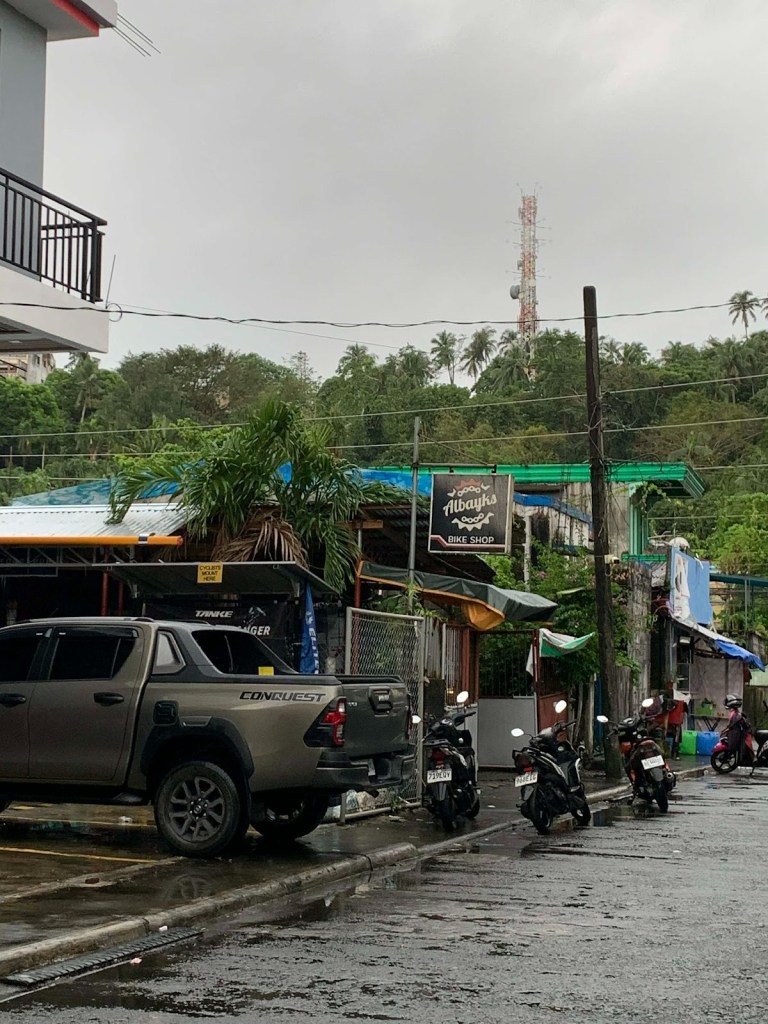
At the same time, the coordinator for Legazpi City’s Planning and Development Office (CPDO) also shared that bike lanes have given tourists an option for more environmentally friendly transportation when exploring the city. Jocelyn M. Cordoniz, the office’s coordinator, highlights that bike lanes have provided opportunities for livelihoods or businesses, such as providing rented bikes to tourists.
However, other bike shop owners have not felt the benefits of the bike lanes. JENJEM Bike Hub, located in Legazpi City at BF Building, Alternate Road, Barangay 16 Kawit-East Washington Drive, is one such example, despite being established since 2017.
According to Cristina Milaflor, a cashier at JENJEM Bike Hub, the pandemic was the peak of their profit when cycling was a necessity. Now that public transportation options are fully restored, bike demand has dropped.
Legislative Foundation
The construction of bike lanes in Legazpi City was primarily driven by the need for a safe, alternative mode of transportation during the COVID-19 pandemic. This initiative was also part of a broader national effort to promote active transport, reduce traffic congestion, and improve public health.
In line with these goals, the Sanggunian Panlalawigan of Albay enacted Provincial Ordinance No. 003-2020 on Oct. 13, 2020. Titled “An Ordinance Establishing Active Transport and Network of Cycling Lanes and Improved Pedestrian Walkways,” this legislation aimed to support people’s mobility in the “New Normal” while securing the necessary funding for provincial infrastructure.
Building upon this provincial mandate, Legazpi City officially adopted the framework through Ordinance No. 16-0011-2023, also known as the “Legazpi City Active Transport and People’s Mobility Ordinance of 2023.” This local ordinance establishes a comprehensive strategy to prioritize walking and cycling as primary modes of transportation, effectively transitioning the city toward a model of sustainable mobility.
To ensure technical consistency, the city’s infrastructure standards are strictly aligned with national guidelines, specifically the Department of Public Works and Highways Department Order No. 263, series of 2021.
Accordingly, the city employs a three-tier classification system designed to protect cyclists based on the specific conditions of the roadway:
CLASS I (Shared Use Path or Bike Path): These paths are completely separated from the roadway. They are dedicated exclusively to bicycles or shared with pedestrians, typically buffered by open spaces or green belts.
CLASS II (Separated Bike Lane): This refers to a portion of the roadway designated for exclusive bicycle use. It is physically distinguished by paint stripes, curbs, or bollards and serves as the preferred standard for most city streets.
CLASS III (Shared Roadway): These are segments of the road officially marked as bicycle routes but shared with motor vehicles. This classification is generally utilized where road width is limited and traffic volume is lower.
Beyond physical infrastructure, the ordinance includes strict enforcement measures to ensure the safety of all road users. Specifically, penalties are imposed for the obstruction of bike lanes and walkways, speed limit violations and reckless driving—particularly in instances involving collisions with cyclists or pedestrians.
Under the ordinance, motorists face a graduated penalty system, with fines and community service increasing for repeat offenses, starting at P1,000 or two days of community service for a first violation and rising to P3,000 and five days of community service for third and succeeding offenses.
Possible Interventions
City officials say addressing bike lane obstructions in Legazpi City will require a combination of stricter enforcement, improved road design and stronger inter-agency coordination.
For Rivero, increasing penalties is one measure he believes could deter repeat violators.
“That is one of the proposals I am putting forward so that violators will stop repeatedly breaking traffic laws. Penalties should be increased — 10,000 pesos for illegal parking, 25,000 pesos for driving without a license, 20,000 pesos for colorum vehicles,” Rivero said.
Rivero also pointed out the need for structural adjustments to ease conflicts between cyclists and public transport drivers, saying bike lanes should be designed with designated loading and unloading zones for passenger jeepneys to prevent roadside congestion.
“Ideally, bike lanes should include designated loading and unloading zones for passenger jeepneys. If all roadside space is designated as bike lanes, where will jeepneys load and unload passengers? They end up stopping in the middle of the road,” Rivero said.
He added that adopting Metro Manila’s segmented bike-lane design in Legazpi City could help reduce conflicts between cyclists and public transport drivers and prevent repeated obstructions along major roads.
Congested space was cited as one of the main reasons people parked their cars on sidewalks and bike lanes. This persisted despite the city government’s standard building code requiring specific buildings to provide parking spaces.
To resolve this, the city is planning to utilize vacant private lots in Legazpi City as parking areas through a Memorandum of Agreement (MOA). Cordoniz also said the city is considering adopting mechanical parking systems, similar to those used by Gaisano Malls.
“That’s the issue, we’re short on parking spaces. Although, the city does have plans to repurpose private lots that aren’t being used, turning them into parking spaces. They’ll just need to MOA with the private owners to see if they’re willing.”
Moreover, city councilor Atty. Butch N. Lucila also proposed adding more bike lanes in Legazpi, which is part of Mayor Hisham Ismail’s urban planning initiative. The Mayor is looking for funds for an urban planner, and they’ll request that bike lanes be included in the new plan, possibly relocating them to avoid obstructing roads.
Through these measures, suggestions of cyclists for safer bike lane routes might be addressed. These includes Custodio’s suggestions for stricter implementation of “no parking on bike lanes,” more continuous and connected bike lane network, additional signage and road markings, more visible barriers or even soft bollards in critical areas, regular maintenance, especially when there are potholes or debris on bike lanes, and awareness campaign for both drivers and cyclists.
 Bicol Daily News
Leave a comment