By Domingo Balding, Maria Adrienne Panesa, Sarah Jean Ventura
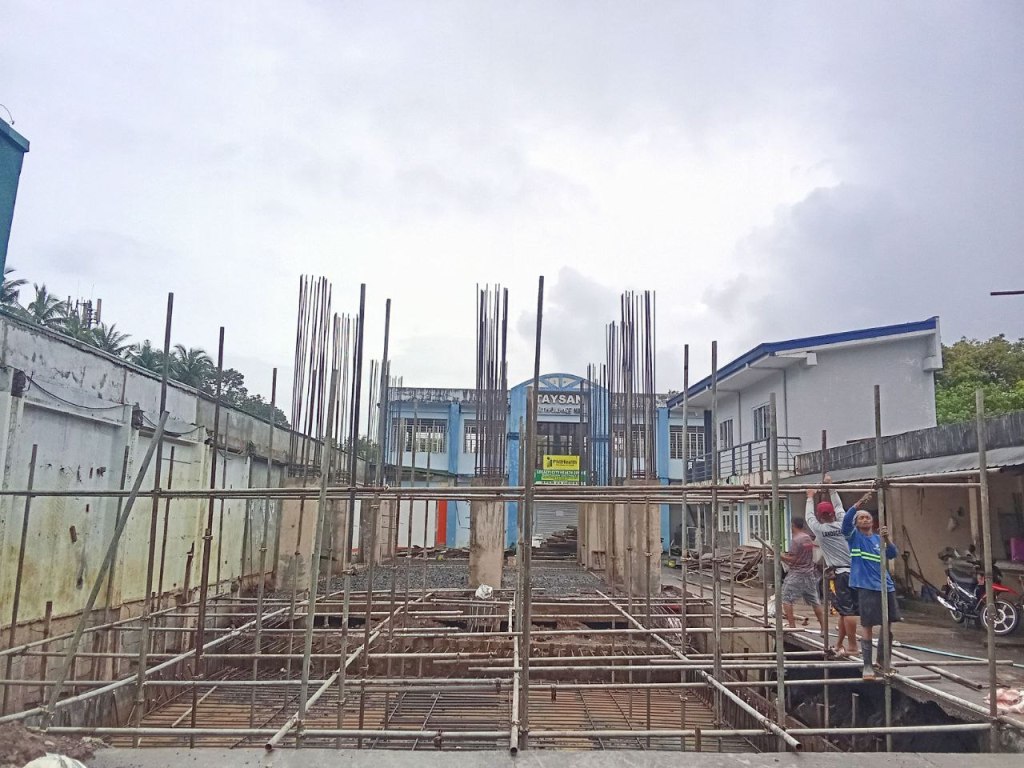
Legazpi City, Philippines—For 14 years, in Barangay Taysan, Legazpi City, the ₱16 million National Tax Allotment (NTA) has been supplemented by consistent vendor rental fees from this Income-Generating Project (IGP). Targeting inefficiencies in infrastructure and stall management, the public market revitalization is currently in progress and is expected to increase revenue to support the local economy.
Benjamin Rosin, barangay captain explained that the tax allotment alone is insufficient for operations, making the consistent revenue from the local income from the market’s IGP essential to fill the financial gap.
Resources generated from these sources have already funded key infrastructure, including a Material Recovery Facility (MRF) in Sitio Burabod, Taysan to address persistent odor and environmental concerns at the central garbage dump.
To further improve solid waste management, the barangay allocated funds from its 20 percent Development Fund to purchase a P730,000 garbage truck, making garbage collection more efficient.
Another major project financed through the sources is the ongoing construction of the Taysan Ibalong Multi-Purpose Hall, proposed as a three-storey facility situated beside the Bureau of Fire Protection.
It includes a birthing center for quicker access for ambulances responding to maternal and emergency cases, a Gender and Development (GAD) standard is also incorporated with offices accessible to persons with disabilities and gender-sensitive restrooms.
Under the previous administration, the local government generated an annual income of P45,000. However, the revenue collection has improved significantly from the current administration with P11,000 to P13,000 monthly, translating to a significantly higher annual revenue of P132,000 to P156,000.
The barangay generated an income from each of the public market vendors through monthly collected fees ranging from P500 to P600.
Benefits to vendors
The Taysan Market is a fundamental establishment for the vendors, functioning as an essential source of income and convenience to support their families.
Gina Jacob, a fish vendor said that, “Selling fish is a profitable business because it generates a lot of revenue, it benefits my family and allows my children to go to college.”
Mercy Aringo, also a fish vendor, relies on the daily income to provide for her family particularly when her husband is unable to work.
“The market helps with our shortcomings and provides for our needs,” Aringo said.
The market thus serves a dual purpose: empowering vendors through self-employment while also providing for their families’ necessities.
Projected vendor accommodation and economic benefits
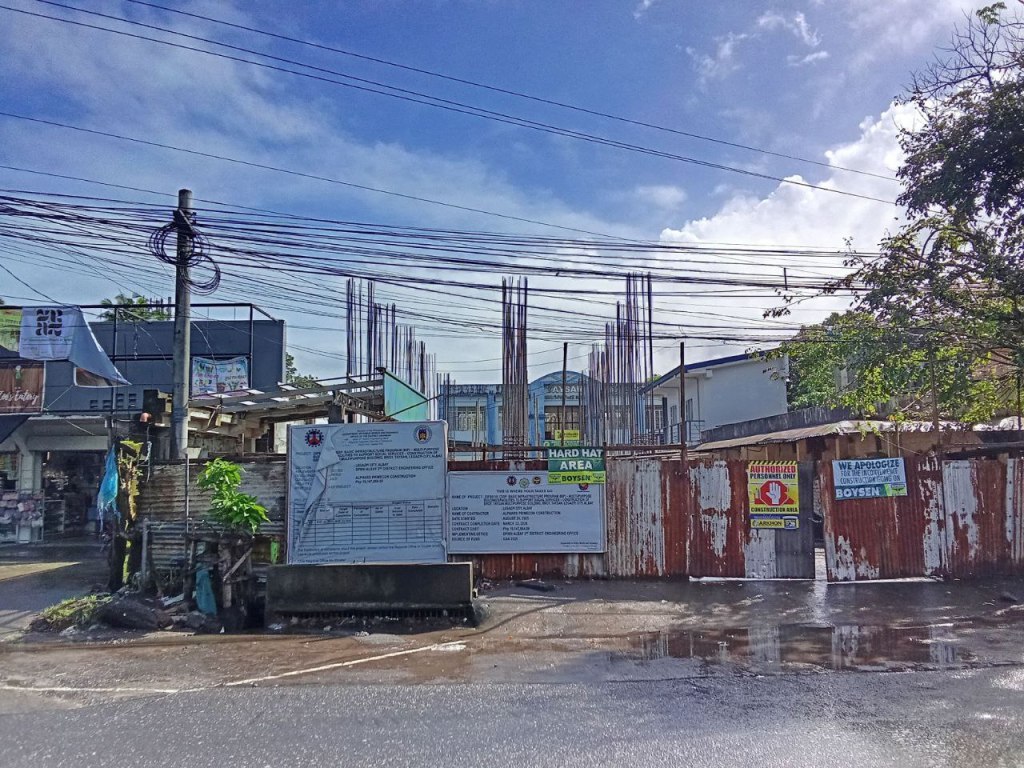
The market is undergoing a major revitalization to address infrastructure flaws and increase capacity.
Once completed, the facility is expected to accommodate more than 100 vendors, a significant increase from 15 current capacity.
Rosin stated that the renovated market is projected to generate approximately P100,000 per month from all of the vendor fees and collections.
Beyond direct barangay revenue, the improved facilities are expected to create livelihood opportunities for residents, as vendors will expand operations in the newly modernized space.
Currently, the reservation requests for the new stalls’ occupancy are already being processed on a first-come, first-served basis, indicating strong anticipation for the facility’s reopening.
Construction and project overview
The renovation of Taysan public market is funded by a ₱19 million allocation from the 2025 General Appropriations Act.
Rosin cited that the Department of Public Works and Highways (DPWH) 2nd District Engineering Office ensures that construction standards align with national standards.
Construction began on Aug. 26, with completion targeted for March 2026, a seven-month timeline designed to deliver comprehensive facility upgrades.
The project is being executed by Alphard Primecon Construction, the contractor responsible for structural transformation within the designated period.
The proposed building plan designates a modern, two-storey building intended to replace the existing cage-like stalls with improved facilities.
The ground floor will feature food service establishments and eateries, creating a dedicated dining and quick-service area designed to encourage customer purchases.
General merchandise business stalls have been designated for the second floor, allowing vendors to operate in a space optimized for non-perishable goods.
Complementing these improvements, a parking area will be integrated into the lower section of the building beside the food court.
“The lower part of the building can be used as a parking area since it has sufficient height where trucks and other vehicles can park,” Rosin explained.
Challenges during renovation
The ongoing improvements face challenges. Rosin noted that progress has been slowed by continuous heavy rains and typhoons common to Albay.
“It’s possible the completion date may extend beyond March,” he admitted, stating that the project is currently at 30 percent completion with only the foundation laid.
Meanwhile, income tax collection operations have been temporarily halted reducing the barangay’s regular revenue stream.
This funding gap has forced local officials to rely on alternative business income sources to sustain community operations.
The barangay currently collects revenue from paper receipts and maintains collectible accounts from a local enterprise.
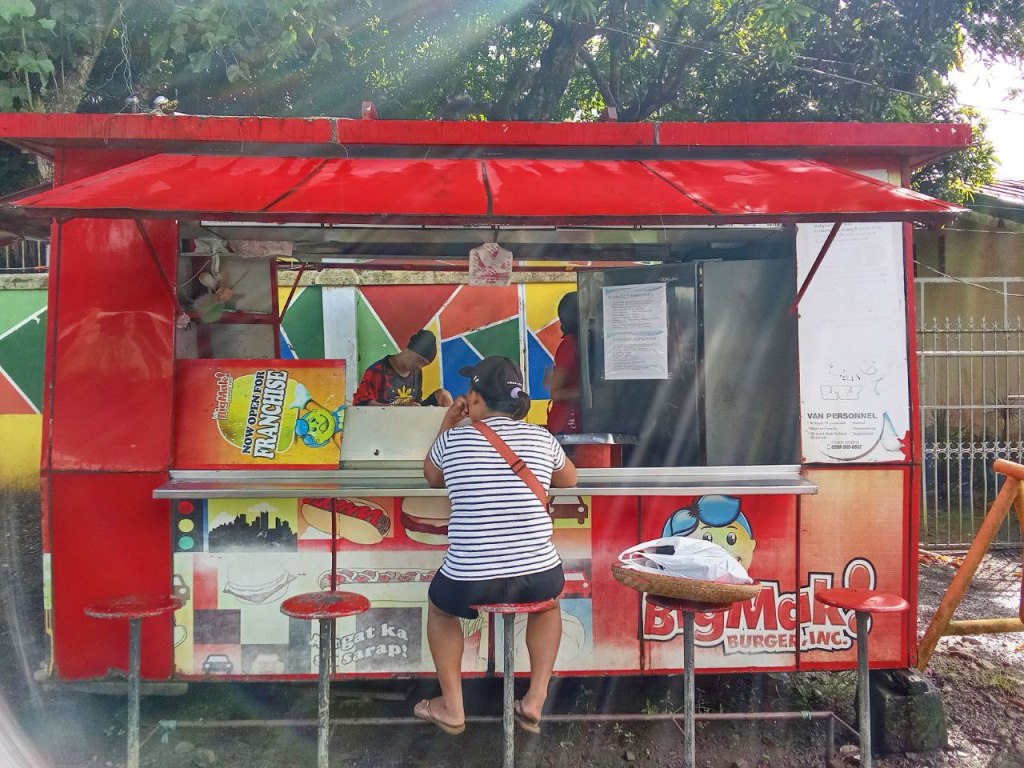
Among its key revenue sources is BigMak, paying ₱5,000 in monthly rent and operating stalls that sell burgers, foot-long sandwiches, drinks, and other items.
“We collect money from the paper receipts, that’s our primary source right now, and we still have outstanding collectibles. We also receive rental income from Big Mak,” Rosin explained.
Vendors’ hope
Vendors are optimistic that the renovation will solve persistent challenges, particularly flooding, sanitation and access.
Joshua Jacob, a vendor, emphasized the need for proper infrastructure.
“Whenever it rains, we are quickly impacted by flooding because the drainage and manholes are too small,” he said, expressing hope that the new construction ensures clean restrooms and well-built facilities.
Other vendors are concerned about inclusivity. Roselyn Baldon, a vegetable vendor, hopes the designation will remain accessible.
“What we want is to stay only on the lower level because the vendors, especially the elderly, can no longer climb up the stairs,” she said.
Evelyn Cardel, a fish vendor, said that motorcycles would frequently enter the market area, often disrupting flow and making it difficult for customers to navigate safely.
Moreover, Jacob hopes that the renovation work should be done properly and not carelessly, hoping for clean restrooms and well-built stairs.
While these issues persist, for the Taysan residents and buyers, the market has become a cornerstone of the community, offering convenience and affordability in the area.
“It’s a big help for us because you don’t have to go to the mall to buy cooking supplies and daily necessities. It’s more practical and easier,” Judith Maraño, a regular buyer said.
Moreover, Efren Marbella, a buyer, said that the market is accessible and beneficial to him since there are a lot of vendors that offer different kinds of products.
The renovation promises to lessen the experiences that have long complicated the shopping experience.
Addressing these safety and utility issues faced by the vendors remains the priority for the barangay leadership.
Rosin is calling on the DPWH to ensure that safety standards are met, particularly regarding the drainage system.
“While some areas have functional drainage, other sections, particularly near the public market, still lack proper channels,” Rosin said.
Rosin hopes that the DPWH will address these gaps to prevent future flooding, ensuring the project benefits not just the vendors, but the entire Barangay Taysan community.
 Bicol Daily News
Leave a comment